Johor's education landscape is set to be transformed through an ambitious international partnership, with 100 students at Sekolah Rintis Bangsa Johor (SRBJ) positioned to benefit from the Harvard University-backed Program for Scientifically-Inspired Leadership (PSIL). The collaboration between the Johor State Government and the prestigious American university represents a significant move to elevate standards and expose young learners to global educational frameworks.
According to Aznan Tamin, chairman of the Johor State Education and Information Committee, the PSIL initiative—developed by Harvard in 2019—prioritises pedagogical approaches centred on experiential engagement, analytical reasoning, articulate dialogue, and the cultivation of leadership capabilities. Rather than treating these competencies as abstract concepts, the programme embeds them within authentic learning scenarios that mirror real-world problem-solving contexts, fundamentally reshaping how students interact with knowledge.
The pilot phase, scheduled to commence in January 2027, will draw participants from two premier government secondary schools: SMK Tasek Utara and SMK Seri Kota Puteri 2. This deliberate selection of institutions reflects an intention to test the programme's efficacy across diverse student populations within the Johor education ecosystem. The phased rollout approach allows educators to gather data on implementation outcomes, refine delivery mechanisms, and identify scaling opportunities for broader adoption across the state.
Beyond direct student engagement, the partnership extends professional opportunities to 40 SRBJ educators through specialised workshops on active learning pedagogies. This investment in teacher development acknowledges that sustainable educational transformation hinges on equipping educators with contemporary methodologies and conceptual frameworks. By strengthening instructional practices in interactive, creative, and effective classroom management, teachers can foster environments where intellectual curiosity thrives and student agency is amplified.
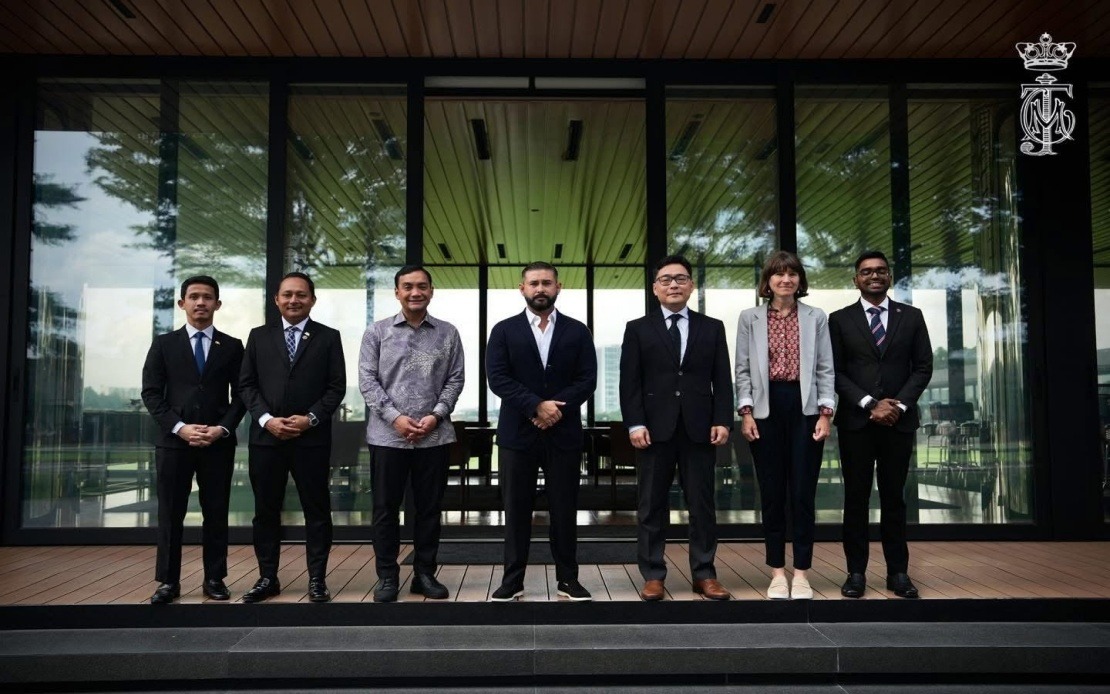
The initiative gained formal momentum recently when the Regent of Johor, Tunku Mahkota Ismail, hosted a delegation from Harvard led by Dr Dominic Mao, assistant director of Undergraduate Studies and Lecturer in Molecular and Cellular Biology, and Dr Andrea Wright, assistant dean of Harvard College. This high-level engagement underscores the state government's strategic commitment to positioning Johor as a regional hub for educational innovation and excellence. The diplomatic nature of such interactions signals to both local and international communities that the state views education as a cornerstone of long-term development.
For Malaysian policymakers and educators monitoring regional trends, this partnership holds particular relevance. Southeast Asia faces mounting pressure to produce graduates equipped with problem-solving acumen, technological fluency, and cross-cultural competence—capacities that traditional curricula alone may not cultivate. Harvard's PSIL model, with its emphasis on scientific thinking applied to leadership challenges, addresses this capability gap by fostering learners who can synthesise technical knowledge with strategic vision.
SRBJ itself embodies an educational philosophy aligned with such aspirations. The institution maintains a distinctive commitment to fostering English language proficiency without marginalising Malay, reflecting Malaysia's bilingual heritage. Concurrently, the school prioritises science, technology, engineering, and mathematics (STEM) competencies, recognising their centrality to economic competitiveness in the 21st century. This dual emphasis on linguistic breadth and technical depth mirrors contemporary workforce demands across the Asia-Pacific region.
The school's integration of personality development and employability enhancement alongside academic rigour distinguishes it from institutions offering narrowly focused curricula. By embedding competency assessments modelled on international standards—while maintaining alignment with Malaysia's Ministry of Education directives—SRBJ demonstrates that global benchmarking and national policy coherence need not conflict. Rather, thoughtful integration can amplify student readiness for both tertiary education and professional environments.
For Johor's broader education sector, this initiative signals a strategic repositioning. The state has historically played a significant role in Malaysia's economic narrative, yet its education ecosystem receives less international visibility than those of Selangor or Kuala Lumpur. The Harvard partnership offers an opportunity to elevate Johor's profile, attracting talent and resources to the region. Moreover, successful implementation could position Johor as a testbed for innovative pedagogical models, potentially influencing education policy across Malaysia.
The timing of this collaboration also carries implications for Malaysia's engagement with the United States on intellectual and cultural grounds. At a moment when geopolitical tensions create uncertainty, educational partnerships grounded in genuine academic exchange and student benefit represent meaningful channels for bilateral relationship-building. Such initiatives transcend political calculations, instead addressing universal human aspirations for knowledge, capability development, and opportunity.
Looking ahead, the success of the January 2027 pilot will likely determine whether PSIL expands to additional schools within Johor and potentially across other Malaysian states. Early findings regarding student outcomes, teacher satisfaction, and institutional integration will inform scaling decisions. For education administrators nationwide, the results will offer concrete evidence regarding the transferability of Harvard's model to the Malaysian context—a question of considerable interest given Johor's distinct demographic and socioeconomic composition.
Ultimately, this partnership embodies an increasingly common phenomenon in global education: the deliberate fusion of local institutional expertise with international pedagogical innovation. By committing resources and political capital to such endeavours, the Johor State Government acknowledges that educational excellence—and by extension, economic and social development—requires openness to external learning while remaining rooted in local values and national priorities.