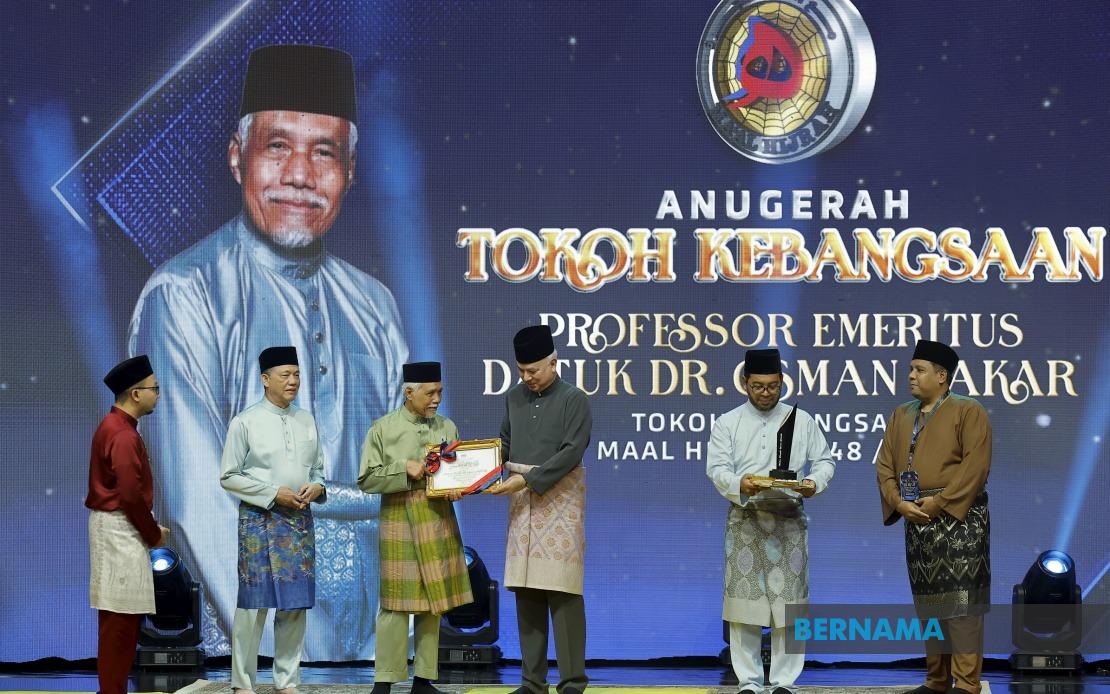
International Islamic University Malaysia Rector Prof Emeritus Datuk Dr Osman Bakar has been named the National Tokoh Maal Hijrah at a national-level observance of Maal Hijrah 1448H/2026 held at Putra Mosque in Putrajaya on June 17. The recognition places Bakar among the year's most esteemed figures in Islamic leadership and scholarship within Malaysia, acknowledging his decades of contribution to Islamic education and intellectual development.
The award ceremony also conferred the International Tokoh Maal Hijrah distinction upon Dr Ahmad Al-Raysuni, a respected Islamic scholar based in Morocco. Both recipients were honoured with cash prizes, ceremonial trophies, and certificates of appreciation in recognition of their scholarly achievements and service to the Islamic community. The dual awards underscore Malaysia's position as a nation deeply engaged with Islamic thought and leadership both domestically and on the global stage.
Sultan Nazrin Shah, the Sultan of Perak, presided over the formal presentation of awards, lending the occasion significant ceremonial weight and royal endorsement. His presence reflected the high regard in which the Malaysian monarchy holds recognition of Islamic scholarship and leadership within the nation's public sphere. Such royal participation in Maal Hijrah celebrations demonstrates the institutional importance of the Islamic calendar milestone and the values it represents in Malaysian governance and society.
This edition of the national Maal Hijrah celebration operated under the theme "MADANI Dihayati, Ummah Diberkati", translating to an emphasis on lived values of compassion and a blessed community. The thematic framework articulated the government's broader vision for strengthening social cohesion, interfaith understanding, and collective well-being across Malaysian society. Maal Hijrah, marking the Islamic calendar's transition, traditionally serves as an occasion for spiritual reflection and recommitment to community values, making the chosen theme particularly resonant with contemporary national priorities.
The ceremony drew attendance from senior government figures, including Deputy Prime Minister Datuk Seri Fadillah Yusof and his wife Datin Ruziah Mohd Tahir. Their presence alongside Minister in the Prime Minister's Department (Religious Affairs) Dr Zulkifli Hasan underscored the government's institutional commitment to recognising Islamic scholarship and leadership. The gathering of top-tier officials signalled that such recognition of Islamic intellectual contribution forms part of the government's broader policy framework around religious affairs and social values.
Prof Emeritus Osman Bakar's selection carries particular significance given his long tenure at IIUM, one of Southeast Asia's leading Islamic institutions of higher education. His career has been defined by efforts to advance Islamic scholarship while promoting dialogue between Islamic thought and contemporary global concerns. The award recognises not merely administrative leadership but intellectual contribution to Islamic discourse at a time when such voices are increasingly important in navigating complex questions around faith, modernity, and social change.
Maal Hijrah observances across Malaysia typically serve as platforms for discussing national values and the role of Islamic principles in public life. By honouring figures like Bakar and Al-Raysuni, the state underscores its investment in Islamic intellectual leadership as a counterweight to polarisation and as a foundation for inclusive national development. The international recognition extended to Al-Raysuni signals Malaysia's engagement with the broader Muslim world and its desire to position itself within networks of Islamic scholarship extending beyond national borders.
The recognition of IIUM's rector also reflects growing international standing of Malaysian Islamic institutions. IIUM has expanded significantly as a research and teaching centre, attracting scholars and students from across the Muslim world and beyond. Bakar's award acknowledges the university's role in shaping Islamic thought that remains grounded in scholarly rigour while addressing contemporary societal challenges, a balance many see as essential for the credibility of Islamic leadership in the twenty-first century.
For Malaysian policymakers and religious leaders, such ceremonies serve multiple purposes simultaneously. They provide occasions for publicly affirming commitment to Islamic values while simultaneously positioning Islamic scholarship as compatible with democratic governance, pluralism, and rational discourse. The choice of awardees and the articulated themes reflect deliberate messaging about the kind of Islamic leadership the state seeks to promote and legitimise within both Malaysian society and the broader Islamic world.
The cash prizes and ceremonial recognition attached to the Tokoh Maal Hijrah award carry practical significance beyond symbolic value, helping to sustain institutional support for Islamic scholarship at a time when such work requires substantial resources and international collaboration. For IIUM and similar institutions, state recognition translates into enhanced standing with potential donors, students, and academic partners, ultimately strengthening Malaysia's contribution to Islamic intellectual production in an increasingly competitive global academic landscape.