India's medical education system faced a critical moment on Sunday as 2.2 million aspiring doctors sat down for a retake of the National Eligibility cum Entrance Test, one of the world's most competitive academic examinations, following the cancellation of the original May administration after leaked question papers compromised the entire examination process. The extraordinary circumstances surrounding the retest underscore deep vulnerabilities in India's high-stakes testing infrastructure and the desperation of students competing for fewer than 100,000 undergraduate medical seats annually.
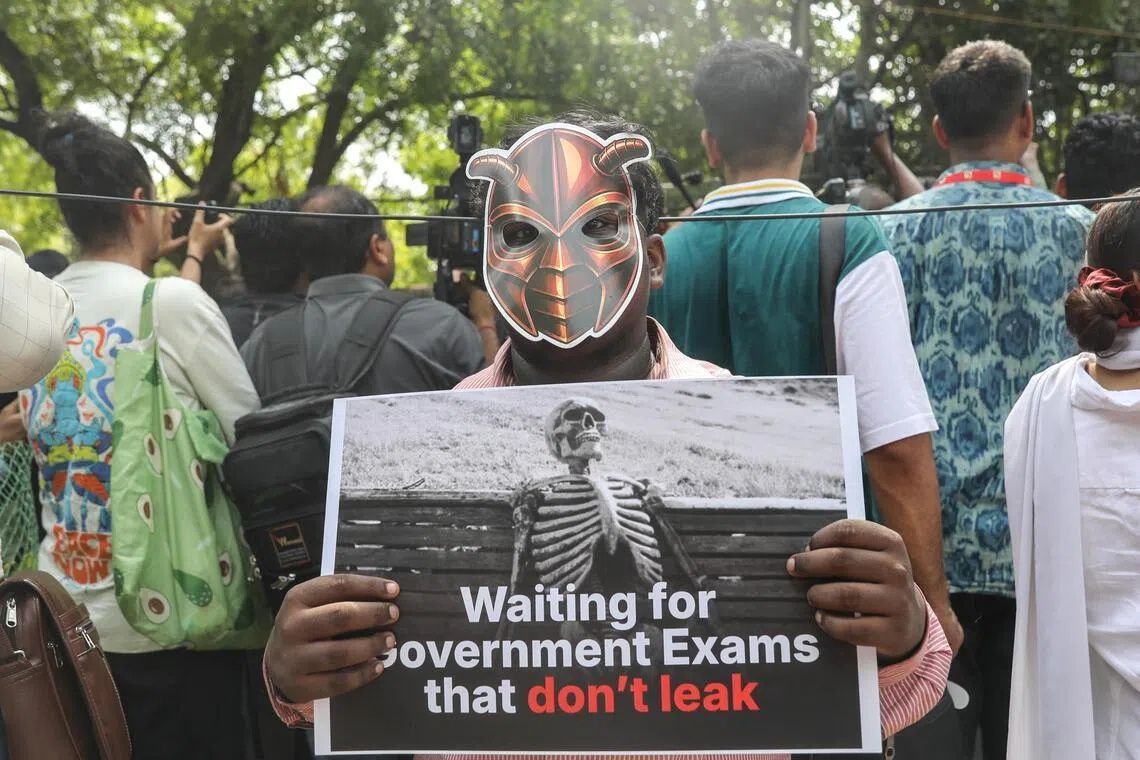
The original examination's cancellation triggered an unprecedented wave of public outrage that extended far beyond disappointed test-takers and their families. Indian media documented tragic incidents of student suicides in the aftermath, while youth protests escalated to demands for Education Minister Dharmendra Pradhan's resignation. The scandal exposed how the intense competition for limited medical seats has created fertile ground for organised criminal networks to exploit desperate candidates willing to pay for exam answers, transforming what should be a meritocratic selection process into a marketplace for fraud.
Authorities mobilised an enormous security apparatus to prevent a repeat of May's chaos. More than 200,000 officials, including police personnel, were deployed across examination centres nationwide to monitor proceedings and deter potential misconduct. The National Testing Agency implemented what it described as a "multi-layered security framework" incorporating biometric authentication technology to verify the identity of test-takers, AI-enabled camera surveillance systems to monitor activities in real time, and GPS tracking of question papers to prevent physical copies from leaving secure facilities. These technological interventions represent a dramatic shift in how India's education establishment approaches examination security.
The decision to temporarily restrict access to Telegram, a widely-used encrypted messaging application, highlighted authorities' struggle with modern communication technologies that enable rapid dissemination of leaked examination materials. The NTA acknowledged that messaging platforms had become the primary tools through which cheating networks distributed compromised questions to candidates willing to pay premium fees for advance access to exam content. However, Telegram's founder Pavel Durov dismissed the effectiveness of such restrictions, arguing that restricting a single platform merely displaced criminal activity to alternative applications rather than addressing the fundamental problem of insiders providing leaked materials to fraudsters.
Investigations into the scandal have already yielded significant arrests. India's Central Bureau of Investigation identified and apprehended a chemistry lecturer as the alleged mastermind orchestrating the question paper leak, revealing how insider participation from individuals with legitimate access to examination materials proves essential to successful exam fraud schemes. This pattern underscores how educational institutions' internal security measures remain vulnerable despite sophisticated external protections, requiring institutional reforms that extend beyond technological solutions.
The examination failure occurred within a broader context of systemic testing failures that had already shaken public confidence in India's education bureaucracy. Concurrent controversies surrounding the online marking system used for high school examinations affecting nearly two million students compounded public frustration, with widespread allegations that the automated grading system assigned incorrect grades or mismatched results to individual candidates. These parallel failures suggested structural problems extending across multiple levels of India's examination ecosystem rather than isolated incidents.
The integrity crisis has catalysed unexpected political consequences, most notably the emergence of the satirical "Cockroach People's Party" as a social media phenomenon attracting millions of followers since its May launch. The movement's humorous critique of governance failures and its specific demands for ministerial accountability demonstrated how younger Indians channelled their frustration through creative protest rather than traditional activism, reflecting generational shifts in political engagement and the power of digital platforms to amplify dissent.
The examination's intense competitive pressure reflects India's broader educational challenges. Medical education seats number just above 100,000 annually, yet millions of students aspire to these positions, creating astronomical odds that incentivise students and families to pursue any available advantage, including illicit examination assistance. This supply-demand imbalance has spawned a massive coaching industry that, while offering legitimate preparation services, also creates ecosystems where examination fraud networks operate with relative impunity.
The retesting scenario carries significant implications for Southeast Asia's education sector more broadly. Several regional nations employ similar high-stakes entrance examinations for medical and professional programs, creating comparable vulnerabilities to examination fraud as competition for limited seats intensifies. India's experience demonstrates how technological solutions alone prove insufficient without institutional reforms addressing insider complicity and the fundamental structural pressures that motivate cheating on such scales.
Sunday's examination commenced at 2pm local time under the watchful eye of tens of thousands of monitoring officials, representing both a logistical achievement and a sobering reminder of how examination integrity now requires resources comparable to small military operations. The retesting represents not merely an administrative correction but a test of whether India's education establishment can restore public trust in evaluation systems that determine entry into one of the nation's most prestigious and socially important professions. The retest's success or failure will reverberate through student communities across India and potentially influence examination security protocols throughout South Asia's competitive academic environments.
%22%2F%3E%3C%2Fpattern%3E%3C%2Fdefs%3E%3Crect%20width%3D%22100%25%22%20height%3D%22100%25%22%20fill%3D%22url(%23ph5iv51g)%22%2F%3E%3Crect%20width%3D%22100%25%22%20height%3D%22100%25%22%20fill%3D%22url(%23ph5iv51p)%22%2F%3E%3Ctext%20x%3D%2250%25%22%20y%3D%2250%25%22%20text-anchor%3D%22middle%22%20dominant-baseline%3D%22central%22%20fill%3D%22rgba(255%2C255%2C255%2C0.95)%22%20font-family%3D%22Georgia%2C%20'Times%20New%20Roman'%2C%20serif%22%20font-weight%3D%22700%22%20font-size%3D%22320%22%20letter-spacing%3D%22-0.02em%22%3E24%3C%2Ftext%3E%3C%2Fsvg%3E)
%22%2F%3E%3C%2Fpattern%3E%3C%2Fdefs%3E%3Crect%20width%3D%22100%25%22%20height%3D%22100%25%22%20fill%3D%22url(%23ph2s5vng)%22%2F%3E%3Crect%20width%3D%22100%25%22%20height%3D%22100%25%22%20fill%3D%22url(%23ph2s5vnp)%22%2F%3E%3Ctext%20x%3D%2250%25%22%20y%3D%2250%25%22%20text-anchor%3D%22middle%22%20dominant-baseline%3D%22central%22%20fill%3D%22rgba(255%2C255%2C255%2C0.95)%22%20font-family%3D%22Georgia%2C%20'Times%20New%20Roman'%2C%20serif%22%20font-weight%3D%22700%22%20font-size%3D%22320%22%20letter-spacing%3D%22-0.02em%22%3EData%3C%2Ftext%3E%3C%2Fsvg%3E)