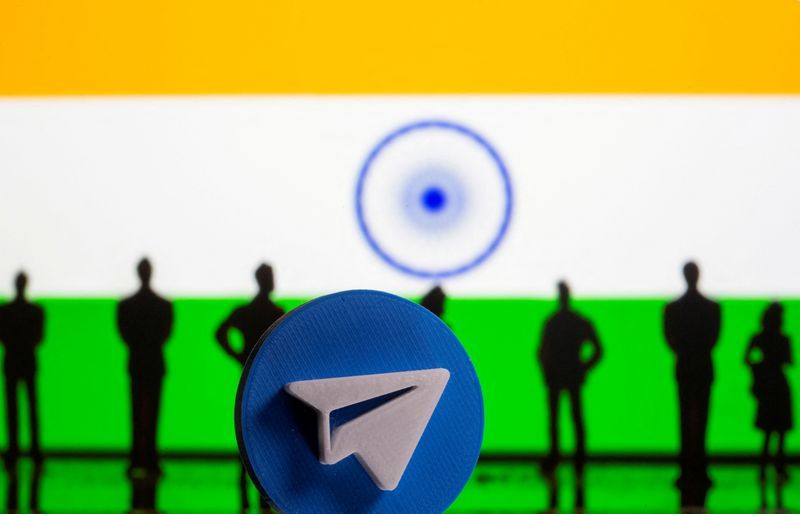
A Delhi High Court judge has rejected Telegram's attempt to overturn India's unprecedented temporary ban on the messaging platform, handing a significant victory to the government's efforts to suppress exam-related fraud. The ruling by Justice Tejas Karia on Friday determined that the Indian government's decision to block the app met legal standards and followed proper procedural requirements, effectively endorsing one of the most aggressive actions New Delhi has taken against a global technology company in recent years.
The temporary prohibition, which will remain in force until June 22, was imposed by India's Information Technology Ministry in response to widespread concerns that fraudsters were using Telegram channels to distribute alleged copies of questions from an upcoming national undergraduate medical entrance examination scheduled for Sunday. The government's justification centred on the principle that even if the leaked materials circulating on the platform proved to be fabricated, they would still constitute fraud against medical school candidates paying substantial fees to sit the competitive exam.
The context for this extraordinary measure extends beyond a single examination controversy. India's National Eligibility cum Entrance Test (NEET) had previously become engulfed in scandal when authorities were forced to cancel and reschedule the undergraduate medical entrance exam after credible allegations emerged that examination questions had been compromised in advance. That debacle triggered widespread public alarm about institutional failures in protecting the integrity of the educational system, creating political pressure on the government to demonstrate it could prevent a recurrence.
Implementing the ban required coordination across multiple layers of India's digital infrastructure. Telecommunications companies operating in the country, alongside major technology firms including Google and Apple, acted within hours to take Telegram offline and remove the application from their respective platforms. This rapid execution demonstrated the government's capacity to mobilise the private sector for enforcement of its directives, though it also raised questions about the balance between security concerns and digital freedoms in a country with over one billion internet users.
Telegram's position in India deserves particular attention given the app's commercial significance to the company. With more than 150 million users, India represents the messaging platform's largest market globally, making the ban economically consequential for the firm. The suspension exposed the vulnerability of foreign technology companies to sudden regulatory action, a lesson relevant across Southeast Asia where governments have similarly demonstrated willingness to restrict digital services deemed problematic.
Pavel Durov, Telegram's founder and chief executive, publicly condemned the blocking measure through statements distributed across media platforms. His criticism centred on the argument that punishing the entire user base for the misconduct of bad actors operating through the service constituted an excessive and counterproductive response. Durov further contended that the ban failed to address the underlying problem, noting that fraudsters had already migrated their operations to alternative platforms, rendering the restriction ineffective against its stated objective.
Telegram's legal defence challenged the government's characterisation of their pre-ban communications. The company submitted court filings describing the official account of negotiations between the two parties as incomplete and skewed, asserting that government representatives had deliberately omitted references to Telegram's own proactive measures. According to the company's submission, it had identified and removed over 900 hyperlinks connected to unlawful exam-related content before the ban was ever imposed, contradicting implications that Telegram had been passive or uncooperative.
Yet Justice Karia's ruling accepted the government's framework that the ban represented an appropriate exercise of state authority. The judge's acceptance of the government's reasoning suggests that Indian courts are inclined to defer to executive decisions regarding national security and public order, particularly when framed in terms of preventing fraud and maintaining institutional integrity. This judicial posture carries broader implications for how technology companies can expect courts to treat regulatory decisions across South Asia.
The episode exposes fault lines in how India's regulatory system engages with global technology platforms. Unlike the lengthy legal proceedings that characterise tech regulation in Western democracies, India's approach permitted rapid, unilateral action with limited prior consultation or transparency. For Malaysian observers and policymakers, the Indian precedent illustrates the trajectory of increasingly assertive state intervention in digital markets, a pattern reflected across Southeast Asia as governments seek greater control over information flows.
The ban also reflects the particular vulnerability of India's examination system, where high stakes and intense competition create incentives for fraud. With millions of students competing for limited medical school places through NEET, the integrity of the examination process carries profound consequences for individuals and families. This context explains the government's willingness to adopt aggressive measures, even at the cost of inconveniencing the broader user base.
Telegram's situation contrasts with how some regional governments have approached similar challenges. Rather than outright bans, certain jurisdictions have pursued negotiations with platforms to implement content-moderation improvements. India's choice of a blunt instrument reflects both the urgency of the political moment and perhaps a confidence in its capacity to compel private sector compliance without significant domestic political backlash.
Looking ahead, the ruling establishes a precedent that may embolden other governments in Asia to consider similar temporary restrictions when they perceive technology platforms as facilitating harmful activities. The court's acceptance of the government's framing suggests that Indian judges will provide limited protection against executive action justified on grounds of preventing fraud or protecting public institutions, a consideration that foreign technology companies must weigh when evaluating their regulatory exposure in India's market.
For Malaysia and neighbouring countries developing their own approaches to digital regulation, India's experience offers a cautionary example of how rapidly a government can restrict access to widely-used platforms and how courts may subsequently validate such decisions. As Southeast Asian nations grapple with questions about content moderation, platform accountability, and state authority over digital services, the Telegram case will likely influence thinking about the feasibility and acceptability of temporary blocking measures as regulatory tools.

%22%2F%3E%3C%2Fpattern%3E%3C%2Fdefs%3E%3Crect%20width%3D%22100%25%22%20height%3D%22100%25%22%20fill%3D%22url(%23ph431nng)%22%2F%3E%3Crect%20width%3D%22100%25%22%20height%3D%22100%25%22%20fill%3D%22url(%23ph431nnp)%22%2F%3E%3Ctext%20x%3D%2250%25%22%20y%3D%2250%25%22%20text-anchor%3D%22middle%22%20dominant-baseline%3D%22central%22%20fill%3D%22rgba(255%2C255%2C255%2C0.95)%22%20font-family%3D%22Georgia%2C%20'Times%20New%20Roman'%2C%20serif%22%20font-weight%3D%22700%22%20font-size%3D%22320%22%20letter-spacing%3D%22-0.02em%22%3EHigh%3C%2Ftext%3E%3C%2Fsvg%3E)