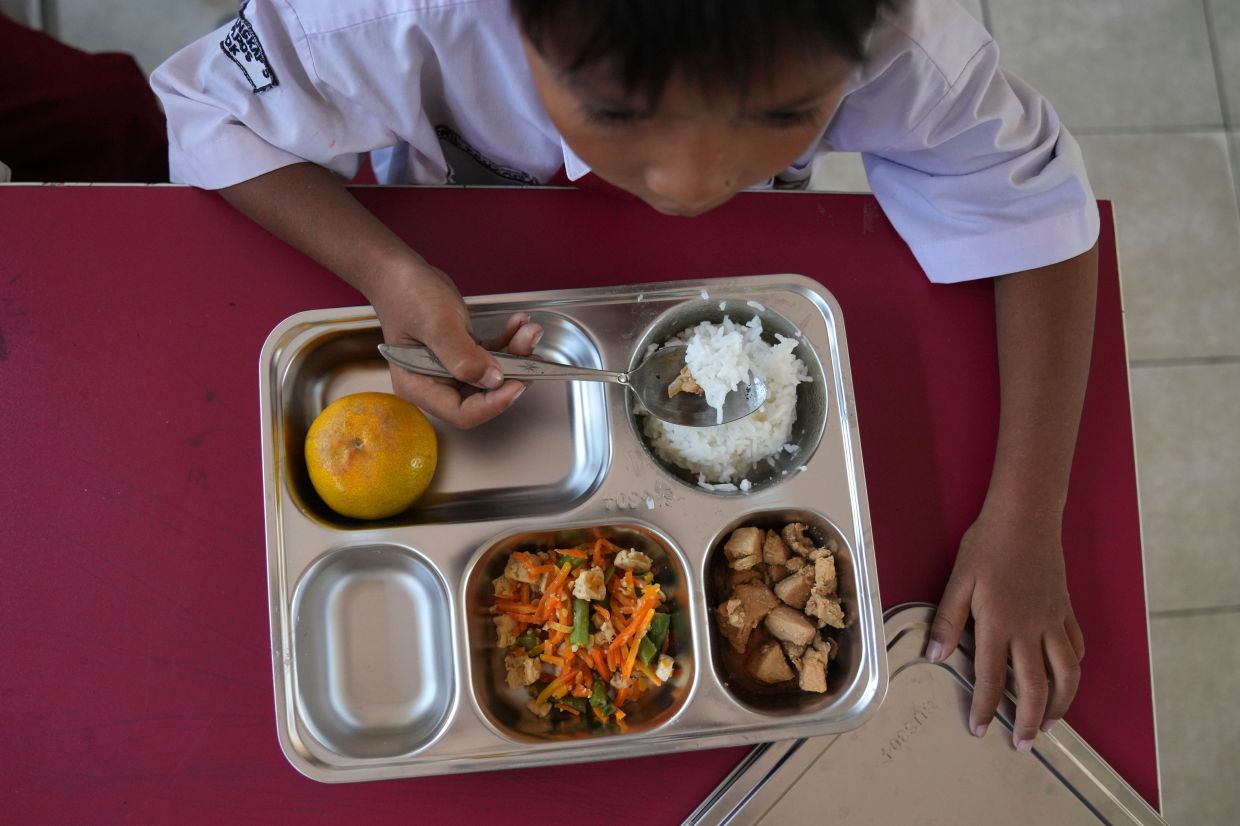
President Prabowo Subianto's ambitious free meals initiative, meant to address malnutrition and poverty across the Indonesian archipelago, faces intense pressure to be halted following a corruption investigation that has already claimed its inaugural agency chief. Indonesia Corruption Watch, the prominent civil society organisation that initially exposed irregularities within the programme, is now calling for a complete suspension of the roughly US$15 billion undertaking and the dissolution of the National Nutrition Agency, or BGN, which oversees the distribution of meals to over 60 million people across the nation.
The escalating crisis centres on Dadan Hindayana, the founding head of BGN, who was dismissed and subsequently detained on corruption charges this month. His removal came just days after authorities announced a formal investigation into his conduct. Four additional individuals, including two of Hindayana's deputy directors, have also been apprehended as part of the widening probe. Wana Alamsyah, who heads the law and investigation division at Indonesia Corruption Watch, argues that the current investigation represents merely the tip of a much larger institutional problem. In his assessment, authorities must cast a wider net to examine everyone who may have profited from the programme's significant governance lapses, including vendors, procurement committee members, and officials at all levels who participated in rolling out what he describes as a hastily conceived and poorly implemented initiative.
The scale of the potential misconduct is staggering given that BGN was established less than two years ago, yet already operates in nearly every corner of Indonesia. The agency's rapid expansion has created numerous vulnerabilities that corrupt actors appear to have exploited with ease. Indonesia Corruption Watch has previously published research documenting how the kitchen network underlying the free-meals programme is deeply susceptible to political patronage and insider dealing. A comprehensive review of 102 foundations managing kitchens across 38 provinces revealed extensive connections between these organisations and politically-connected individuals, including active politicians, government officials, military personnel, and law-enforcement figures. These entanglements raise serious questions about whether selections of contractors and fund allocations were made on merit or through backroom arrangements.
Wana's criticism extends to what he perceives as the government's passive stance toward mounting public complaints about the programme's execution. Reports of food poisoning incidents, substandard meal quality, and the distribution of ultra-processed foods have circulated on social media for months, yet authorities took no substantive action until a formal complaint forced their hand. He suggests the government's sudden commitment to cleaning house may be less about principled leadership and more about fiscal desperation. With Indonesia's budget increasingly strained by fuel subsidy costs exacerbated by regional geopolitical tensions, officials may be repackaging the programme primarily to manage the fiscal picture, he speculates, while sacrificing mid-level personnel to legitimise the inevitable downsizing and refocusing.
The new head of BGN, Nanik S. Deyang, has signalled a significant recalibration of the programme's trajectory. Rather than chasing the ambitious target of feeding 82.9 million people, the agency now intends to prioritise quality over quantity, focusing resources on remote regions where nutritional needs are greatest. By concentrating on areas of genuine poverty and malnutrition rather than implementing the programme uniformly across all schools nationwide, the revised approach addresses one of the major criticisms levelled by development experts and think tanks. The agency aims to spend less than the 268 trillion rupiah budgeted for this year by repurposing existing school canteens and other facilities instead of constructing new kitchen infrastructure. A moratorium on establishing additional kitchens has been imposed to allow time for tightened vetting of prospective vendors and operators.
President Prabowo has sought to project an image of zero tolerance for corruption within his flagship initiative, stating publicly that he will not permit the nation's resources to be misappropriated and promising that no exceptions will be tolerated regardless of the culprit's status. This rhetorical commitment, however, rings hollow to many observers given the systematic nature of the governance failures that have emerged. The programme's popularity with voters—who view free meals as a tangible benefit from their government—has made it politically difficult to acknowledge the full extent of mismanagement without risking public backlash.
Public discontent with the initiative has already surfaced on the streets. In mid-June, police clashed with student demonstrators in Jakarta who were protesting Prabowo's spending priorities and demanding the entire programme be scrapped. Subsequent protests erupted in multiple major cities, prompting authorities to deploy over 6,000 police and military personnel across the capital to maintain order. The deployment underscores the political sensitivity surrounding what was intended as a signature achievement for the new administration. Investor anxiety about Indonesia's fiscal health has also grown as the free-meals expenditure competes with other budgetary priorities. Some economists and research institutions have publicly questioned whether the programme can genuinely deliver on its promises of improved employment outcomes, better health indicators, and sustainable economic growth.
Independent research has added empirical weight to concerns about the programme's design and execution. A study by the Jakarta-based Centre of Economic and Law Studies found that 79 per cent of survey respondents were aware of potential conflicts of interest in how vendors were directly appointed to the programme, bypassing normal competitive bidding processes. An earlier investigation warned of risks including uneven meal distribution across regions, inconsistent food quality, and persistent budget inefficiencies. These findings suggest that the corruption issues now under investigation may be symptomatic of broader structural problems baked into the initiative from the outset, rather than isolated instances of individual malfeasance.
The geographical and sectoral scope of Indonesia Corruption Watch's concerns underscores why a narrow investigation focused only on top BGN officials would be insufficient. The foundations managing meal kitchens across the country operate with considerable autonomy, creating multiple points where procurement decisions can be manipulated or where politically-favoured contractors can be steered lucrative deals. The involvement of politically-connected figures—spanning the military, law enforcement, civil service, and business sectors—suggests that corrupt networks may have deliberately positioned themselves to profit from the programme's massive scale. Unless investigators follow the money through the entire chain from central budgets to local procurement committees to individual vendors, many perpetrators will escape accountability.
Wana's broader point about timing also merits serious consideration in the Malaysian context. The Indonesian government's apparent indifference to mounting evidence of problems throughout 2025, followed by sudden action only when fiscal pressures mounted, demonstrates how development programmes can become vehicles for elite capture and rent-seeking if proper oversight mechanisms are absent from inception. For Malaysia, which faces its own pressures to expand social spending programmes and ensure they reach vulnerable populations effectively, the Indonesian experience offers cautionary lessons about the necessity of robust institutional checks, transparent procurement processes, and responsive governance that acts on public concerns before they metastasise into systemic corruption.
The stakes for Indonesia extend beyond the immediate reputational damage to Prabowo's administration. The free-meals programme, whatever its eventual form, touches the lives of tens of millions of citizens and represents a significant share of public resources. How the government responds to corruption allegations—whether through genuine institutional reform or merely cosmetic personnel changes—will signal to investors, civil society, and ordinary citizens whether Indonesia's leadership is serious about accountability or merely performing anti-corruption theatre. The resolution of this crisis will likely influence not only the future trajectory of social welfare programmes in Indonesia but also public confidence in governance more broadly.