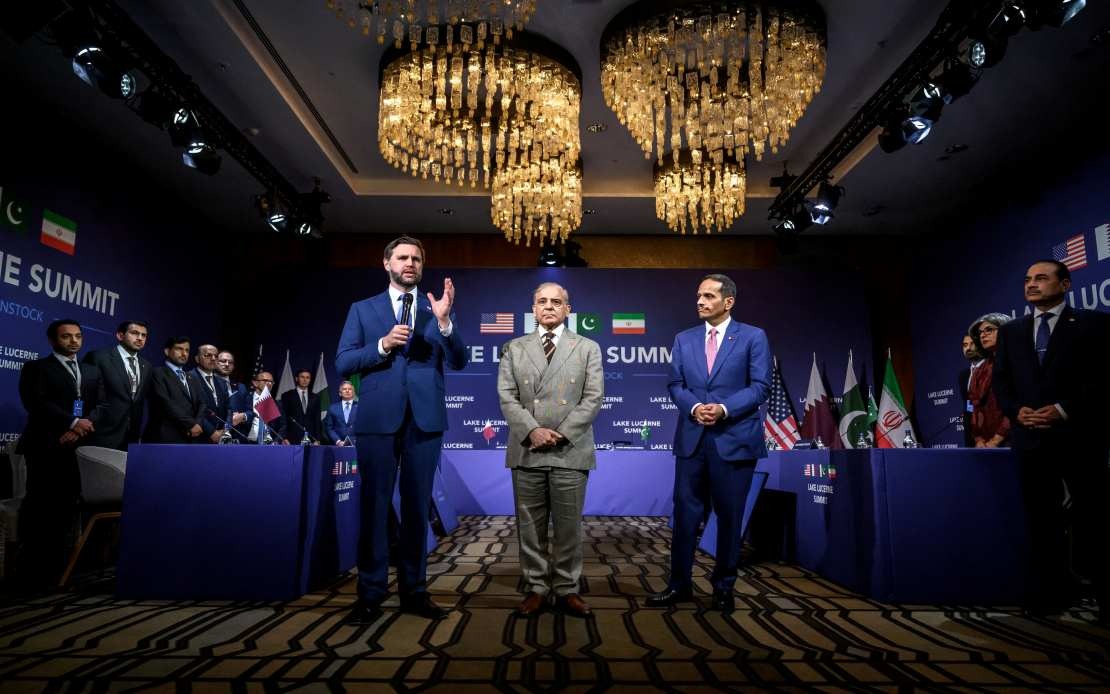
Diplomatic efforts to bridge the deepening divide between Iran and the United States have entered a new phase with the conclusion of initial talks held in Switzerland over the weekend. The first session of four-party negotiations, involving delegations from both countries alongside mediators from Qatar and Pakistan, wrapped up after roughly 80 minutes of substantive discussions. The engagement marks a significant step forward in implementing a memorandum of understanding signed just days earlier, which aims to arrest the cycle of military escalation that has destabilized the Middle East and threatens global shipping lanes.
The Swiss-hosted negotiations reflect a carefully constructed diplomatic architecture designed to defuse tensions that had reached critical levels. Both Tehran and Washington despatched their most senior officials to the Bürgenstock location, signalling the gravity with which each side views the negotiations. Leading the American delegation was Vice President JD Vance, while Iran fielded Parliament Speaker Mohammad Bagher Qalibaf and Foreign Minister Abbas Araghchi. The presence of such high-ranking figures underscores that these are not routine technical exchanges but rather high-stakes conversations with potential ramifications across the region.
For Malaysian observers and policymakers, the significance of these talks extends beyond bilateral US-Iran relations. The Middle East remains a critical geopolitical zone affecting global energy markets, international commerce, and regional stability—all matters of direct concern to Malaysia and Southeast Asia. Any escalation in Iranian-American tensions threatens the Strait of Hormuz, through which approximately one-third of seaborne traded oil passes globally. Malaysian shipping and commerce rely heavily on unimpeded access through this waterway, making the outcome of these negotiations relevant to economic interests far beyond the Persian Gulf.
The role of Qatar and Pakistan as mediators deserves particular attention. Qatar's involvement reflects its established position as a neutral regional actor capable of maintaining dialogue channels with both Washington and Tehran. Pakistan's participation adds another dimension, given its complex relationships with both parties and its considerable influence in Islamic world politics. For Malaysia, the mediation pattern demonstrates how smaller, strategically positioned nations can leverage diplomatic capital to broker international agreements—a model with potential relevance for ASEAN's own efforts to maintain stability and dialogue in Southeast Asia.
The suspension of talks after 80 minutes for internal consultations is entirely routine in such high-level negotiations. Each delegation required time to review the substance of discussions, consult with their respective capitals, and develop positions for subsequent sessions. This procedural pause does not indicate disagreement or breakdown but rather the careful, measured approach necessary when addressing fundamental security and economic concerns. The fact that both sides agreed to recess rather than abandon the format suggests mutual commitment to the process.
The interim agreement signed on Wednesday that prompted these talks addressed critical implementation details. Rather than serving as a final settlement of all differences between the two nations, the accord establishes a framework and timetable for confidence-building measures and concrete steps toward de-escalation. This graduated approach allows both governments to deliver tangible progress to domestic constituencies while maintaining flexibility for eventual broader agreements. The focus on reopening the Strait of Hormuz particularly reflects international concern about the economic consequences of continued tension.
The memorandum itself represents months of behind-the-scenes engagement, during which preliminary discussions established sufficient common ground to justify formal negotiations. Neither side entered these talks lightly. Iran faces international sanctions and economic pressure that a resolution could substantially alleviate, while the United States seeks to reduce military commitments in the region and decrease tensions that destabilize oil markets and complicate broader strategic priorities. These convergent interests, however limited, provided the foundation for talks to commence.
Regional implications warrant careful consideration. Saudi Arabia and other Gulf states have expressed interest in the outcomes of these negotiations, recognizing that American-Iranian stability directly affects their own security calculations. The involvement of Pakistan, which maintains complex relationships with both Iran and the Gulf states, ensures that Pakistani interests in regional balance are represented. For Malaysia and ASEAN, these developments illustrate how Middle Eastern affairs directly influence broader Asian geopolitics and economic stability.
The absence of immediate announcement regarding the next negotiating session reflects deliberate opacity designed to protect the talks from public pressure and hardline critics on either side. Both Washington and Tehran contain domestic constituencies skeptical of engagement with the other. By maintaining confidentiality around timelines and progress, negotiators reduce the opportunity for nationalist politicians to exploit details for domestic political purposes. This strategic discretion, though potentially frustrating to observers seeking transparency, often proves essential for successful diplomatic breakthroughs.
Moving forward, the pace and substance of subsequent rounds will determine whether this diplomatic opening represents a genuine turning point or merely a temporary pause in confrontation. Success requires both sides to demonstrate flexibility on substantive issues while maintaining the red lines essential to their respective national security calculations. For Malaysia and the broader Southeast Asian region, the outcome carries implications for energy security, maritime commerce, and the maintenance of a stable international rules-based order. The coming weeks will prove telling in whether this Swiss engagement inaugurates a new era of American-Iranian relations or merely provides a brief interlude in ongoing strategic competition.