A grieving mother in western Japan has launched a landmark legal challenge against state authorities, alleging that her teenage daughter's traumatic imprisonment and interrogation directly contributed to the girl's death from malnutrition. The case, filed at Kobe district court this week, represents one of the most severe documented consequences of Japan's controversial "hostage justice" system, a practice long criticised by international human rights organisations for prioritising confessions over genuine evidence and fundamental legal protections.
The plaintiff's 16-year-old daughter, referred to as Runa in court documents, was arrested in June of the previous year on suspicion of assaulting a patient at a disability care facility in Hyogo region. According to the legal complaint, Runa's alleged offence was extraordinarily minor: she had gently pressed her hand against a patient's chin to prevent the person from biting another service user during a facility Valentine's Day celebration. Insisting on her innocence from the moment of arrest, Runa endured eighteen days of incarceration before authorities entirely dropped all charges, acknowledging they lacked sufficient grounds to pursue prosecution. Devastatingly, the ordeal had already inflicted irreversible damage. Five months after her release, the teenager weighed merely 20 kilograms, a skeletal condition her mother described as rendering her "unrecognisable." She died in December, her body unable to recover from the psychological and physical degradation sustained during her detention.
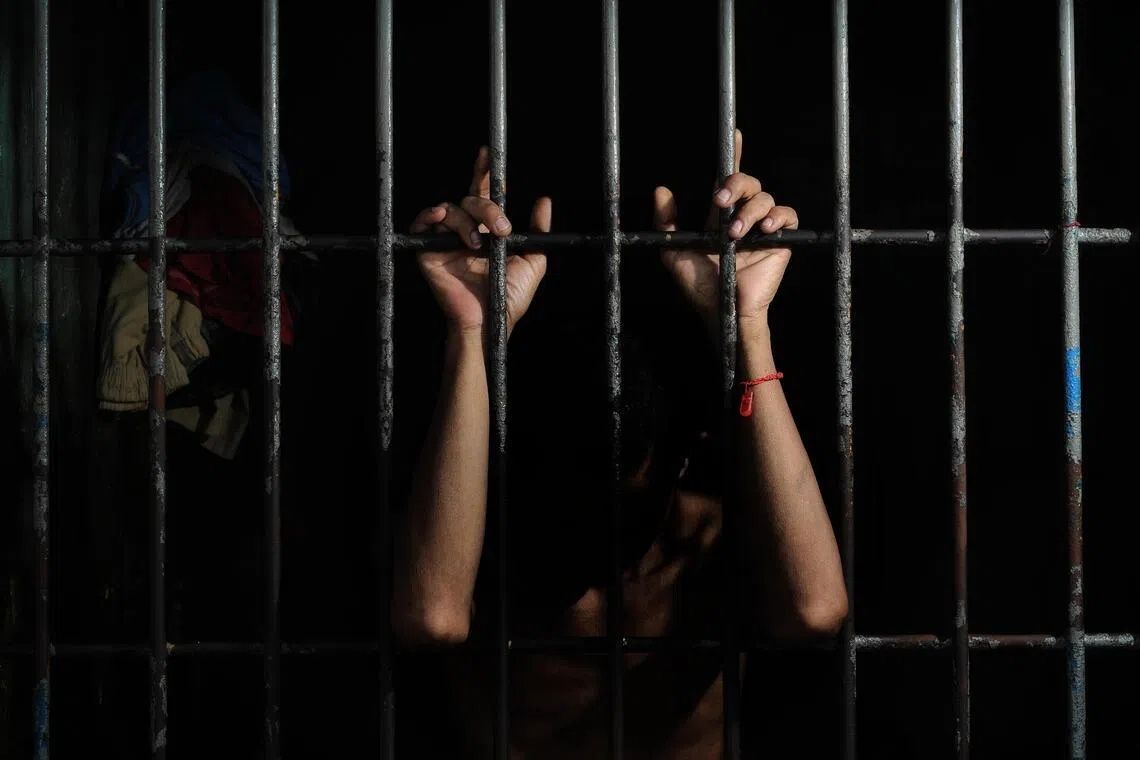
The mother's anguish underpins the lawsuit's central question: why was a minor with no criminal history subjected to prolonged custody over an allegation so trifling that prosecutors ultimately deemed it entirely without merit? Throughout her eighteen-day detention, Runa was systematically isolated from her family, permitted contact only with lawyers, and subjected to relentless pressure to fabricate a confession. Her own journal, maintained in custody, documents interrogators repeatedly insisting "You did it, didn't you? Just tell the truth," a formulaic approach that reflects the fundamental problem embedded within Japan's criminal justice apparatus. Masahiro Sasaki, the attorney representing Runa's mother, has emphasised that nothing in her background justified such severe restriction of liberty; living under parental supervision with zero delinquency record, she presented no credible flight risk or capacity to obstruct evidence. Yet prosecutors twice requested detention extensions whilst simultaneously blocking her lawyer's judicial appeals for release.
The complaint details psychological coercion tactics specifically designed to extract a confession from a vulnerable adolescent. Interrogators threatened Runa with placement in a reformatory facility and threatened to separate her permanently from her mother unless she admitted guilt. Such manipulation proved devastatingly effective; the detention triggered acute stress disorder, eating disorders, and post-traumatic stress syndrome, diagnoses that would subsequently define the remainder of her brief life. She only secured release after collapsing and vomiting so severely that she required emergency hospital treatment. Even then, freedom came not through legal validation but through prosecutorial discretion—a non-prosecution decision that implicitly acknowledged the charges' baselessness whilst offering no immediate remedy for the damage inflicted.
Runa's death exemplifies the dark endpoint of systemic dysfunctions that international human rights bodies have long documented with growing alarm. The term "hostage justice" itself encapsulates the mechanism: suspects' exercise of fundamental rights—remaining silent, denying charges, refusing to incriminate themselves—effectively triggers lengthier detention and psychological intimidation, creating perverse incentives to confess rather than maintain innocence. Japanese law enforcement has developed a sophisticated apparatus for breaking suspect resistance, relying on extended solitary detention, restricted communication, and intensive interrogation sessions designed to exhaust psychological defences rather than uncover genuine truth. Confessions function as de-facto conditions for release, transforming the criminal justice system into a coercive instrument that presumes guilt and employs detention as punishment preceding any trial or conviction.
The broader systemic context renders Runa's case neither anomalous nor unprecedented. International observers have documented numerous instances where this framework produced catastrophic injustice, most notably the decades-long wrongful imprisonment of Iwao Hakamada, once recognised as the world's longest-serving death-row inmate. Hakamada's eventual exoneration in 2024 revealed that his convictions rested substantially upon confessions extracted during interrogations the Supreme Court itself ruled were "inhumane." His case exposed not merely individual prosecutorial overreach but structural deficiencies embedded throughout Japan's investigative and judicial institutions. Multiple defence lawyers, human rights advocates, and now bereaved families are collectively demonstrating that the hostage justice system produces consequences far exceeding detention statistics—it generates broken lives, wrongful convictions, and in Runa's case, premature death.
The compensation claim seeks 100 million yen, reflecting not merely financial restitution but acknowledgment of state responsibility for irreversible harm. This figure represents an attempt to quantify institutional culpability for a preventable tragedy: the death of a teenager from malnutrition directly traceable to detention over charges subsequently recognised as unfounded. Yet no monetary award could restore what was lost. The mother's statement—"I want to know what happened to her, and why she was arrested, detained and had to die"—expresses a more fundamental demand: accountability for systems that transform innocent children into legal casualties, that weaponise isolation and psychological coercion against the vulnerable, and that prioritise extracting confessions over pursuing justice.
For Malaysian observers and Southeast Asian legal communities, Runa's case illuminates the consequences when criminal justice systems elevate confession-extraction above evidence-gathering and presume guilt rather than innocence. Japan's advanced economy and developed legal infrastructure have proven insufficient to prevent such systematic abuses, suggesting that institutional dysfunction around interrogation practices and pre-trial detention extends beyond resource constraints. The case also underscores how procedural protections—theoretically available to suspects through legal representation—prove inadequate when structural pressure makes confession the path of least resistance. As Malaysia and other regional jurisdictions continue developing their own criminal justice frameworks, Runa's death serves as a cautionary testament to institutional reform's necessity. The Kobe district court's reception of this case may signal whether Japanese authorities will finally acknowledge that hostage justice produces casualties whose cost extends far beyond detention records into human tragedy and preventable death.