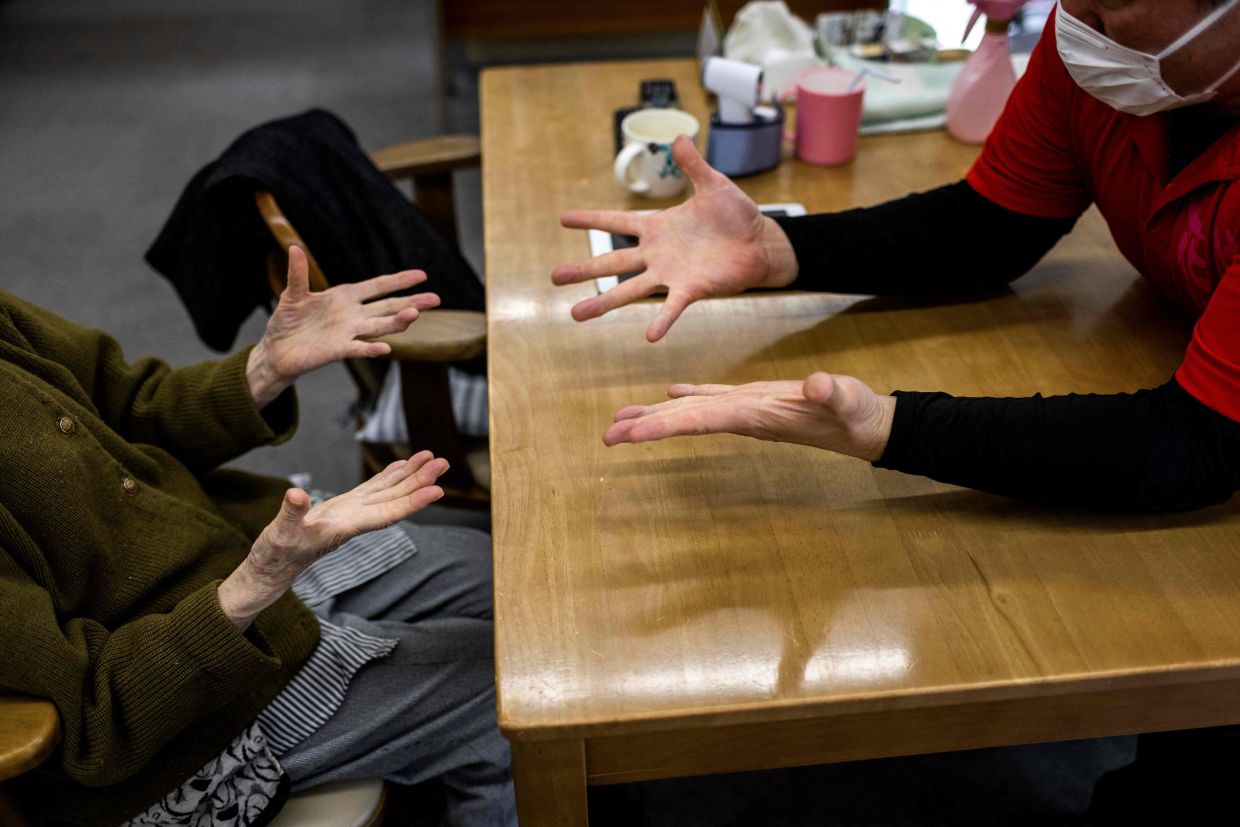
Yo Kusakabe, a retired geriatrician from Osaka, has sparked widespread controversy with a radical proposition that challenges conventional thinking about elderly care: selective amputation of immobilised limbs to reduce the physical strain on exhausted caregivers. His 2003 novel exploring this concept, "Haiyoshin (Useless Body)," has finally reached the cinema this month, forcing Japanese audiences to confront an uncomfortable question about how their nation will sustain care for its rapidly ageing population. The film adaptation has divided critics, with some labelling it the year's most shocking and controversial release, while others acknowledge it raises legitimate ethical questions about end-of-life dignity in contemporary Japan.
Kusakabe's provocative idea emerges from decades of clinical experience and a clear-eyed assessment of Japan's demographic crisis. At 70 years old, the former specialist articulated his reasoning with clinical precision: removing paralysed arms and legs would significantly lighten patients, directly reducing the physical burden on caregivers whose backs and bodies deteriorate from constant lifting of immobile bodies. He envisions this as a potential circuit-breaker for an industry approaching collapse, though he emphasises this would only occur with explicit patient consent. His argument extends beyond simple ergonomics—he notes that non-functional limbs create practical complications during daily care routines, from tangling in clothing during dressing to requiring extended bathing time and frequent repositioning during the night.
The timing of the film's release coincides with Japan facing an acute care worker shortage that threatens the foundations of its social support system. Government projections estimate a deficit of approximately 570,000 care workers by 2040, even as the proportion of elderly citizens continues climbing. Nearly one-third of Japan's population has already reached age 65 or beyond, creating unprecedented demand for professional and family-based care. Kusakabe's dystopian novel, considered unfilmable when first published over two decades ago, suddenly resonates as plausible prophecy rather than science fiction. The work resonates across Southeast Asia too, where several nations are entering their own demographic transitions and facing comparable pressures on care infrastructure.
Beyond the provocative central premise, Kusakabe's novel grapples with broader systemic failures in how Japanese society approaches elderly care. The narrative unflinchingly depicts caregiver shortages, family members overwhelmed by impossible demands, and instances of abuse and neglect of vulnerable patients. These issues are not fictional abstractions but recurring tragedies documented in Japanese media. Public broadcaster NHK's 2016 investigation uncovered a grim statistic: homicides by desperate, exhausted caregivers—termed "kaigo satsujin" (caregiving murders)—were occurring at a rate of approximately once every two weeks. This cultural acknowledgement of care-related violence demonstrates how normalized the sector's dysfunction has become in Japanese consciousness.
What distinguishes Kusakabe's provocative framing is his assertion that amputation could theoretically benefit patients themselves, not merely serve caregiver convenience. Within the film's narrative, elderly patients with paralysed limbs express relief at removing useless appendages that cause phantom pain, throb persistently, or convulse unexpectedly. Freed from physical encumbrance, amputees in the story discover newfound mobility and autonomy, navigating wheelchairs with greater dexterity and engaging in activities previously impossible. The film depicts these patients experiencing genuine improvement in quality of life metrics beyond mere caregiver burden reduction. This reframing—amputation as potentially liberating rather than solely utilitarian—proved sufficiently nuanced that some online reviewers acknowledged the concept contained legitimate philosophical merit despite its apparent ruthlessness.
Kusakabe poses a deliberately uncomfortable ethical question: what constitutes genuine dignity for bedridden elderly patients? He contrasts two scenarios—the agony of forcing paralysed limbs through garment sleeves during dressing versus freedom from physical pain altogether. This challenge strikes at the heart of Japanese end-of-life practices, which he argues prioritise keeping patients biologically alive above all other considerations. Feeding tubes and intravenous nutrition for patients aged 75 and older receive heavy insurance coverage and are deployed with remarkable frequency, even for those clearly approaching natural death. Families, driven by emotional inability to "do nothing," often insist on these interventions despite questionable medical benefit and potential suffering inflicted on dying patients. Kusakabe's critique extends beyond individual cases to describe a broader cultural phenomenon where Japanese society "blindly believes that even those clearly better off being left to die must be kept alive."
This cultural pattern stands in sharp contrast to practices in Scandinavian nations, where palliative care best practice acknowledges that discontinuing nutrition for patients who stop eating represents appropriate end-of-life management. Sweden and Denmark have developed frameworks where allowing natural death takes precedence over aggressive life extension when prognosis is terminal. The divergence reflects different philosophical approaches to aging, family obligation, and the meaning of medical care itself. For Malaysian readers and other Southeast Asian audiences, this comparison offers instructive lessons about how different societies navigate the tension between extending biological life and honouring patient autonomy and comfort. Japan's approach, Kusakabe argues, ultimately increases caregiver burden by extending the period of intensive care required, pushing the system toward the very breaking point his novel imagines.
Despite these provocative arguments, Kusakabe himself expresses scepticism that radical amputation solutions would actually gain traction in contemporary Japanese society. He acknowledges that Japan's cultural conservatism, ethical frameworks, and family structures militate against embracing such extreme interventions. The inability of Japanese institutions and individuals to embrace "bold, rational approaches" to end-of-life issues suggests amputation would likely remain forever theoretical rather than practical. His own novel ultimately undermines confidence in the concept through narrative tragedy—the initial enthusiasm around elective amputation is brutally deflated by unforeseen consequences that shatter the protagonist's belief in the intervention's efficacy.
The film's release and the accompanying controversy it has generated serve a deeper purpose than promoting amputation specifically. By presenting an extreme solution, Kusakabe forces mainstream discourse to confront the actual crisis underlying his fictional proposal: an elderly care system approaching breaking point with insufficient workers, inadequate compensation, and burnout rates that destroy caregivers physically and psychologically. The taboo nature of amputation discussion creates permission for examining more systemic alternatives that Japanese policymakers have largely avoided. These might include investment in robotic assistance, radical restructuring of family caregiving expectations, expansion of palliative care frameworks, or fundamental reassessment of what constitutes appropriate end-of-life intervention.
For regional observers, the Japanese case illustrates challenges approaching rapidly across Southeast Asia. Malaysia, Thailand, and Indonesia all face accelerating demographic ageing, with projections showing elderly populations doubling within decades. Japan's current struggles offer cautionary lessons about inadequate planning for care infrastructure, insufficient wages for care workers, and the social fracturing that results when aging populations outpace institutional capacity. Kusakabe's controversial film, whatever its narrative fate for the amputation concept itself, succeeds in breaking silence around care sector dysfunction. Whether through his extreme proposal or alternative reforms, the underlying message resonates across ageing Asia: confronting these challenges requires courage, investment, and willingness to question inherited assumptions about how societies should care for their elderly citizens.