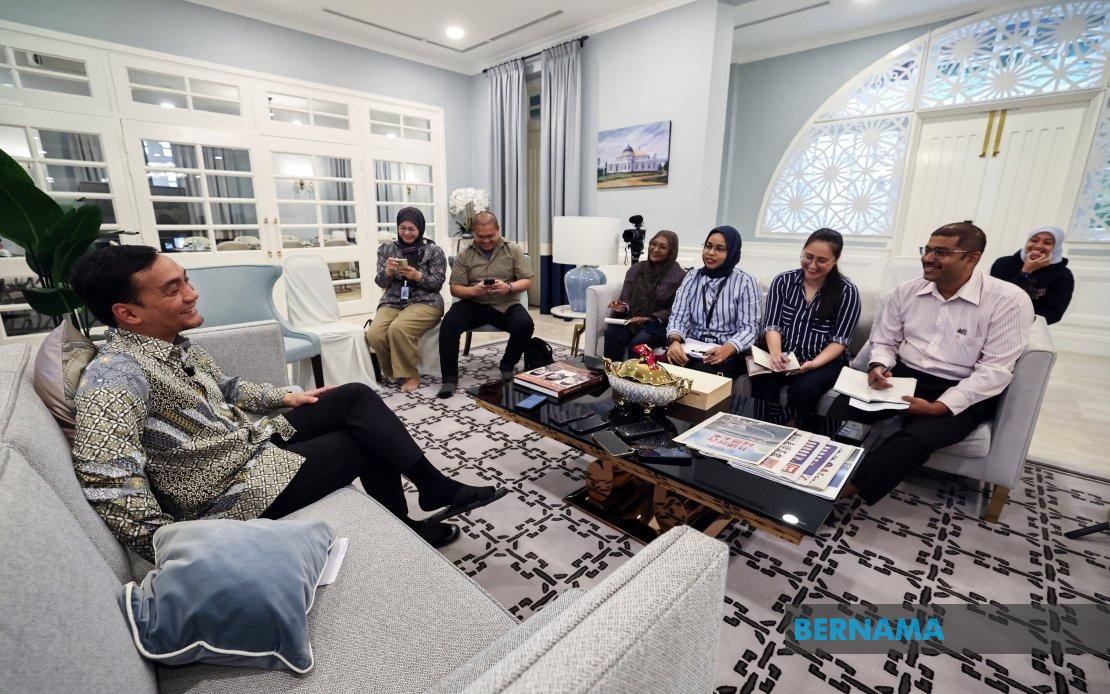
With the Johor state election set for July 11, Johor Barisan Nasional chairman Datuk Onn Hafiz Ghazi has delivered a message of reassurance to party members who will not be contesting as candidates, urging them to view their non-selection not as a dead end but as a transition to different avenues of service within the movement. In an interview at his official residence in Saujana, the Johor Menteri Besar acknowledged the disappointment that inevitably accompanies rejection in a crowded political field, yet framed the situation as an opportunity for members to contribute through alternative roles that the coalition must inevitably fill.
Onn Hafiz emphasized that the struggle to strengthen the party and ultimately serve the people transcends individual candidacies. He pointed out that while the number of available state assembly seats necessarily limits how many members can contest, the political structure creates numerous other positions where capable individuals can make meaningful contributions. These opportunities span from involvement in parliamentary campaigns to roles within the party machinery itself, allowing rejected candidates to redirect their energy and ambition toward the broader organisational objectives that Barisan Nasional pursues across Malaysia's political landscape.
The candidate selection process itself remains fluid at this critical juncture, with Onn Hafiz revealing that approximately 80 per cent of selections have been determined but nothing remains final until appointed candidates formally receive their watikah, or letters of appointment. This staged approach reflects the complexity inherent in managing competing claims within a large coalition, where regional party chapters, component parties including UMNO, and national leadership must all reach consensus on contested seats. Notably, Onn Hafiz disclosed that previous administrations have even withdrawn watikah letters that had already been issued, indicating that aspirants should harbour no illusions of certainty until formal appointment materialises.
The selection criteria that BN has applied reveal an attempt to broaden the coalition's appeal across generational and professional divides. Rather than privileging youth or experience, the party has sought candidates from diverse professional backgrounds who demonstrate strong roots within their intended constituencies. Onn Hafiz explicitly rejected the notion that age should be a primary consideration, arguing instead that capability and genuine commitment to constituent welfare matter far more than whether a candidate is young and energetic or older and experienced. A candidate must be locally known, acceptable to the community, and genuinely willing to serve—qualities that transcend demographic categories and speak to the WALI framework that BN previously articulated, emphasising candidates who are winnable, acceptable, and likeable.
Crucially, the selection process cannot proceed through the unilateral decisions of state leadership alone. Onn Hafiz emphasised that BN chairman and UMNO president Datuk Seri Dr Ahmad Zahid Hamidi, along with senior figures across the coalition, must collectively validate major candidate appointments. This requirement for multi-level approval, while potentially cumbersome, reflects the delicate balance required to maintain cohesion within a coalition that encompasses multiple component parties, each with its own constituencies and leadership structures. Such consultation mechanisms, though they slow the process, help prevent the perception of autocratic decision-making that could inflame internal tensions at a critical moment in the electoral cycle.
Among the most significant strategic considerations for Johor BN is the composition and engagement of the younger electorate. Voters aged below 40 constitute between 20 and 40 per cent of Johor's population, a bloc substantial enough to determine electoral outcomes in closely contested races. Recognising this demographic reality, Onn Hafiz stated that most of the coalition's elected representatives have established engagement with this segment, creating a foundation upon which to build support. The implication is clear: younger voters, far from being peripheral to BN's electoral mathematics, occupy a central position in determining whether the coalition can secure another term governing Malaysia's southern economic powerhouse.
The turnout mobilisation effort extends beyond state boundaries, reflecting Johor's unique position as a state where a significant workforce crosses the border daily into Singapore. Onn Hafiz issued a specific call for Johoreans working across the Causeway to exercise their voting rights on July 11, recognising both their interests in state governance and the symbolic importance of their participation in affirming democratic legitimacy. This targeted appeal underscores how Johor's economy and demographics create voting patterns that differ from other Malaysian states, requiring tailored campaign strategies that acknowledge the transnational dimensions of residency and work.
The broader argument underpinning Onn Hafiz's position rests on the proposition that higher voter turnout strengthens the representative legitimacy of whichever government emerges victorious. In a state that practices democracy, so the logic goes, the depth of public participation lends greater moral authority to the mandate that results. This framing transforms election day from a routine procedural exercise into an occasion for reaffirming the democratic contract between governed and governors, elevating the significance of each individual ballot cast. For Onn Hafiz and the outgoing BN administration, maximising turnout serves the practical purpose of potentially inflating the majority, whilst also lending the eventual result greater legitimacy across diverse segments of Johor society.
Onn Hafiz's personal accountability for the record of the BN state government anchors his public messaging as election day approaches. He declared that his administration has striven to deliver optimal outcomes for Johoreans and stands ready to extend that service should voters grant another mandate. The implicit covenant here is straightforward: judge us by our past performance, and decide whether we have earned the right to continue governing. This appeal to record rather than mere promises represents a strategic choice by an incumbent administration confident enough in its achievements to rest its case substantially on documented performance rather than future pledges alone.
With nomination day scheduled for June 27 and early voting set for July 7, the selection process rapidly approaches its conclusion. For party members who will not receive watikah letters, the weeks ahead demand a conscious choice about whether to channel their disappointed ambitions into supporting the BN campaign machinery or risk allowing resentment to fester and potentially undermine the grassroots mobilisation that determines electoral outcomes. Onn Hafiz's appeal for steadfastness, framed as adherence to party principle rather than blind obedience to leadership, attempts to provide a psychological framework within which disappointed members might process rejection and redirect their energies productively. The success of this appeal will likely determine whether internal dissatisfaction translates into measurable erosion of BN support on polling day.