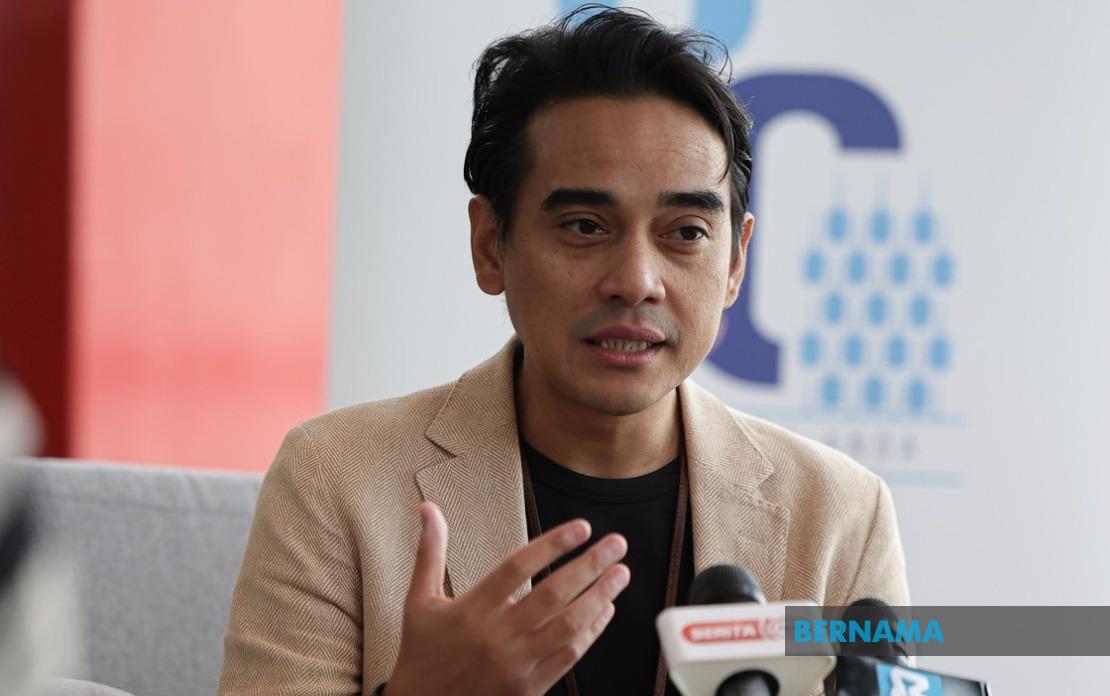
The future of journalism in Malaysia and across Southeast Asia hinges on media practitioners' willingness to integrate artificial intelligence into their daily work, according to Ashwad Ismail, Director-General of Broadcasting. Speaking in Kuala Lumpur on June 17, he emphasized that those who fail to harness AI's capabilities risk obsolescence in an industry undergoing rapid technological transformation, even as others who master these tools surge ahead.
Ashwad's framing of AI represents a significant departure from the anxiety that has gripped newsrooms worldwide since generative AI entered the mainstream. Rather than view the technology as an existential threat to journalism jobs, he positioned it as a professional asset that enhances rather than displaces human talent. His message carries particular resonance in Malaysia, where media organizations continue navigating digital disruption while managing legacy business models dependent on advertising revenue and traditional distribution channels.
The broadcasting chief articulated a crucial distinction between AI replacing journalists and AI replacing journalists who lack technological adaptability. This nuance acknowledges that competitive advantage in modern media increasingly belongs to those who understand how to leverage AI for research, fact-checking, initial drafts, data analysis, and audience engagement. The warning is implicit: professional stagnation in an era of rapid technological change carries real career consequences, regardless of journalistic talent or experience.
Addressing concerns that preoccupy many industry leaders, Ashwad identified two critical vulnerabilities within Malaysia's media sector. First, he highlighted widespread difficulty among practitioners in adapting to technological shifts—a challenge particularly acute in organizations where digital transformation efforts lag behind competitors in developed markets. Second, he acknowledged the real threat of employment losses, a prospect that generates legitimate anxiety even as industry analysts debate whether AI ultimately expands or contracts newsroom employment.
Yet Ashwad argued that responsible AI adoption requires guardrails rather than rejection. He called for clear guidelines governing how media organizations deploy artificial intelligence, establishing boundaries that prioritize human oversight and editorial integrity. Such frameworks become essential when considering AI's documented vulnerabilities: hallucinations that fabricate facts, biases embedded in training data, and the risk that algorithmic decision-making could erode editorial independence or compromise journalistic judgment. Without institutional guidelines, newsrooms risk undermining their credibility precisely when public trust in media institutions already faces challenges.
The purpose of such guidelines extends beyond risk mitigation. According to Ashwad, they should ensure AI augments journalistic capacity and elevates the quality of reporting. In practice, this might mean using AI to identify patterns in large datasets that would overwhelm human researchers, to monitor social media for emerging stories, to assist with initial transcription and summarization, or to personalize content delivery. Properly implemented, these applications free journalists from routine tasks, allowing them to focus on investigation, analysis, and the nuanced storytelling that defines quality journalism.
Differently configured, however, AI deployment could commodify journalism further, pressuring organizations to maximize output and minimize costs rather than investing in deeper reporting. The distinction between AI as an enabler of better journalism and AI as a tool for cost-cutting operates largely at the institutional level, dependent on editorial leadership's priorities and newsroom culture. Ashwad's emphasis on guidelines implicitly acknowledges this tension.
Crucially, Ashwad grounded his argument about AI adoption within a broader conversation about media credibility. He identified hyperlocal reporting and authentic community engagement as foundational to rebuilding trust in journalism—precisely the kinds of work that require human judgment, local knowledge, and genuine relationships. This positioning reconciles the apparent contradiction between technological innovation and traditional journalistic values. AI handles certain technical functions, but the human element—the storyteller's voice, the community connection, the editorial conscience—remains irreducible and central to journalism's social mission.
This emphasis on the human dimension reflects a sophisticated understanding of why audiences increasingly question mainstream media. Trust erodes not primarily because of technological inadequacy but because of perceived distance, conflicts of interest, or failure to address community concerns. No algorithm restores confidence; only authentic engagement rooted in shared purpose does. Ashwad's insistence that "the human touch matters" reframes the AI discussion within journalism's essential function: serving as a trusted intermediary between communities and information.
For Malaysian journalists and newsroom managers, the implications are multifaceted. Organizations must invest in training programs that build genuine AI literacy rather than superficial familiarity. Educational institutions training future journalists should integrate AI fundamentals into curricula. Professional associations might develop guidelines aligned with Ashwad's call for responsible deployment. Individual practitioners face the entrepreneurial challenge of continuous learning in an environment where technological fluency becomes a baseline professional expectation rather than a specialized skill.
The remarks also position Malaysia within regional and global conversations about media's digital future. Southeast Asian news organizations often operate with fewer resources than Western counterparts, potentially making AI tools particularly valuable for amplifying limited staff capacity. Yet the region's diverse regulatory environments and varying levels of press freedom mean that AI adoption cannot follow a single template. Malaysian organizations navigating these considerations have an opportunity to pioneer responsible, community-focused AI implementation that other regional media outlets might emulate.
Ashwad's message ultimately articulates a path between techno-pessimism and techno-utopianism. Journalism has always adapted to new tools—from photography to broadcast to digital platforms—while retaining its essential function. AI represents another chapter in this ongoing adaptation. The question is not whether to embrace AI, but how to harness it in service of journalism's core mission: informing the public, holding power accountable, and serving communities with integrity. For Malaysian journalists contemplating their career trajectories, that distinction may prove career-defining.