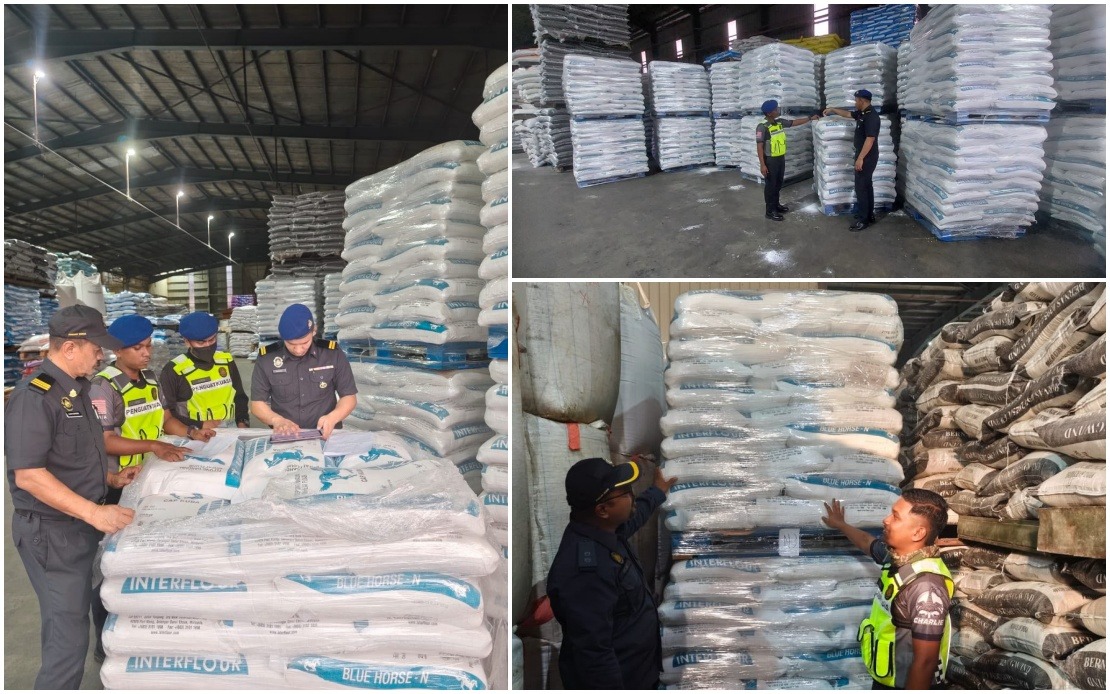
Authorities in Kedah have cracked down on an animal feed processing factory suspected of illegally stockpiling wheat flour without the required government permits. The Ministry of Domestic Trade and Cost of Living (KPDN) conducted an enforcement operation at the Kuala Ketil Industrial Area facility, discovering a substantial cache of flour that the company had failed to legitimately authorise for storage and use.
The raid, executed on June 15 by four enforcement officers from the Baling branch at approximately 4.30 pm, uncovered wheat flour that the factory had been incorporating into its animal feed production processes. According to Kedah KPDN director Muhammad Nizam Jamaludin, the inspection revealed a significant quantity of the subsidised commodity being held without proper documentation or approval from the relevant Supply Controller authority.
The enforcement action resulted in the seizure of 53,325 kilogrammes of flour with an estimated market value of RM100,251. This substantial haul highlights the scale of potential flour diversion in the industrial processing sector, where subsidised agricultural commodities can be subject to misuse or unauthorised trading. The seized flour is now being held pending completion of the investigation.
When questioned during the operation, a 25-year-old individual managing the facility could not furnish any permit or authorisation documentation that would have legitimised the flour storage. The absence of proper Supply Controller approval represents a clear violation of regulatory requirements governing subsidised commodity handling in Malaysia. Such documentation is mandatory for any entity seeking to maintain stocks of controlled agricultural inputs, particularly those benefiting from government price support schemes.
The investigation is proceeding under Section 21 of the Control of Supplies Act 1961, legislation designed to prevent misuse of price-controlled goods and maintain equitable distribution across the economy. This legal framework empowers authorities to take decisive action against parties found diverting or misusing subsidised commodities that are intended to benefit specific sectors or reach intended beneficiaries at controlled prices.
The KPDN's enforcement effort reflects broader concerns about flour diversion in Malaysia's supply chain. Wheat flour remains a strategically important commodity, with subsidies helping to maintain affordability for consumers and supporting industries reliant on flour inputs. Unauthorised stockpiling or redirection of these subsidised supplies can distort market dynamics and undermine government policy objectives aimed at controlling living costs. When commercial entities accumulate flour without proper oversight, the commodity may be diverted to unintended uses or sold at premium prices, effectively circumventing price controls.
This raid underscores the ministry's commitment to rigorous enforcement against supply chain violations. Muhammad Nizam's statement warning of firm action against any party found misusing or diverting subsidised goods signals that regulatory agencies are actively monitoring industrial storage facilities and processing operations. Such targeted enforcement sends a clear message to the business community regarding compliance expectations and the consequences of operating outside regulatory frameworks.
For animal feed manufacturers specifically, the incident raises important questions about raw material sourcing and documentation standards. While flour can legitimately be used in animal feed formulations, processors must obtain proper authorisation and maintain transparent supply chain records. The facility's failure to secure required permits suggests either deliberate non-compliance or inadequate understanding of regulatory obligations, both of which warrant corrective action.
The seizure also reflects underlying vulnerabilities in commodity tracking systems. With thousands of facilities processing agricultural inputs across the country, comprehensive oversight requires both regular inspections and intelligence-led operations. The KPDN's ability to identify and act on this violation demonstrates capacity in targeted enforcement, though the case suggests that without systematic verification, unauthorised stockpiling may persist across various industrial sectors.
Looking ahead, this enforcement action will likely prompt increased scrutiny of animal feed manufacturing facilities and other industries using flour as a raw material. Regulatory bodies may intensify permit verification procedures and conduct follow-up inspections at similar operations. Facility managers will face pressure to ensure complete documentation compliance, particularly given the publicity surrounding enforcement outcomes.
The case also highlights interconnections between price control policies and enforcement capacity. Malaysia's approach to maintaining affordable flour through subsidies creates incentive structures that can encourage diversion if monitoring is insufficient. Balancing supportive pricing with robust supply chain integrity requires ongoing investment in inspection resources and inter-agency coordination to detect and deter violations across diverse operational environments.