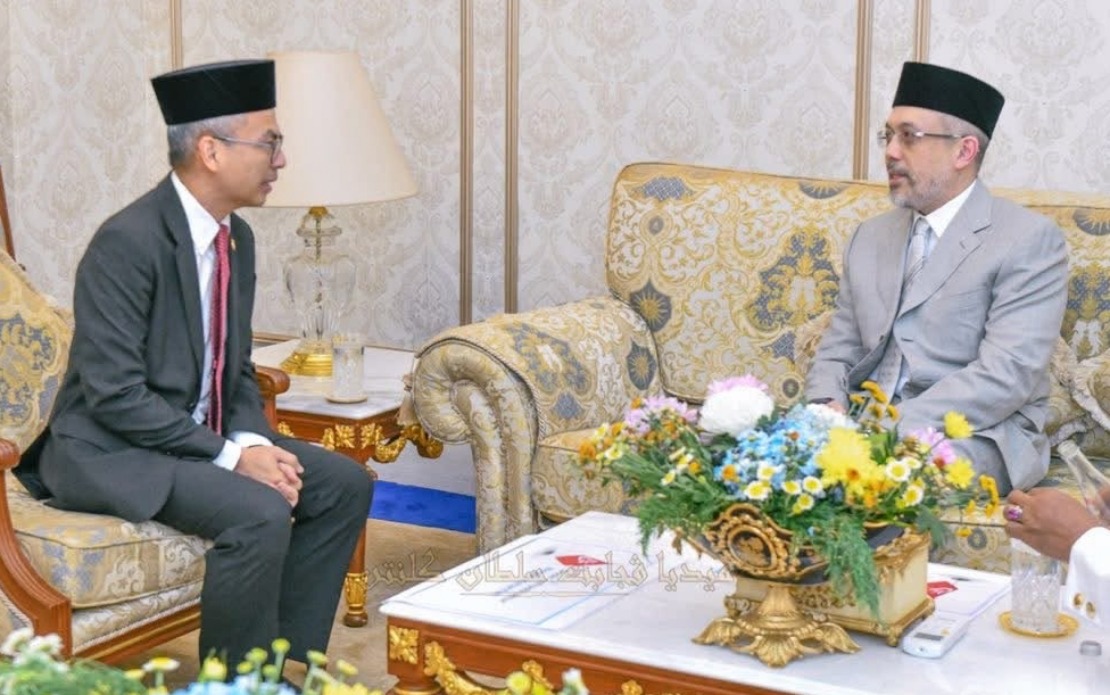
Tengku Muhammad Fakhry Petra, the Crown Prince of Kelantan, received Communications Minister Datuk Fahmi Fadzil at Kota Lama Palace in Kota Bharu on June 17, providing a formal platform for discussing emerging challenges in Malaysia's digital landscape. The audience, which commenced at 5 pm, represented a significant engagement between the state's royal institution and the federal ministry responsible for overseeing the nation's communications infrastructure and regulatory environment.
According to a statement from the Kelantan Sultan's Media Office, the purpose of the meeting centred on updating the Crown Prince regarding recent developments within the Ministry of Communications' operational scope. This briefing mechanism reflects the traditional consultation protocols observed within Malaysia's constitutional framework, whereby senior government officials maintain regular communication with royal households on matters of national importance, particularly those affecting public institutions and social stability.
The conversation between Tengku Muhammad Fakhry and Minister Fahmi placed particular emphasis on the proliferation of fraudulent social media accounts, a phenomenon that has intensified across major digital platforms in recent months. These inauthentic accounts have become vectors for coordinated disinformation campaigns, enabling bad actors to amplify false narratives and misleading content with minimal accountability. For Malaysian policymakers and the royal institution alike, this represents a tangible threat to information integrity and public discourse.
Among the most concerning manifestations of this problem is the deliberate spread of false news and defamatory content targeting the Malaysian Royal Institution. The Crown Prince's engagement with the Communications Minister underscores official awareness that the monarchy faces heightened vulnerability to coordinated online attacks and reputation damage orchestrated through networks of inauthentic accounts. Such campaigns can erode public confidence in constitutional institutions and create divisive narratives that destabilise national cohesion.
The meeting extended beyond formal policy discussion, with Tengku Muhammad Fakhry accepting a memento from Minister Fahmi as a gesture of courtesy and respect. This exchange, though symbolic, carries significance within Malaysia's diplomatic etiquette and signals the Crown Prince's receptiveness to the ministry's agenda on digital governance. The presentation of gifts at such occasions reinforces the personal dimension of high-level meetings and demonstrates commitment to collaborative problem-solving across institutional boundaries.
Minister Fahmi's delegation included Senior Private Secretary MohamadAsif Afifi Mohd Yusof and accompanying officer Tuan Ahmad Afifi Hamdan Tuan Aziz, along with supporting staff from the ministry's office. This composition reflected the formality and importance attributed to the engagement, with appropriate representation across both administrative and protocol functions. The inclusion of senior private office officials signalled that the matters discussed warranted careful documentation and potential escalation within government channels.
The gathering also incorporated senior officers from the Kelantan Sultan's Office, ensuring that the royal household's administrative apparatus remained fully engaged throughout the proceedings. This institutional participation reinforces the collaborative nature of the engagement and indicates that dialogue on digital governance challenges now extends beyond federal ministries to encompass state-level royal administration. Such coordination is essential given that information security and public messaging transcend jurisdictional boundaries within Malaysia's federal structure.
The hour-long duration of the audience suggests substantive discussion rather than perfunctory protocol. For a meeting of this format and audience composition, the extended timeframe indicates that detailed briefings and policy explanations occupied the agenda, moving beyond ceremonial pleasantries. This intensity of engagement reflects the gravity with which government officials and the royal institution view threats to institutional integrity emanating from the digital sphere.
The subsequent friendly meet-and-greet and photographic session served to humanise the formal proceedings and generate accessible documentation of the interaction. In contemporary governance, such visual records serve multiple functions: they communicate to broader constituencies that institutional leaders are actively addressing digital governance challenges, they provide media-friendly content that shapes public narrative, and they create tangible evidence of coordinated effort between monarchy and executive authority.
For Malaysia and the Southeast Asian region more broadly, this meeting reflects intensifying governmental concern regarding weaponised disinformation and the coordinated use of fake accounts as tools for institutional destabilisation. The region has witnessed escalating sophistication in online influence operations, with state and non-state actors deploying inauthentic networks to undermine trust in constitutional institutions, sow political division, and amplify extremist narratives. The engagement between royal authority and communications ministry authority demonstrates that Malaysia's institutional leadership recognises these threats as sufficiently serious to warrant direct consultation and coordinated response mechanisms.
The broader implications extend to questions of regulatory capacity and institutional resilience. While the ministry formally oversees communications infrastructure, the involvement of royal institutions signals recognition that protection of institutional legitimacy increasingly requires palace-level awareness of digital threats. This conversation reflects an evolution in governance thinking, where traditional notions of institutional authority must be defended not only through conventional channels but also through vigilance against sophisticated online campaigns designed to exploit cultural divisions and undermine public confidence in constitutional arrangements that have anchored Malaysia's political stability for decades.