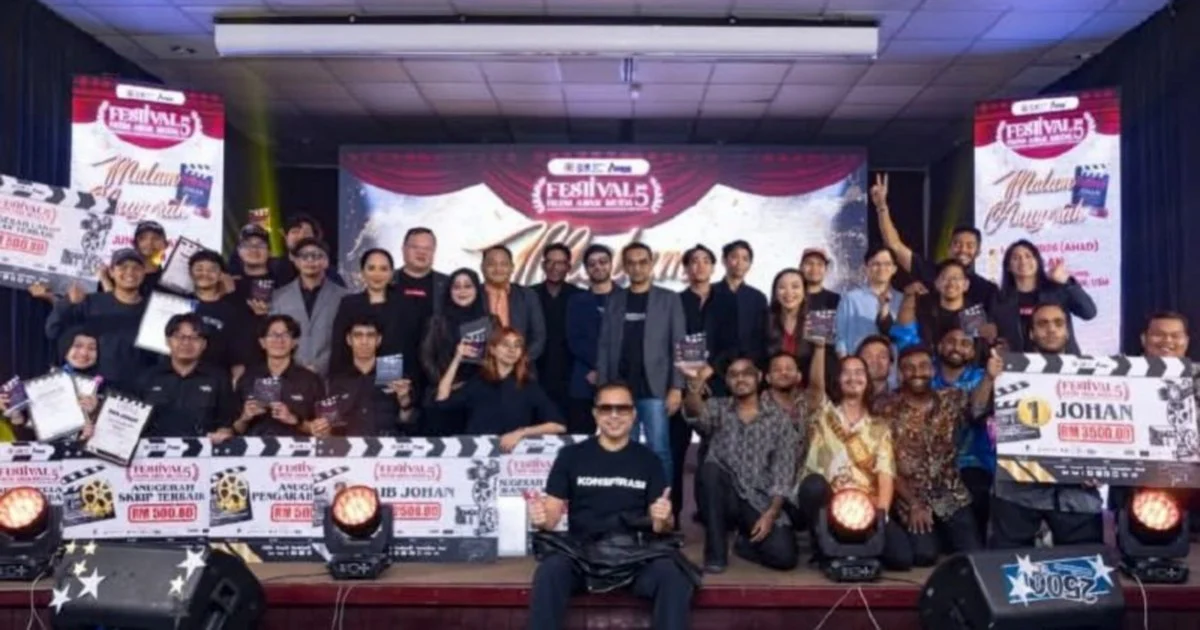
The Malaysian Anti-Corruption Commission is broadening its approach to fighting graft by turning to the creative industries and youth engagement as vehicles for promoting ethical values across the country. The strategy crystallises in a partnership for the 5th Youth Film Festival, being held at Universiti Sains Malaysia in Penang, where MACC aims to weave anti-corruption principles into the work of emerging filmmakers and creative practitioners. This initiative reflects a growing recognition that traditional enforcement and penalties, while important, must be complemented by cultural change rooted in the values of younger generations who will shape Malaysia's institutional landscape for decades to come.
The festival represents a deliberate pivot toward preventative corruption-fighting rather than reactive investigation alone. By collaborating with USM and engaging student filmmakers, MACC is seeking to embed integrity awareness into creative expression, recognising that films and multimedia content often resonate far more deeply with audiences than formal compliance training or public awareness campaigns. Young people, who consume media digitally and share content widely across social platforms, become both creators and amplifiers of anti-corruption messages—a multiplier effect that traditional communications cannot achieve. The partnership therefore serves a dual purpose: fostering ethical consciousness among participants while producing compelling content that can reach millions of viewers.
This shift in approach aligns with broader regional trends in Southeast Asia, where several nations have begun investing in cultural initiatives to complement their anti-corruption frameworks. Thailand, Singapore, and Indonesia have similarly explored arts-based interventions to strengthen public integrity. Malaysia's initiative at USM places it alongside these peers in recognising that young creative talent possesses the storytelling power to make abstract values—honesty, accountability, transparency—tangible and emotionally compelling. The festival format encourages competition and excellence while maintaining the advocacy mission, ensuring that winning entries can serve as exemplars and educational tools across schools and communities.
The significance of the venue choice should not be overlooked. USM, located in Penang on Malaysia's northwestern coast, serves as a major education hub drawing students from across the country and the wider region. Hosting the festival there amplifies its reach beyond the immediate campus to encompass a diverse demographic of young Malaysians with varying backgrounds and exposure to civic values. Penang itself has long been a focal point for progressive governance discourse, and the state's positioning as a technology and creative industries hub makes it a fitting location for this convergence of ethics and innovation.
For MACC, the collaboration signifies confidence in youth as agents of change rather than passive recipients of top-down messaging. This empowerment approach acknowledges that young filmmakers understand their peers' language, concerns, and aesthetic preferences in ways that institutional communicators often do not. The films produced through the festival framework are likely to capture nuanced narratives about corruption—its human costs, its institutional roots, its normalization in everyday life—that reach viewers where lecturing campaigns cannot. Whether exploring bribery in small business contexts, nepotism in higher education, or procurement fraud, the variety of perspectives submitted by student creators will reflect genuine social concerns rather than propagandistic templates.
The strategic collaboration also carries implications for MACC's institutional legitimacy and public perception. An anti-corruption agency that engages with creative and cultural spheres signals openness to dialogue and partnership beyond law enforcement circles. This inclusive approach can help overcome the sometimes-adversarial relationship between government institutions and creative communities, particularly in contexts where censorship concerns or artistic freedom debates have historically created friction. By inviting filmmakers to explore anti-corruption themes freely rather than imposing messaging, MACC demonstrates respect for creative autonomy while advancing its mandate.
For participating students and early-career filmmakers, the festival offers practical opportunities to develop professional skills in documentary, narrative, and experimental formats while contributing to societal discourse. Many participants will go on to careers in media, law, business, and public service—sectors where integrity awareness and ethical behaviour are foundational. The formative experience of creating anti-corruption content during university years can subtly reshape participants' own ethical frameworks and sense of personal responsibility toward institutional integrity. This generational effect, multiplied across cohorts of film festival participants over successive years, could meaningfully shift the cultural norms around corruption within Malaysia's professional and civic institutions.
The festival also provides MACC with valuable market research and narrative intelligence. The films submitted will reveal how young Malaysians perceive corruption, what aspects trouble them most, and what solutions they see as credible or desirable. These insights can inform MACC's own communication strategies, policy recommendations, and public education priorities. Rather than assuming what messaging will resonate, the commission gains direct evidence of youth perspectives through the creative work produced.
Looking forward, the sustainability and expansion of such initiatives will prove crucial. A single festival, however well-executed, cannot alone transform public attitudes. MACC's commitment to leveraging creative arts must become embedded within longer-term institutional strategy—including partnerships with film schools, regular festival iterations, and integration of winning content into educational curricula. Regional collaboration with counterpart agencies in other Southeast Asian nations could also amplify impact, creating cross-border dialogue about integrity through film.
Ultimately, MACC's partnership with the 5th Youth Film Festival at USM reflects recognition that combating corruption demands cultural change alongside institutional reform. By nurturing the artistic expression and moral imagination of young Malaysians, the commission is investing in the construction of social norms around integrity that no enforcement apparatus alone can achieve. Whether this initiative catalyses measurable shifts in corruption perception and behaviour among youth will require careful evaluation—but the creative approach itself marks a significant departure from conventional anti-corruption strategy in the Malaysian context.