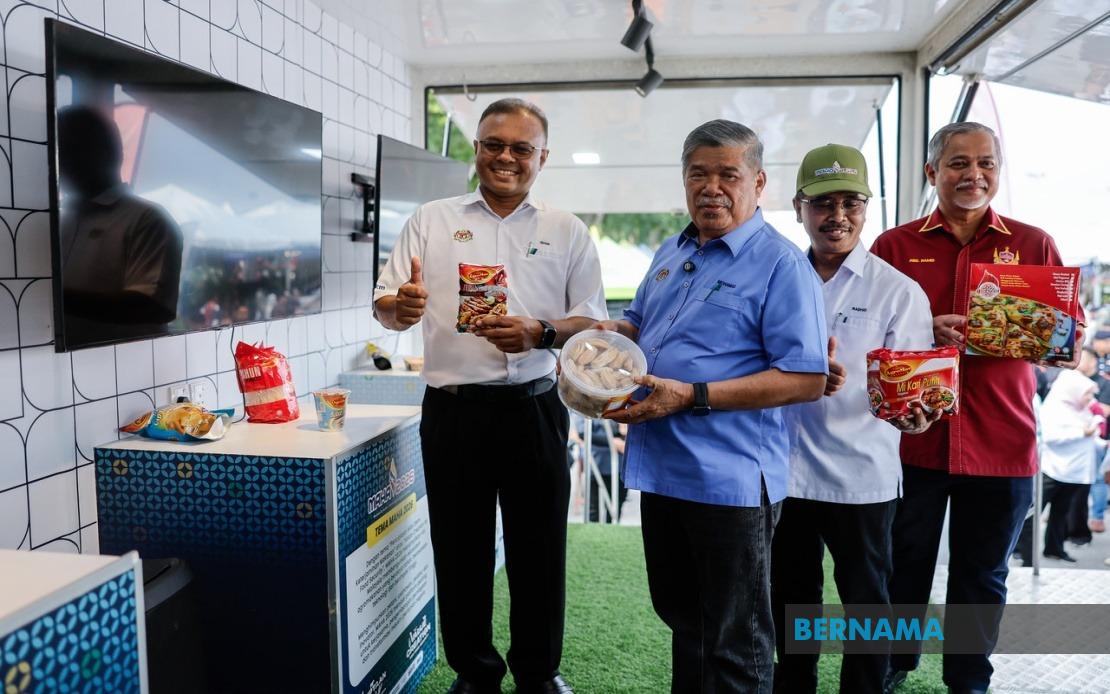
The Malaysia Agriculture, Horticulture and Agrotourism Show will make its debut as a truly international platform when it opens its doors in 2026, bringing together exhibitors from countries across multiple continents to showcase agricultural innovations and trade opportunities. Agriculture and Food Security Minister Datuk Seri Mohamad Sabu announced that the biennial event will see participation from Brazil, China, the United States, Japan, South Korea, Hungary, and China's Guangxi region, with additional nations such as Uzbekistan signalling their intent to join. This marks the first occasion that foreign exhibitors will participate in the event, fundamentally reshaping its character and scope.
The expansion reflects Malaysia's strategic recognition that agricultural challenges transcend borders and that solutions require collaborative engagement. Mohamad emphasised that food security represents an interconnected global concern, where no nation can claim complete self-sufficiency. When natural disasters or supply disruptions affect one country's harvest, others must step in to provide assistance and alternative sources. This interdependence makes international participation not merely advantageous but essential for building resilient food systems across regions.
For Malaysian agricultural stakeholders, the inclusion of foreign exhibitors presents tangible commercial and educational advantages. Datuk Isham Ishak, secretary-general of the Agriculture and Food Security Ministry, highlighted that local farmers and businesses will gain direct exposure to cutting-edge agricultural technologies and methodologies being deployed in leading farming nations. Visitors will be able to observe advanced cultivation techniques, pest management systems, and mechanisation solutions that could be adapted for Malaysian conditions and scales of operation.
The business-matching component of the 2026 event has been designed to facilitate transactions rather than simply showcase offerings. Organisers plan to arrange structured sessions where Malaysian participants can negotiate purchase agreements with foreign suppliers or establish export channels for their own products. Conversely, international exhibitors will discover Malaysian agricultural goods and services, potentially opening new distribution networks. This transactional approach transforms the event from a display platform into an active marketplace where commercial relationships form and deals materialise.
The timing of this international expansion arrives as Malaysia fortifies its approach to food security through technological innovation. Mohamad used the occasion to launch the Surveillance and Intervention Supply Demand Agrofood system, known as SISDA, a data-driven platform developed to strengthen the nation's capacity to monitor and manage its food supply chains. The system represents a significant shift towards precision governance in agriculture, moving beyond reactive crisis management to predictive intervention.
SISDA employs sophisticated analytical tools including machine learning and big data processing to track supply conditions, demand fluctuations, and price movements across the agrofood sector. By aggregating real-time information from multiple sources, the platform enables government officials to forecast shortages, anticipate price volatility, and implement interventions before disruptions materialise. This capability proves particularly valuable in managing staple commodities where price stability directly affects household food security and consumer purchasing power.
The system architecture addresses multiple stakeholder concerns simultaneously. Consumers benefit from government interventions that help maintain affordable access to essential foods, while farmers and traders gain better visibility into market conditions, allowing them to make informed decisions about planting, harvesting, and marketing. The comprehensive monitoring capability also identifies where supply bottlenecks occur, enabling the government to address inefficiencies in distribution infrastructure or storage systems that artificially inflate prices without benefiting producers.
Malaysia's agricultural sector faces distinct pressures that necessitate both technological advancement and international partnership. Climate variability, urbanisation reducing farmland availability, and rising input costs create an environment where accessing global expertise becomes strategically important. The 2026 MAHA event positions Malaysia as a serious participant in regional agricultural development rather than a peripheral player, signalling to major agricultural economies that the country seeks deeper engagement with their innovations and markets.
For Southeast Asian agricultural economies, Malaysia's initiative to internationalise MAHA holds broader significance. The region's diverse agroecological zones, climate challenges, and varying levels of mechanisation mean that proven solutions from developed agricultural systems can be tested and adapted for tropical and subtropical conditions. When Malaysian farmers successfully implement techniques or technologies showcased at international events, neighbouring countries can observe these real-world applications before investing in similar approaches.
The government's simultaneous deployment of SISDA alongside the international expansion of MAHA reflects a coherent strategy linking domestic capacity-building with global engagement. Data from the surveillance system can inform which foreign technologies and practices merit priority focus at the exhibition, while exhibitor feedback and transaction patterns captured at MAHA provide valuable information about which agricultural innovations Malaysian stakeholders believe address their specific challenges. This feedback loop ensures government investment in agricultural technology development remains responsive to actual farmer needs rather than theoretical preferences.
Looking forward, the 2026 edition of MAHA will likely establish expectations for permanent international participation in subsequent biennial events. As foreign exhibitors develop relationships with Malaysian counterparts and discover profitable markets, their commitment to participation will strengthen, creating a self-reinforcing cycle of internationalisation. This trajectory could position Malaysia as a regional hub for agricultural innovation, knowledge exchange, and agricultural commerce, benefits that extend beyond the exhibition dates to influence agricultural productivity and competitiveness throughout the year.
%22%2F%3E%3C%2Fpattern%3E%3C%2Fdefs%3E%3Crect%20width%3D%22100%25%22%20height%3D%22100%25%22%20fill%3D%22url(%23ph43s4kg)%22%2F%3E%3Crect%20width%3D%22100%25%22%20height%3D%22100%25%22%20fill%3D%22url(%23ph43s4kp)%22%2F%3E%3Ctext%20x%3D%2250%25%22%20y%3D%2250%25%22%20text-anchor%3D%22middle%22%20dominant-baseline%3D%22central%22%20fill%3D%22rgba(255%2C255%2C255%2C0.95)%22%20font-family%3D%22Georgia%2C%20'Times%20New%20Roman'%2C%20serif%22%20font-weight%3D%22700%22%20font-size%3D%22136%22%20letter-spacing%3D%22-0.02em%22%3ERonaldinho%3C%2Ftext%3E%3C%2Fsvg%3E)
%22%2F%3E%3C%2Fpattern%3E%3C%2Fdefs%3E%3Crect%20width%3D%22100%25%22%20height%3D%22100%25%22%20fill%3D%22url(%23ph4tn5og)%22%2F%3E%3Crect%20width%3D%22100%25%22%20height%3D%22100%25%22%20fill%3D%22url(%23ph4tn5op)%22%2F%3E%3Ctext%20x%3D%2250%25%22%20y%3D%2250%25%22%20text-anchor%3D%22middle%22%20dominant-baseline%3D%22central%22%20fill%3D%22rgba(255%2C255%2C255%2C0.95)%22%20font-family%3D%22Georgia%2C%20'Times%20New%20Roman'%2C%20serif%22%20font-weight%3D%22700%22%20font-size%3D%22272%22%20letter-spacing%3D%22-0.02em%22%3EJohor%3C%2Ftext%3E%3C%2Fsvg%3E)