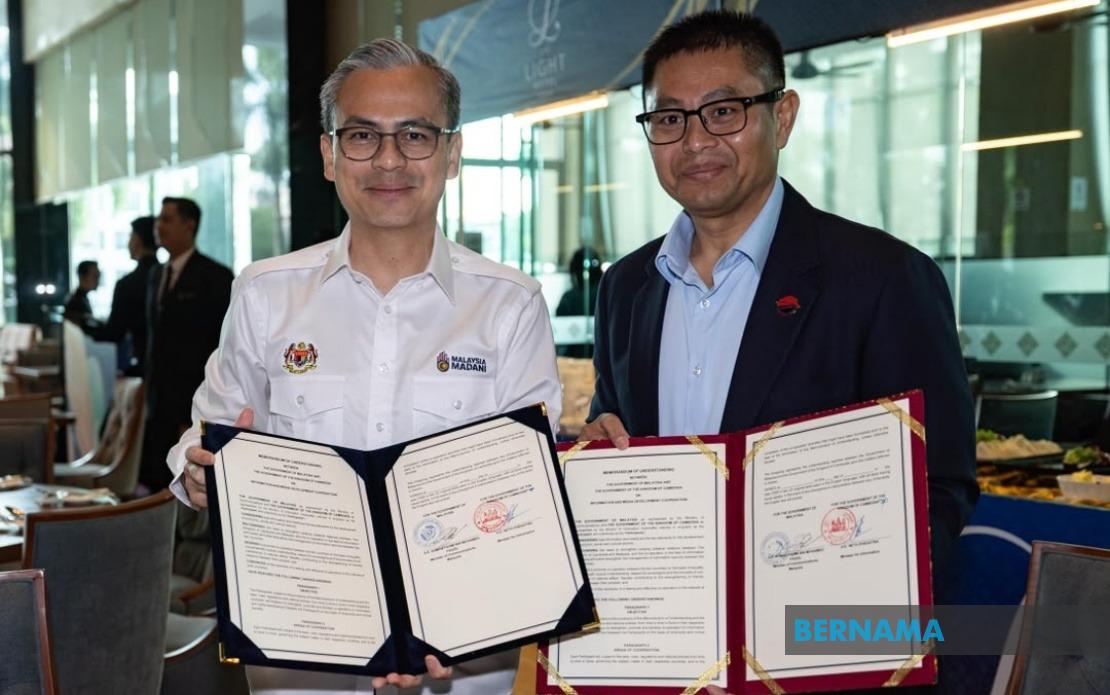
Malaysia and Cambodia have moved to broaden their relationship in the media and communications sphere through a formal memorandum of understanding signed in Butterworth on June 20. The agreement, inked by Communications Minister Datuk Fahmi Fadzil and presented by Cambodian Information Ministry's Under Secretary of State Prak Thaveak Amida on behalf of Information Minister Neth Pheaktra, signals renewed commitment from both Southeast Asian neighbours to align their information sectors and share expertise across an increasingly complex digital landscape.
The scope of the partnership is deliberately expansive, encompassing multiple dimensions of modern communications infrastructure. News and information exchange forms the foundation, yet the agreement extends far beyond traditional news-sharing arrangements to include cooperation in radio and television broadcasting standards, printing and publishing practices, and film and documentary production capabilities. This breadth reflects an understanding that contemporary media systems are interconnected, and that regulatory frameworks, technical standards, and content production methods must evolve in tandem across the region.
One particularly significant dimension of the accord concerns media cybersecurity and information policy. As Southeast Asian nations grapple with rising digital threats, misinformation, and evolving regulatory requirements, the ability to share threat intelligence, security protocols, and policy approaches becomes strategically important. Both countries face similar challenges in protecting their information ecosystems while maintaining press freedom and managing the complexities of content moderation across multiple platforms. This component of the agreement positions Malaysia and Cambodia as potential partners in developing regional resilience against digital threats.
The development and exchange of human capital constitutes another pillar of cooperation. Journalists, producers, technicians, and other media professionals from both countries will gain opportunities to learn contemporary practices, techniques, and ethical standards through direct engagement and professional exchange programmes. For Malaysia's established media industry, such partnerships provide avenues to mentor neighbouring nations while reinforcing its own standing as a regional communications hub. For Cambodia, access to Malaysian expertise and training resources supports the modernization of its media sector.
The agreement explicitly addresses innovation in media and broadcasting, acknowledging that the communications landscape is undergoing fundamental transformation. Emerging technologies, changing audience preferences, and new delivery mechanisms demand that both nations remain adaptive and forward-thinking. By formalizing cooperation in this arena, Malaysia and Cambodia create space for joint exploration of new broadcasting models, digital platforms, and storytelling approaches that reflect contemporary consumption patterns while maintaining editorial integrity.
Prak Thaveak Amida's presence in Malaysia as Cambodian representative at the National Journalists' Day (HAWANA) 2026 grand finale provides important context for the timing and significance of this agreement. The MoU signing occurs during a major regional gathering of media practitioners, amplifying its symbolic value and demonstrating commitment at a moment when the communications community is assembled. The HAWANA event, now in its sixth edition and themed around media integrity and credibility, creates an appropriate backdrop for two nations to publicly reinforce their dedication to professional standards and sector development.
The agreement's framing around knowledge exchange and best practices reflects a recognition that media development requires sustained learning and adaptation. Neither country claims to possess all solutions to the challenges facing modern journalism and broadcasting. Instead, the partnership acknowledges that collaborative problem-solving and the voluntary sharing of successful approaches yield superior outcomes for both parties. This orientation proves especially valuable in addressing persistent challenges such as combating misinformation, maintaining journalistic independence amid political pressures, and adapting business models to changing economic realities.
For Malaysia specifically, deepening media ties with Cambodia aligns with broader strategic objectives of positioning itself as a credible, influential player within Southeast Asia. As the region's communications landscape becomes increasingly integrated, bilateral media cooperation initiatives strengthen Malaysia's soft power and create platforms for Malaysian media organizations and professionals to extend their reach and influence. The agreement also potentially benefits Malaysia's media companies seeking expansion opportunities in Cambodia, a market with significant growth potential.
The formal nature of this arrangement—a signed memorandum of understanding presented during a high-profile national event—suggests serious commitment rather than aspirational gesturing. The involvement of Communications Minister Datuk Fahmi Fadzil on the Malaysian side and Information Minister Neth Pheaktra on the Cambodian side indicates executive-level attention. Similarly, the participation of Prime Minister Datuk Seri Anwar Ibrahim, who is scheduled to officiate the HAWANA event, underscores the political importance assigned to strengthening communications ties with neighbouring nations.
The timing also reflects recognition that media cooperation becomes increasingly urgent as digital platforms reshape information flows across borders. Traditional regulatory approaches designed for terrestrial broadcasting and print media prove insufficient in environments where content travels instantaneously and audiences exist in multiple jurisdictions. By establishing institutional frameworks for cooperation, Malaysia and Cambodia position themselves to develop more coherent responses to these transnational challenges while respecting each other's sovereign requirements.
Looking forward, the success of this initiative will depend on operationalizing the broad principles outlined in the memorandum. Specific working groups, exchange programmes, and collaborative projects must translate the agreement's aspirations into tangible outcomes. The involvement of Malaysian National News Agency (Bernama) Chairman Datuk Seri Wong Chun Wai and CEO Datin Paduka Nur-ul Afida Kamaludin in the HAWANA event suggests that national-level media institutions will play central roles in implementation. Regular dialogue, shared training initiatives, and coordinated responses to emerging challenges will determine whether this partnership achieves lasting impact on both nations' media ecosystems.