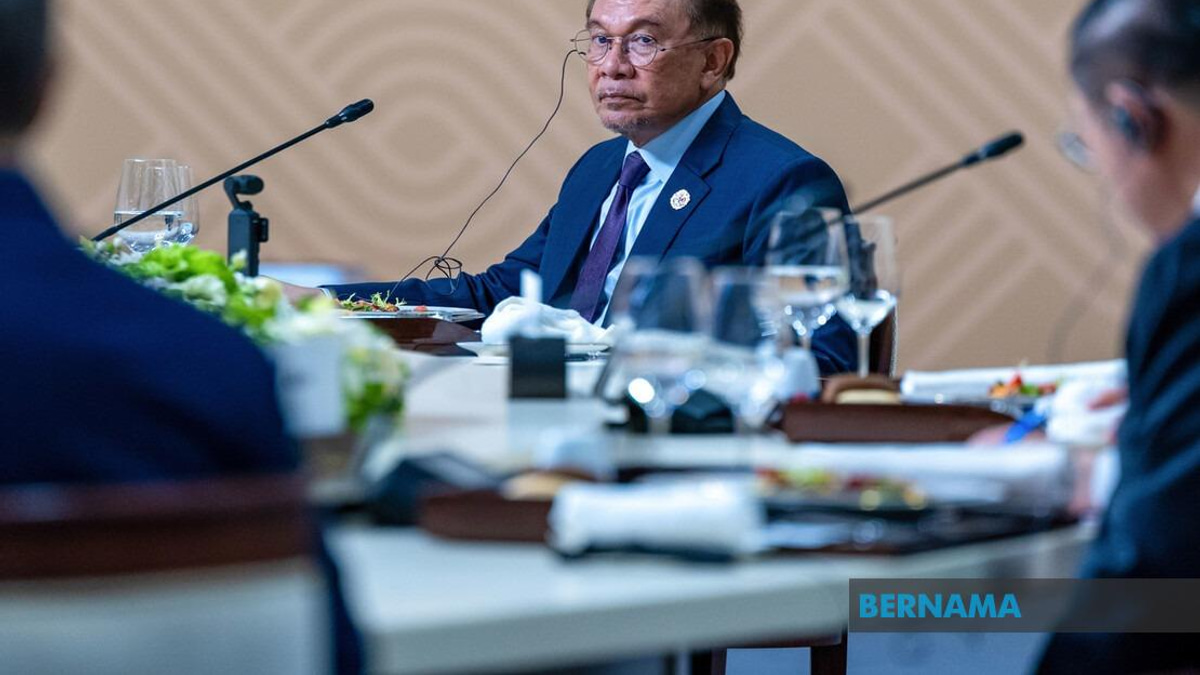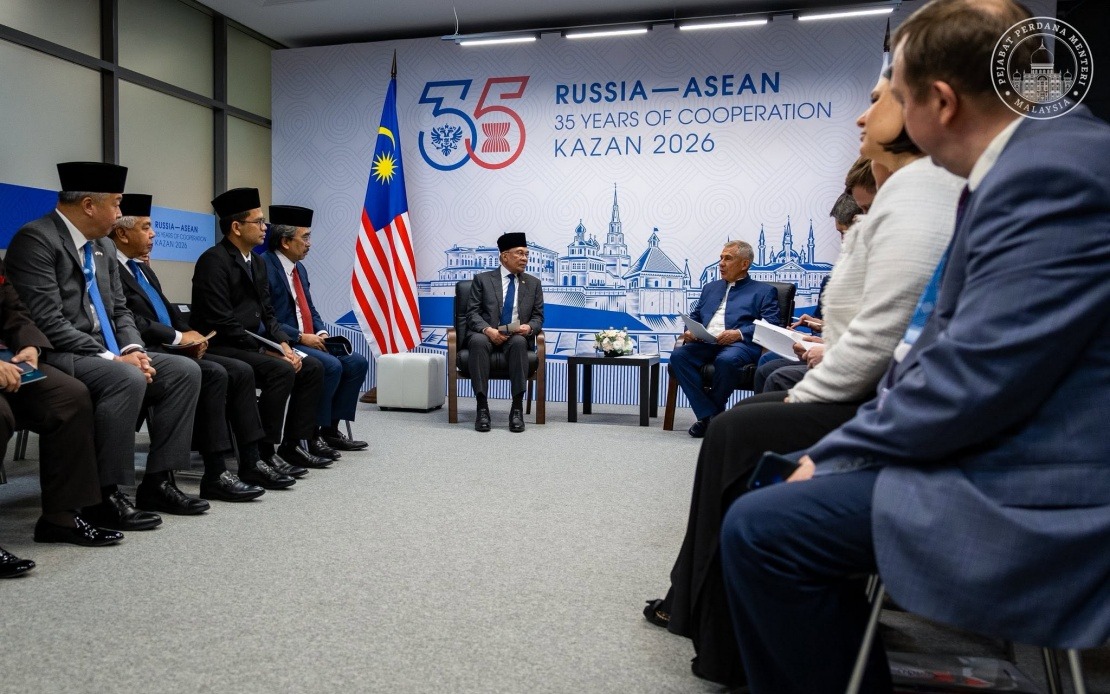
Prime Minister Datuk Seri Anwar Ibrahim has identified a broad spectrum of potential partnerships between Malaysia and the Russian Republic of Tatarstan, ranging from conventional trade and investment channels to emerging sectors including the halal industry and digital innovation. The Malaysian leader articulated this vision during a high-level meeting with Rustam Minnikhanov, the Rais (Head) of Tatarstan, upon his arrival in Kazan on Tuesday ahead of the ASEAN-Russia Commemorative Summit. The discussion reflected a strategic assessment of complementary economic strengths and growing people-to-people connections that both nations could leverage to mutual advantage.
Energy cooperation emerged as a focal point of the bilateral engagement, with particular emphasis on Tatarstan's substantial hydrocarbon reserves and Malaysia's expertise in downstream petroleum refining and petrochemical manufacturing. Anwar, who holds the additional portfolio of Finance Minister, highlighted the scope for collaborative ventures spanning the entire oil and gas value chain, from extraction through to advanced chemical processing. This positioning of energy as a priority area reflects both the historical importance of the sector to Tatarstan's regional economy and Malaysia's established capabilities in transforming crude resources into high-value finished products.
Beyond the traditional energy corridor, the Malaysian delegation sought to broaden engagement into contemporary spheres of economic dynamism. Discussions centred on leveraging Kazan's designation as the Islamic World Cultural Capital 2026, a recognition conferred by the Islamic World Educational, Scientific and Cultural Organisation. This cultural credential opens pathways for Malaysia to showcase its halal ecosystem, an industry where the nation has cultivated international authority through certification standards, manufacturing expertise, and market access. The halal sector represents one of Malaysia's strategic economic differentiation points globally, and Tatarstan's position as a historically Muslim-majority region within Russia presents natural alignment for partnership development.
The technology and digital economy dimensions of the partnership negotiations underscore the shifting nature of modern bilateral engagement. Rather than confining discussions to commodity trade, both leaders examined how innovation frameworks and strategic investment vehicles could facilitate knowledge transfer and entrepreneurial collaboration. Anwar and Minnikhanov discussed the Kazan Forum as a platform for convening business leaders and identifying investment opportunities, particularly in sectors where digital transformation creates new opportunities for Malaysian companies seeking Russian and Central Asian market access.
Anwar's acknowledgment of President Vladimir Putin's Strategic Vision Group, conceived as a bridge between Russia and the Islamic world, reflects Malaysia's pragmatic recognition of geopolitical realities. Russia's relationship with Muslim-majority nations has gained strategic salience as traditional Cold War alignments have shifted. Malaysia's positioning as a moderate Islamic-majority democracy gives it particular diplomatic utility in facilitating substantive dialogue between Moscow and the broader Muslim world on matters ranging from trade facilitation to security cooperation.
The human capital dimension received explicit consideration in the bilateral exchange, with talent development and educational cooperation identified as expansion opportunities. Malaysia's established universities and technical training institutions, combined with Tatarstan's educational infrastructure, create potential for student mobility programmes, academic partnerships, and professional skill-sharing arrangements. Educational ties often generate lasting commercial networks and cultural understanding that underpin deeper economic integration.
Anwar's two-day visit to Kazan carries significance beyond the immediate bilateral dimension. His attendance at the ASEAN-Russia Commemorative Summit marks a continuation of dialogue relations established in 1991 and subsequently elevated to a Strategic Partnership in 2018. Malaysia's role as a G20 invited participant and regional heavyweight within ASEAN positions the nation as an important intermediary in ASEAN-Russia ties. The bilateral meeting with Minnikhanov thus functions simultaneously as a vehicle for strengthening Malaysia-Tatarstan relations whilst reinforcing ASEAN's institutional engagement with Russia at a moment when global alignments have shifted significantly.
The composition of the Malaysian delegation conveyed the comprehensive nature of anticipated cooperation. Investment, Trade and Industry Minister Datuk Seri Johari Abdul Ghani and Economy Minister Akmal Nasrullah Mohd Nasir accompanied Anwar, signalling governmental commitment across multiple economic portfolios. This multi-ministerial approach indicates that discussions transcended the ceremonial and contemplated substantive institutional arrangements requiring coordination across different regulatory domains.
Kazan itself occupies a distinctive position within the Russian federation and broader Eurasian landscape. Situated approximately 800 kilometres east of Moscow at the confluence of the Volga and Kazanka rivers, the city functions as a major regional centre with a population exceeding 1.3 million. Its millennium-long history encompasses significant Islamic cultural heritage, earning recognition as one of Russia's foremost centres of Islamic scholarship and practice. This cultural-religious identity provides common ground with Malaysia, a nation where Islam constitutes both a state religion and a civilisational anchor.
For Malaysian policymakers and business strategists, Tatarstan represents a gateway into the Russian economy and, through it, broader Eurasian markets. The region's petrochemical industries, automotive manufacturing, and technology sectors offer sectors where Malaysian companies could establish footholds. Conversely, Malaysian financial services, Islamic banking expertise, and renewable energy technologies present offerings of potential interest to Tatarstan's diversification agenda.
The timing of this bilateral engagement within the ASEAN-Russia Summit framework carries strategic weight. As regional organisations reassess partnerships in response to changing international circumstances, Malaysia's active cultivation of deepened ties with Russian Federation entities demonstrates diplomatic diversification. The nation refuses confinement to traditional alignment patterns, instead pursuing pragmatic partnerships grounded in identifiable mutual interests spanning energy, trade, investment, and cultural exchange.
Looking forward, the identification of cooperation potential requires translation into concrete institutional mechanisms and commercial arrangements. Both governments possess the stated political will to pursue expanded engagement. The substantive challenge lies in overcoming geographical distance, regulatory differences, and the practical complexities of conducting sustained business relationships across divergent time zones and institutional contexts. Successful partnership development will depend upon follow-up mechanisms, regular high-level engagement, and the emergence of private sector champions capable of identifying and executing viable commercial opportunities within the frameworks established by governmental dialogue.