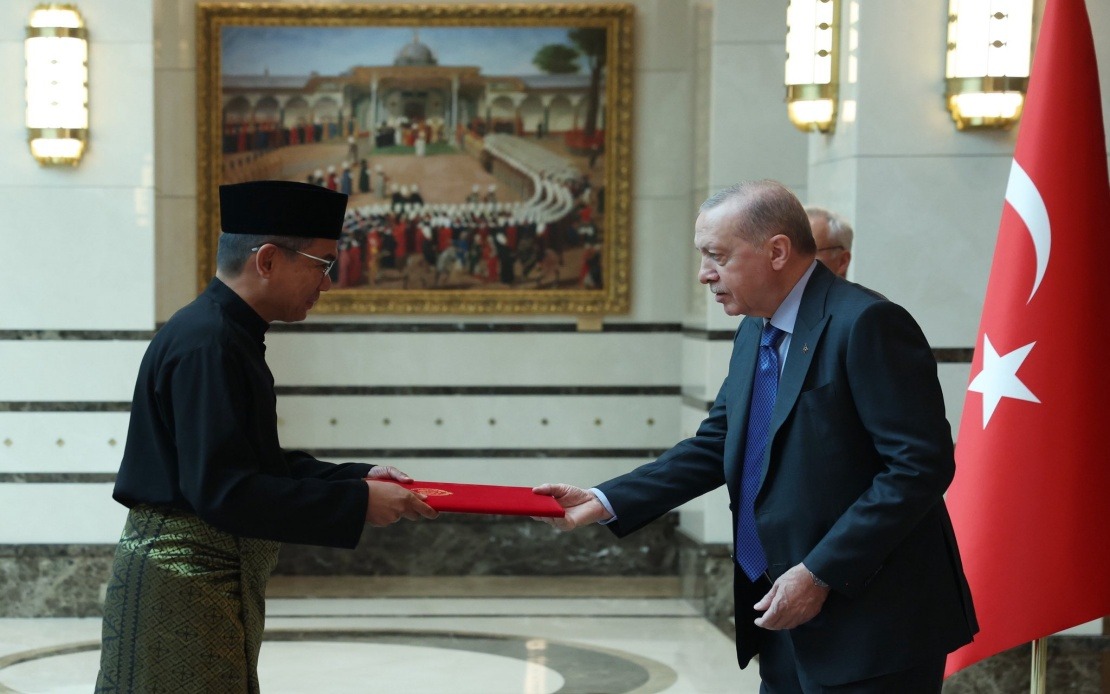
Malaysia has formally declared its backing for Türkiye's aspiration to become an ASEAN Dialogue Partner, marking a significant diplomatic gesture that underscores the growing importance of the Turkish nation within Southeast Asian circles. The endorsement came through a formal statement issued by the Malaysian Embassy in Ankara on June 18, following Ambassador Adlan Mohd Shaffieq's presentation of his letter of credence to Turkish President Recep Tayyip Erdoğan at the Presidential Complex on June 17.
During the ceremonial meeting, Ambassador Shaffieq articulated Malaysia's position clearly, emphasising that Türkiye has progressively established itself as a consequential partner for the Southeast Asian region. This characterisation reflects more than diplomatic courtesy; it acknowledges the tangible expansion of Turkish economic involvement across ASEAN markets, complemented by a strategic orientation that aligns with regional priorities and an increasingly vibrant exchange of people-to-people interactions between Turkish nationals and citizens of ASEAN member states.
The timing of this announcement carries particular resonance given Malaysia's current regional leadership role and its historical commitment to fostering partnerships that benefit the broader ASEAN framework. By articulating support for Türkiye's dialogue partner aspirations at this juncture, Malaysia positions itself as a facilitator of deepened Turkish engagement with Southeast Asia—a role consistent with Kuala Lumpur's emphasis on expanding the regional bloc's international partnerships.
Crucially, Ambassador Shaffieq conveyed formal greetings and expressions of goodwill from His Majesty Sultan Ibrahim, King of Malaysia, and Prime Minister Datuk Seri Anwar Ibrahim to President Erdoğan. This protocol-level gesture underscores the importance both the Malaysian palace and government attach to the bilateral relationship, lending official weight to the support for Türkiye's regional ambitions.
The ambassador further emphasised Malaysia's determination to deepen the established strategic partnership with Türkiye, pointing to the substantial progress already achieved through consistent high-level diplomatic engagement. He highlighted three sectors as particularly significant areas of cooperation: education, defence, and the halal industry. These sectors are not incidental; they represent the convergence of Malaysian and Turkish strengths and interests. The halal industry connection, for instance, reflects shared religious and cultural values as Muslim-majority nations with established expertise in halal certification, product development, and market access.
In characterising the Malaysia-Türkiye relationship, Ambassador Shaffieq invoked the language of mutual trust and shared vision, framing the partnership as resting upon bedrock foundations that extend beyond transactional interests. He specifically referenced the personal rapport between President Erdoğan and Prime Minister Anwar Ibrahim, suggesting that the strength of individual leadership relationships could be leveraged to accelerate collaborative initiatives across multiple economic and social sectors.
During the same meeting, President Erdoğan reciprocated the diplomatic warmth by welcoming the newly presented ambassador with expressions of confidence regarding bilateral trade prospects. The Turkish president articulated an ambitious target: expanding trade relations to reach US$10 billion. This figure is not merely aspirational rhetoric; it represents a concrete goal that would require substantial deepening of commercial ties and structural integration between the Malaysian and Turkish economies across diverse product categories and service sectors.
The significance of Malaysia's support for Türkiye's dialogue partner status should be understood within the broader context of ASEAN's external relations strategy. Dialogue partner designations represent a formal mechanism through which ASEAN regulates and structures its engagement with major external powers and significant regional actors. Such status grants Türkiye a framework for institutionalised interaction with the grouping while also conferring legitimacy and visibility upon Turkish regional interests within Southeast Asia.
For Malaysia specifically, backing Türkiye's aspirations reflects strategic calculations rooted in shared Islamic heritage and overlapping geopolitical interests, particularly regarding connectivity, maritime security, and the preservation of multilateralism as an operating principle in international affairs. Both nations have consistently advocated for inclusive regional frameworks and greater voice for the Global South in international decision-making processes.
The focus on education collaboration carries particular relevance for Southeast Asian readers, given that Turkish universities have increasingly attracted Malaysian and other regional students, while Turkish expertise in vocational training and technical education aligns with ASEAN nations' development requirements. Defence cooperation, meanwhile, addresses regional security concerns and the pursuit of credible partnerships beyond traditional alignments.
Türkiye's cultivation of deeper ties with Southeast Asia represents part of its broader diversification of international partnerships—a geopolitical reorientation that has accelerated in recent years. For ASEAN members, engagement with Türkiye offers opportunities to strengthen relationships with a nation that commands influence across Europe, the Middle East, and Central Asia, thereby enhancing the regional bloc's strategic positioning.
The bilateral trade target of US$10 billion, while ambitious, is achievable given Malaysia's robust commercial networks and Türkiye's manufacturing capabilities, particularly in textiles, automotive components, and processed foods. Enhanced trade would necessarily involve deepened supply chain integration and expanded market access for Turkish exports into ASEAN, alongside Malaysian exports reaching Turkish and broader Mediterranean markets.
Moving forward, Malaysia's endorsement is likely to carry weight in ASEAN consultations regarding Türkiye's dialogue partner application, particularly given Kuala Lumpur's respected voice within the regional grouping. The convergence of diplomatic support, explicit ambitions for expanded trade, and identified sectoral collaboration points suggest that Malaysia-Türkiye ties will continue their upward trajectory, with potential benefits extending across the wider Southeast Asian region.