The Prime Minister's Department (Religious Affairs) has inaugurated the Maal Hijrah Lecture Series, a strategic initiative designed to democratize access to the scholarly insights of leading Islamic thinkers across Malaysia. The programme was officially launched during the Maal Hijrah 1448H/2026 observance in Putrajaya, marking a deliberate shift towards making Islamic intellectual discourse accessible to broader segments of Malaysian society rather than restricting it to university campuses and specialist circles.
Minister in the Prime Minister's Department (Religious Affairs) Dr Zulkifli Hasan articulated the vision driving this initiative, emphasizing that the profound contributions of recognized Islamic figures must transcend the traditional confines of academic environments. He stressed that allowing such influential thought to remain sequestered within exclusive forums would represent a significant missed opportunity for national intellectual advancement. The minister expressed confidence that this outreach approach will enable the ideas and frameworks developed by these scholars to resonate with Malaysians from all walks of life, fostering a more informed public discourse on Islamic matters.
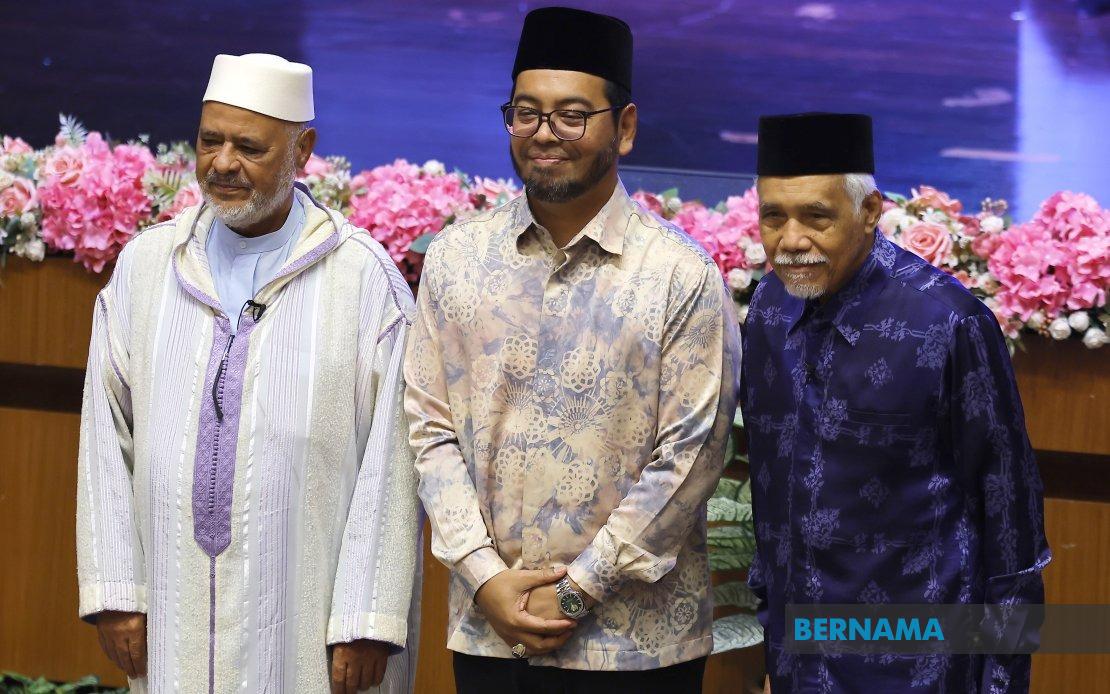
The inaugural lecture series honours two recipients of the Maal Hijrah awards announced during the national-level Maal Hijrah 1448H/2026 celebration at Masjid Putra. Emeritus Professor Osman Bakar, rector of the International Islamic University Malaysia, received recognition as the national Maal Hijrah figure, while Professor Sheikh Dr Ahmad Al-Raysuni, a distinguished Islamic jurisprudence expert from Morocco, was named the international Maal Hijrah figure. Both recipients were presented with cash prizes, commemorative trophies, and certificates of appreciation by the Sultan of Perak, Sultan Nazrin Shah, underscoring the significance with which Malaysia's leadership regards scholarly contributions to Islamic thought.
The collaboration framework for this initiative has already attracted substantial backing from Malaysia's religious affairs agencies and several prestigious educational institutions. Universiti Sains Islam Malaysia and the International Islamic University Malaysia have signalled their commitment to supporting the lecture series, providing institutional platforms and academic infrastructure to facilitate wider dissemination of scholarly content. This partnership model demonstrates recognition among Malaysia's higher education sector that universities bear responsibility for translating specialized research into formats accessible to the broader population.
Dr Zulkifli indicated that the scope of institutional partnerships will expand progressively, bringing additional universities and research institutions into the network. This expansion strategy reflects an understanding that achieving genuine nationwide reach requires a distributed network of venues and supporting organizations rather than reliance on centralized programming. By extending partnerships across Malaysia's academic landscape, the programme aims to ensure that lectures and scholarly discussions occur in multiple locations and cultural contexts, adapting content to resonate with diverse audiences while maintaining intellectual rigor.
The conceptual foundation of the Maal Hijrah Lecture Series carries implications extending beyond Muslim audiences. Dr Zulkifli articulated an aspiration for the intellectual frameworks and ethical insights developed by these Islamic figures to appeal to Malaysian non-Muslims as well, positioning Islamic scholarship as a source of wisdom relevant to national discourse more broadly. This inclusive framing suggests recognition that Malaysia's plural society stands to benefit from exposure to diverse intellectual traditions, and that Islamic thinkers have contributions valuable to discussions of ethics, governance, and social welfare that transcend religious boundaries.
Professor Osman Bakar's recognition represents acknowledgment of his sustained contributions to Islamic education and scholarship within Malaysia's institutional context. As rector of IIUM, he has been instrumental in shaping how Islamic thought is transmitted to new generations of students, and his elevation to national Maal Hijrah figure status affirms the value placed on building institutional capacity for advanced Islamic learning. His continued engagement with the lecture series lends credibility and scholarly depth to the initiative, signalling that this is not a superficial popularization effort but rather an extension of serious academic work into public forums.
Professor Ahmad Al-Raysuni's selection as the international Maal Hijrah figure demonstrates Malaysia's engagement with Islamic scholarship beyond its borders and recognition of contemporary contributions to jurisprudential thought from other Muslim-majority contexts. His expertise in Islamic jurisprudence brings technical sophistication to the lecture series, as jurisprudence provides frameworks for addressing complex questions about Islamic law's application in modern societies—issues of direct relevance to Malaysian Muslim communities navigating contemporary challenges from technology to family law to environmental governance.
The timing of this initiative reflects broader conversations within Southeast Asian Islamic circles about the role of scholarship in shaping public understanding of Islam. Malaysia's launch of the Maal Hijrah Lecture Series positions the country as committed to elevating intellectual discourse on Islamic matters, distinguishing its approach from regions where Islamic dialogue may be dominated by less academically rigorous forums. For a nation with Malaysia's religious diversity and constitutional framework protecting multiple faith communities, ensuring that Islamic thought is presented through scholarly channels rather than potentially sensationalized media outlets carries particular significance.
The programme's emphasis on accessibility raises questions about how complex theological and jurisprudential concepts will be translated for general audiences without sacrificing intellectual integrity. The success of the initiative will likely depend on striking this balance effectively—presenting substantive ideas in formats that educated but non-specialist audiences can engage with meaningfully. This challenge mirrors similar efforts internationally where universities and research institutions have attempted to make scholarly work relevant to public policy and public understanding.
For Malaysia's minority religious communities, the commitment to broadcasting Islamic scholarly discourse more widely may carry both positive and cautious implications. On one level, it reflects confidence in the compatibility of Islamic thought with plural society values. Conversely, some may question whether amplifying any single religious tradition's intellectual framework raises concerns about proportional representation of other faith communities' scholarly contributions in public discourse. The degree to which the government subsequently supports similar initiatives for other religions may influence perceptions of even-handedness.
The Maal Hijrah Lecture Series also has implications for how Malaysia positions itself within global Islamic intellectual networks. By creating platforms for international scholars like Professor Ahmad Al-Raysuni to disseminate their ideas, Malaysia establishes itself as a venue for serious engagement with contemporary Islamic thought. This enhances Malaysia's soft power within the Muslim world while simultaneously enriching local discourse through exposure to international perspectives on persistent challenges facing Muslim communities.
Moving forward, the success of this initiative will be measurable not merely through attendance figures but through whether the ideas introduced actually influence public conversations, policy discussions, and individual thinking about contemporary issues. The government's stated hope that these lecture series will create a "wave of thought" suggests ambitions for catalyzing intellectual momentum extending well beyond the formal programmes themselves.