The Prime Minister's Department (Religious Affairs) has committed to expanding its outreach to young Malaysians, adopting Sultan Nazrin Shah's recent royal address as a foundational framework for policy implementation. The initiative responds directly to the Sultan of Perak's call for religious leaders to assume a more prominent position in countering extremism, false information, and polarisation fuelled by digital platforms—challenges that have intensified across Southeast Asia in recent years.
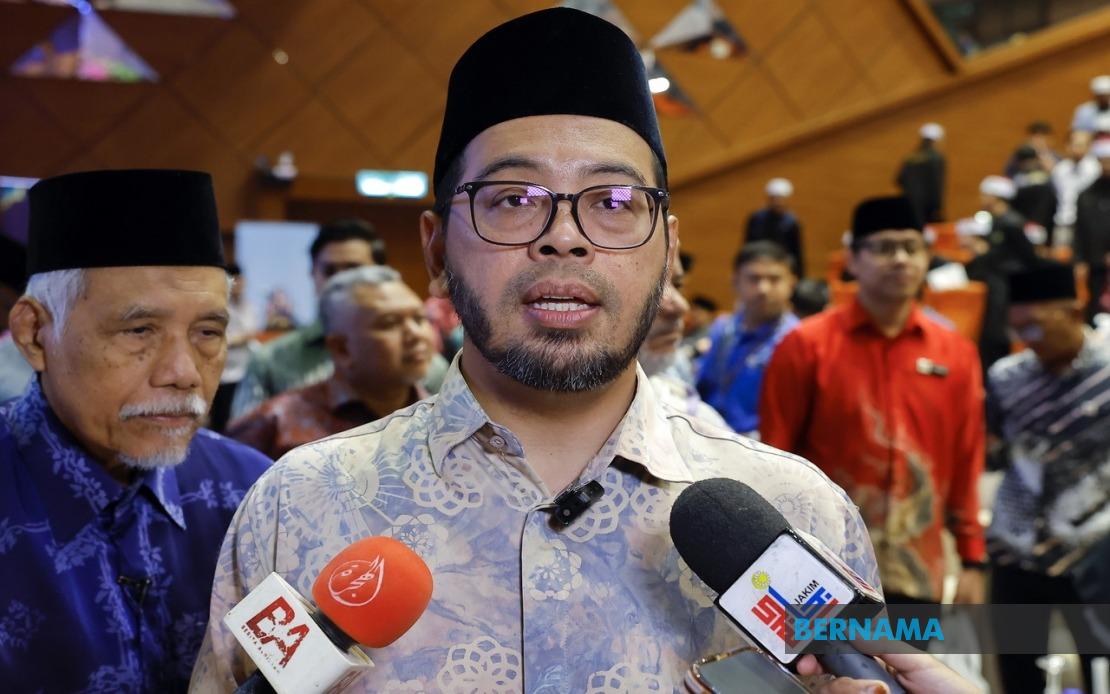
Dr Zulkifli Hasan, Minister in the Prime Minister's Department (Religious Affairs), declared the government's resolve to translate the royal message into concrete action. Speaking at the National and International Tokoh Ma'al Hijrah Premier Lecture 1448/2026 in Putrajaya on June 18, he indicated that the Sultan's address would serve as a guiding principle for departmental programmes and strategic initiatives moving forward. The minister's public endorsement signals the administration's alignment with palace perspectives on religious leadership and national security concerns.
Sultan Nazrin Shah, addressing the matter last Friday, articulated a vision of religious figures as active intermediaries capable of engaging with young people on complex societal challenges. His Royal Highness emphasised that the current generation confronts a multifaceted constellation of pressures that traditional institutional responses have struggled to adequately address. These pressures extend beyond conventional religious concerns to encompass emerging global issues—climate anxiety, international conflicts, and economic precarity—all transmitted and amplified through social media channels where young people consume information and form opinions.
The Sultan's diagnosis of youth vulnerability reflects regional patterns observable throughout Southeast Asia. Digital platforms have created echo chambers where extremist narratives, conspiracy theories, and divisive content proliferate with minimal friction. Young people, navigating identity questions and seeking community belonging, often encounter radical messaging before encountering credible counter-narratives from established institutions. Religious authorities, traditionally respected voices in Malaysian society, represent a largely untapped resource for inoculating youth against such threats through authentic, contextualised engagement rather than top-down prohibition.
Misinformation campaigns targeting Southeast Asian youth have demonstrated particular potency during periods of political tension or communal sensitivity. Narratives depicting religious communities as threatened or monolithic, deliberately distorted depictions of interfaith relations, and manufactured grievances can rapidly mobilise young supporters online. The decentralised nature of social media makes traditional gatekeeping mechanisms obsolete, requiring instead grassroots counter-messaging from trusted community figures with credibility among younger demographics. Sultan Nazrin's intervention suggests palace recognition that religious leaders occupy precisely this position.
The polarisation dimension of the Sultan's address carries particular significance for Malaysia's multi-ethnic, multi-religious context. Young Malaysians increasingly self-segregate into identity-based digital communities, consuming content that reinforces existing perspectives while filtering out contrary viewpoints. This algorithmic fragmentation undermines the national fabric of shared civic space that previous generations inhabited through common media channels and mixed educational environments. Religious leaders, if properly mobilised and equipped, can model interfaith dialogue and promote nuanced discussion of contentious topics that algorithm-driven platforms inherently distort.
Dr Zulkifli Hasan's statement that the department will "mainstream the messages and reminders conveyed by His Royal Highness" suggests the government recognises the need for systematic, coordinated action rather than ad-hoc responses. This framing indicates potential expansion of existing youth programmes under the religious affairs portfolio, possibly including formal training for religious leaders in digital literacy and youth engagement, development of counter-narrative content specifically designed for social media distribution, and integration of misinformation literacy into Islamic religious education curricula.
The timing of this commitment holds strategic importance for Malaysia's regional positioning. As Southeast Asian governments grapple with radicalisation vectors extending from Afghanistan to the Philippines and across digital borderlands, Malaysia's effort to harness religious institutional authority for preventive purposes could model approaches applicable across the region. Countries with comparable demographic profiles—Indonesia, Pakistan, Bangladesh—struggle with similar challenges, and Malaysian innovations in this domain could inform broader security strategies.
Yet implementation success remains uncertain. Religious leaders require preparation for conversations occurring in social media environments fundamentally different from traditional educational contexts. Youth authenticity-detection mechanisms are highly attuned; messaging perceived as patronising or disconnected from their actual concerns will generate counterproductive backlash. Furthermore, the diversity of Malaysian religious leadership—spanning multiple schools of Islamic thought plus other faith traditions—requires coordination mechanisms to ensure coherent messaging rather than competing or contradictory guidance.
Economic dimensions underlying youth vulnerability also warrant attention. Many young Malaysians' susceptibility to extremist or polarising narratives correlates with economic precarity, limited employment prospects, and perception of institutional indifference to their material concerns. Religious messaging, however sophisticated, cannot substitute for economic policy addressing youth joblessness and income inequality. The government's commitment to youth engagement therefore requires complementary fiscal and labour market interventions to address underlying conditions generating susceptibility to mobilisation through divisive narratives.
The Sultan's intervention also reflects monarchy's traditional role as custodian of national unity and religious authority in the Malaysian constitutional framework. By explicitly calling for religious leaders' engagement with youth, Sultan Nazrin elevates this issue beyond ministerial policy to constitutional principle, lending it heightened legitimacy and signalling expectations that religious institutions and government collaborate rather than operate in parallel. This positioning may encourage greater coordination between the Prime Minister's Department (Religious Affairs) and Islamic religious councils at state level, as well as non-Islamic religious bodies.
Moving forward, success metrics for this initiative will likely focus on youth programme participation rates, measurable changes in young people's information-consumption habits and critical evaluation of online content, and community feedback on religious leaders' perceived relevance to contemporary challenges. The government's commitment to implementing Sultan Nazrin's vision represents acknowledgment that conventional security approaches prove insufficient for countering digital-era threats requiring cultural and religious persuasion alongside institutional policy.