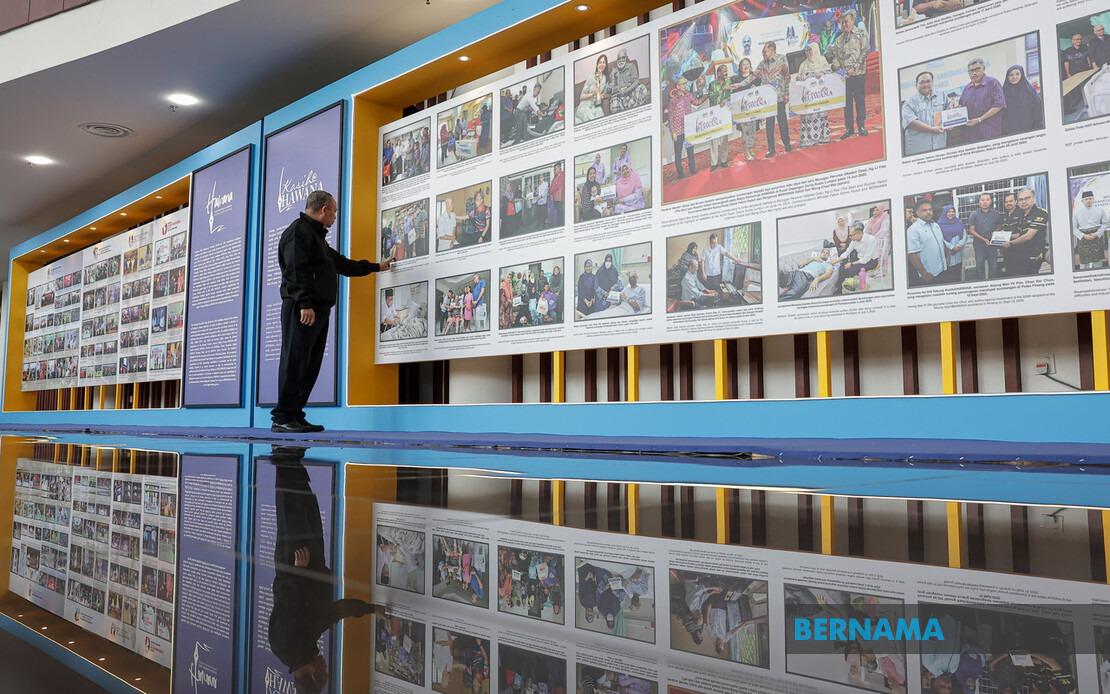
Penang is hosting the centrepiece of Malaysia's National Journalists' Day, HAWANA 2026, drawing the country's media fraternity to examine their industry's trajectory and relevance in a rapidly transforming landscape. Prime Minister Datuk Seri Anwar Ibrahim will formally launch the celebration tomorrow at the PICCA @ Butterworth Arena, where approximately 1,000 journalists and media executives from Malaysia and overseas are expected to converge. The gathering occurs against a backdrop of considerable upheaval in how news is gathered, distributed and consumed, making the theme "Media Integrity, Foundation of Credibility" particularly resonant for industry stakeholders grappling with erosion of public trust and technological displacement.
The lead-up to the main event has already witnessed a flurry of substantive programming designed to strengthen professional bonds within the media ecosystem and confront the sector's most pressing concerns. The Malaysian Federation of Media Clubs (GKMM) organised the Malaysia Media Retreat 2.0, assembling representatives from 15 media clubs nationwide to foster collaboration and assess organisational progress since GKMM's formal establishment in October 2022. According to Mohamad Fauzi Ishak, the federation's president, these gatherings serve dual purposes: reinforcing connections across the media landscape while providing opportunity for reflection on institutional development ahead of the upcoming annual general meeting, notably to be conducted without contested elections.
Communications Minister Datuk Fahmi Fadzil, alongside Bernama CEO Datin Paduka Nur-ul Afida Kamaludin and Editor-in-Chief Arul Rajoo Durar Raj, witnessed the retreat's proceedings, signalling government backing for industry-led initiatives to maintain professional standards. The presence of senior ministerial representation underscores official recognition that media institutions require dedicated platforms to address systemic challenges collaboratively rather than in isolation. For Malaysian and regional journalists, such governmental acknowledgment carries weight in legitimising industry concerns about resources, regulatory frameworks, and professional autonomy.
Parallel to the retreat, the Malaysian Press Institute convened a particularly pointed discussion titled "2035: Will Journalists Still Exist?" at Han Chiang University College of Communication, bringing senior editorial figures to contemplate the profession's longevity amid artificial intelligence proliferation, digital-first news cycles, and dramatically altered audience behaviour. The panel featured MPI President Datuk Yong Soo Heong alongside Farrah Naz Abd Karim from New Straits Times Press, renowned for her stewardship of legacy media operations navigating digital disruption, and Azhari Muhidin representing Media Prima's news operations. This gathering crystallised a reality confronting newsrooms across Southeast Asia: technological advancement threatens traditional journalism roles while simultaneously creating editorial possibilities that require entirely new skill sets and conceptual frameworks.
The question posed by the town hall session reflects anxieties permeating global journalism during a period when generative artificial intelligence threatens to automate routine reporting and editorial functions. Within Malaysia's context, where media ownership concentration already constrains competitive diversity, AI-driven newsroom consolidation could potentially amplify existing structural limitations. Newsrooms already operating with constrained budgets face acute pressure to demonstrate that human journalists deliver value AI cannot replicate—investigative rigour, local contextual understanding, and editorial judgment rooted in community accountability. The conversation in Penang thus carries implications extending well beyond Malaysia's borders, as other Southeast Asian markets confront identical technological pressures with varying degrees of regulatory preparedness.
Tomorrow's agenda includes engagement sessions orchestrated by the Malaysian Media Council (MMC), designed to facilitate dialogue between industry bodies and practitioners, particularly those operating in the northern region where Penang serves as a significant media hub. These networking opportunities prove instrumental for strengthening professional relationships that often remain fractured along competitive corporate lines. When journalists from rival publications gather in neutral forums, opportunities emerge for solidarity around shared professional interests—editorial independence, workplace protections, and industry sustainability—that transcend market competition.
The broader HAWANA 2026 celebration, formally organised by the Communications Ministry with Bernama serving as implementing agency, positions itself as Malaysia's premier recognition platform for media contributions and professionalism. Such institutional framing carries significance for emerging journalists and established practitioners alike, affirming that journalism remains a recognised profession deserving systematic acknowledgment rather than merely a commercial function. The three-day RIUH @ HAWANA Carnival commencing tonight at the PICCA Convention Centre complements the formal celebration, potentially introducing journalism to younger audiences and offering venues for media organisations to demonstrate their work and values directly to the public.
The timing of this gathering proves particularly significant given Malaysia's media landscape transformations of recent years. Political developments have heightened scrutiny of editorial independence and journalistic impartiality, whilst economic pressures continue squeezing traditional business models supporting full-time newsrooms. Digital platforms have fundamentally disrupted advertising revenue streams historically funding journalism operations, forcing experimentation with subscription models, membership programmes, and alternative revenue architectures. Against this backdrop, HAWANA 2026 offers occasion for collective reflection on how Malaysia's media sector might sustain itself whilst maintaining the professional standards necessary for democratic functioning.
The emphasis on media integrity as the central theme addresses a vulnerability affecting journalism across the region. Public trust in media institutions has eroded considerably, driven partly by legitimate criticism regarding editorial standards and partly by coordinated campaigns designed to discredit factual reporting. Malaysian journalists operating in this environment face pressure from multiple directions: commercial imperatives pushing toward sensationalism, political actors seeking favourable coverage, and audiences increasingly prone to dismissing inconvenient facts as bias. Restoring credibility requires renewed commitment to verifiable fact-checking, transparent sourcing, and editorial principles applied consistently across ownership lines.
For Malaysian readers and the broader Southeast Asian media community, HAWANA 2026 represents more than ceremonial celebration. The programming surrounding the main event demonstrates that Malaysia's media sector possesses capacity for serious professional self-examination and collective action toward shared improvement. When major news organisations, journalist associations, and government representatives gather explicitly to contemplate challenges like artificial intelligence's impact on employment and journalism's social mission, they signal recognition that the profession's sustainability cannot be taken for granted. The conversations occurring in Penang this week will likely influence how Malaysian newsrooms approach technological adoption, professional development, and audience engagement throughout coming years.