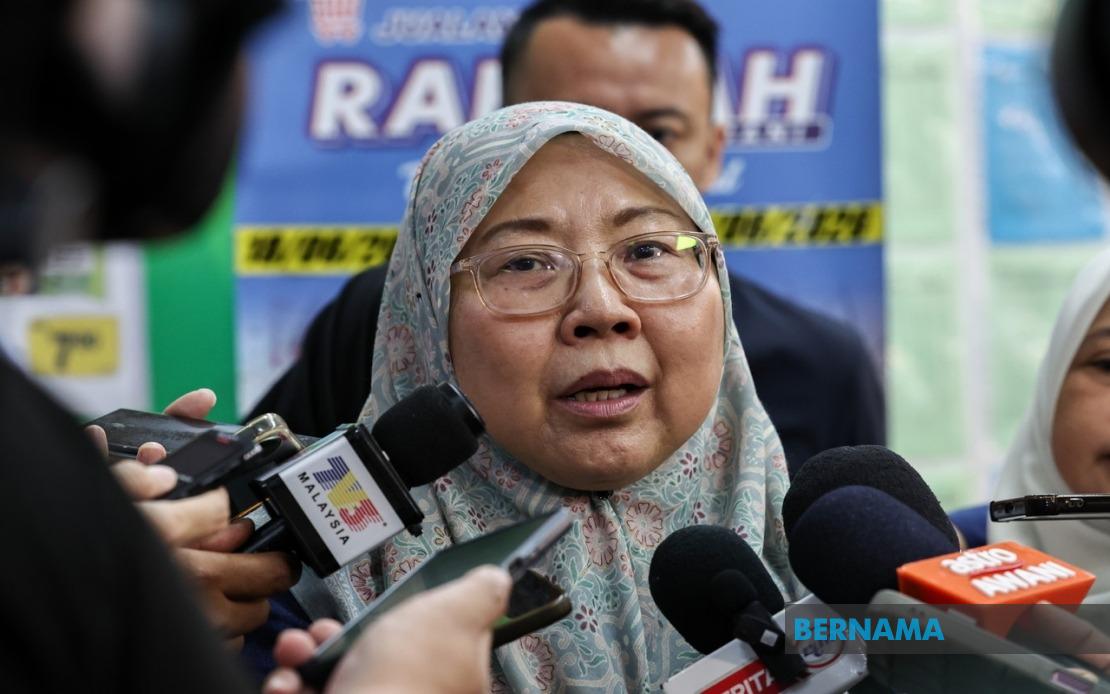
The Ministry of Domestic Trade and Cost of Living has moved to reassure the public that essential goods will remain in steady supply across Johor and Negeri Sembilan as both states prepare for their upcoming elections. Deputy Minister Datuk Dr Fuziah Salleh made the commitment during an inspection at Econsave Taman Daya, emphasising that despite mounting global logistics expenses stemming from the West Asia conflict, comprehensive strategies are already operational to safeguard against supply disruptions. The assurance comes at a time when election activity is expected to trigger heightened demand from election officials and visiting citizens from other states.
At the heart of the ministry's preparedness strategy lies a newly implemented distribution framework for subsidised cooking oil that bypasses traditional wholesale intermediaries. Under this revised system, repackers deliver subsidised cooking oil directly to retail points of sale, creating a leaner supply chain designed to prevent bottlenecks and ensure products reach consumers faster. This structural innovation reflects the government's recognition that during high-demand periods such as elections, conventional distribution channels can become congested, potentially creating artificial shortages even when adequate stock exists.
Johor's cooking oil allocation demonstrates the scale of the supply commitment. The state receives a monthly quota exceeding 3,000 metric tonnes, processed and packaged by 18 licensed repackers operating across the state. These repackers supply 95 designated retail points of sale, encompassing both hypermarket chains such as Econsave and smaller community outlets. The inspection conducted at Econsave Taman Daya confirmed that inventory levels are being maintained at healthy levels, with approximately 100 cartons of subsidised cooking oil available on a daily basis to cater to established local consumption patterns.
To prevent leakage and protect subsidised goods for Malaysian citizens, the ministry has implemented stringent verification mechanisms at retail checkout points. These controls require customers to scan a dedicated application or present their MyKad identity card before purchasing subsidised items. Such measures address a persistent concern in subsidy programmes across Southeast Asia, where diversion to unintended beneficiaries or informal markets can undermine the effectiveness of government support initiatives. By creating a documented transaction trail, the verification system also provides regulators with data to monitor purchasing patterns and identify anomalies.
The broader context for this election-season supply assurance involves the Rahmah MADANI Sales Programme, a nationwide pricing intervention initiative designed to ease cost-of-living pressures on Malaysian households. Since the start of this year through mid-June 2026, the programme has hosted 13,692 events across the country, with Johor accounting for 920 of these sessions. These events have been distributed across all 56 state constituencies within Johor, collectively attracting 2.3 million visitors and facilitating more than 1.46 million individual transactions. The scale of engagement demonstrates substantial public uptake and suggests that government affordability initiatives are reaching their intended audiences.
The significance of these figures extends beyond mere transaction numbers. They indicate that a substantial portion of Johor's population actively participates in subsidised purchasing opportunities, which in turn implies that supply adequacy during the election period is genuinely consequential for household budgets. Election periods create temporary population movements and altered consumption patterns that can strain supply chains if not anticipated. The ministry's proactive stance reflects lessons learned from previous elections and demonstrates institutional memory regarding what happens to demand patterns during polling seasons.
Global logistics costs present a legitimate structural challenge underlying the ministry's assurances. The West Asia conflict has increased shipping expenses, port congestion, and insurance premiums for goods moving through international supply chains. Malaysia, as a net food importer with significant reliance on regional and international sourcing for many essential commodities, remains exposed to these cost pressures. By confirming that adequate stocks have been built up and distribution systems optimised, the ministry is implicitly acknowledging that it has factored these global cost increases into its procurement and inventory planning for the election period.
The election timeline itself shapes the urgency of these supply guarantees. Johor's state election is scheduled for July 11, 2026, preceded by early voting on July 7 and candidate nominations on June 27. This two-week window creates a predictable demand surge, allowing the ministry to concentrate resources and monitor performance metrics with specific reference points. The announcement from Deputy Minister Fuziah Salleh comes strategically during this pre-election period, allowing sufficient time for any supplementary measures to be implemented if inspections reveal unexpected shortages.
For Malaysian readers and regional observers, these assurances carry implications beyond simple commodity availability. The willingness of government agencies to publicly commit to supply adequacy during elections reflects institutional confidence in planning capacity and reflects democratic accountability mechanisms. When public officials stake their credibility on specific outcomes, they create observable benchmarks against which performance can be measured. This transparency contrasts with situations elsewhere where supply disruptions during elections occur without prior public acknowledgment of risks.
The coordination between the Ministry of Domestic Trade and retail partners such as Econsave also illustrates how public-private cooperation functions in Malaysia's subsidised goods ecosystem. Hypermarkets serve as critical distribution nodes, and their participation in the government's direct delivery system ensures that subsidised goods reach urban populations efficiently. The success of this arrangement depends on sustained communication between regulators and retailers, particularly during volatile demand periods.
For Negeri Sembilan, though mentioned less prominently in the announcement, similar protocols are presumably in operation, though the state's smaller population and different geographical characteristics may require calibrated approaches. The ministry's blanket assurance covering both states suggests a coordinated national strategy rather than state-specific improvisation, which strengthens confidence in implementation capacity.
As Malaysia moves toward the July 11 poll date in Johor, the adequacy of essential goods supplies will remain a practical barometer of government effectiveness. Citizens evaluating electoral options will naturally observe whether promised supplies materialise and whether prices remain stable. For policymakers, the election period offers a high-visibility testing ground for supply chain innovations and subsidy mechanisms that may be scaled nationally if they perform effectively during this concentrated demand episode.