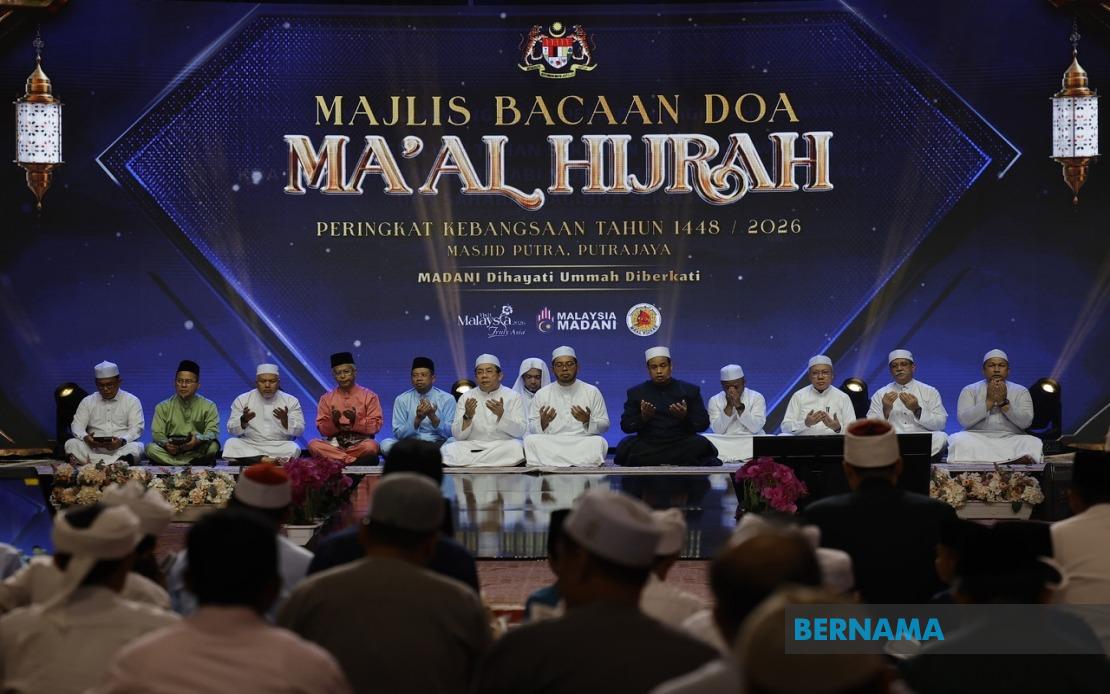
Malaysia's religious leadership is channelling efforts to connect the nation's youth with the historical significance of Hijrah through this year's national celebration, positioning the annual observance as a catalyst for personal and societal development. Datuk Dr Zulkifli Hasan, Minister in the Prime Minister's Department (Religious Affairs), has stressed that young Malaysians possess considerable latent capacity to drive meaningful transformation, and that reflecting on Prophet Muhammad SAW's foundational journey offers a compelling philosophical template for realising this potential. His remarks come as the country prepares to commemorate Maal Hijrah 1448H/2026M with renewed emphasis on the deeper spiritual messages embedded in the Prophet's historic migration from Makkah to Madinah.
The shift in approach to this year's commemoration reveals how Malaysian religious authorities are reconceptualising Hijrah beyond a mere historical marker. By anchoring celebrations in mosque-based programming and thematic reflection rather than grand public spectacles, organisers are attempting to deepen spiritual introspection among participants. Zulkifli outlined how Putra Mosque in Putrajaya has been deliberately selected as the central venue, serving as both a symbolic anchor and practical space for contemplation. This choice carries particular resonance given the mosque's architectural significance and its role as a symbol of Malaysia's Islamic institutional development. The decision underscores an argument that mosques function as foundational spaces where not only religious practice flourishes but also civilisational advancement and community cohesion take root.
The thematic centring of Hijrah's institutional dimension—specifically how Prophet Muhammad established the mosque as the first institution upon arriving in Madinah—speaks to Malaysian authorities' desire to frame religious observance within a development-oriented narrative. Rather than positioning Hijrah as purely commemorative, the framing encourages audiences to extract practical lessons about institution-building, community organisation, and the symbiotic relationship between spiritual commitment and societal progress. For Malaysian youth, this presents an interpretative pathway that connects religious devotion to concrete social contribution and personal accountability. The approach acknowledges that younger generations increasingly seek meaning that bridges personal spiritual growth with tangible contributions to their communities and nation.
Resourcefulness and pragmatism have characterised the planning of this year's main event, which the organisers have deliberately scaled to reflect broader concerns about energy consumption and global supply chain pressures. Rather than viewing modest celebrations as diminishment, religious authorities have framed restraint as itself embodying Hijrah principles—abandoning superfluity in favour of substantive spiritual engagement. This messaging carries implicit lessons about sustainable practice and conscious resource management, themes that resonate particularly in Southeast Asian contexts where environmental and economic pressures are mounting. The celebration's modest footprint thus becomes a pedagogical statement, teaching through example rather than exhortation.
The structured programme reflects careful attention to reaching diverse audiences through different mechanisms. The main ceremonial component, occurring on June 17 at Putra Mosque and commencing at 7 am coinciding with 1 Muharam 1448H, will feature presentation of national and international Maal Hijrah Figure awards and be officiated by Sultan Nazrin Shah of Perak. This formal component lends gravitas and institutional weight to the occasion while honouring individuals exemplifying Hijrah principles in contemporary contexts. The selection of distinguished awardees serves to make abstract principles tangible by highlighting real individuals whose life trajectories embody the transformative potential embedded in Hijrah philosophy.
Complementing the ceremonial dimension, a keynote lecture programme scheduled for June 18 at the JAKIM Auditorium provides space for intellectual engagement and deeper exploration of Hijrah's contemporary relevance. By inviting both national and international speakers to address approximately 1,000 participants, organisers are creating platforms where Islamic scholars and thought leaders can articulate how historical precedent applies to current challenges facing Malaysian society. This educational approach recognises that meaningful engagement with religious themes requires more than ceremonial participation; it demands intellectual scaffolding and reasoned discourse that helps audiences synthesise inspiration with practical application.
The emphasis on drawing Malaysian youth into this interpretive process reflects broader anxieties and aspirations within the country's religious establishment regarding generational engagement. Young Malaysians navigate increasingly complex landscapes where traditional religious institutions compete with diverse sources of meaning and identity. By deliberately framing Hijrah as a developmental and transformative concept rather than purely commemorative practice, religious authorities position Islamic heritage as directly relevant to youth concerns about purpose, direction, and contribution. The narrative implicitly argues that historical Islamic precedent contains resources for addressing contemporary Malaysian challenges including social cohesion, institutional integrity, and purposeful community engagement.
The reference to Hijrah's institutional dimension carries particular significance for Malaysian contexts where mosque-centred community development has become increasingly important. Malaysia's Islamic authorities have increasingly emphasised mosques as multifunctional spaces serving educational, welfare, and community organising roles beyond prayer. By highlighting how Prophet Muhammad prioritised mosque establishment as his first institutional act upon reaching Madinah, this year's celebration implicitly endorses expanding mosque functions beyond traditional liturgical roles. For Malaysian youth seeking meaningful community involvement, such messaging suggests that religious spaces offer legitimate venues for social contribution and capacity-building alongside spiritual practice.
The participation of Sultan Nazrin Shah lends royal legitimacy to the observance while signalling the continued integration of traditional monarchical authority with religious institutional frameworks in Malaysia. The Sultan's presence underscores the establishment's commitment to bridging religious and secular governance structures, a delicate equilibrium that remains important in Malaysia's constitutional monarchy. For attendees, particularly youth observing formal state endorsement of Islamic commemorations, the royal participation reinforces messages that religious engagement constitutes responsible citizenship rather than sectarian activity.
Looking forward, the effectiveness of this year's approach in mobilising youth engagement will likely depend on how well organisers connect abstract Hijrah principles to concrete contemporary challenges facing young Malaysians. Whether messaging about institutional development, community building, and purposeful transformation genuinely resonates with youth audiences or remains rhetorical remains to be seen. However, the deliberate restructuring of celebrations toward thematic depth rather than ceremonial grandeur suggests Malaysian religious authorities recognise that meaningful engagement requires substantive rather than superficial engagement with religious concepts. The coming weeks will clarify whether this recalibrated approach successfully catalyses renewed youth commitment to community-oriented Islamic practice.