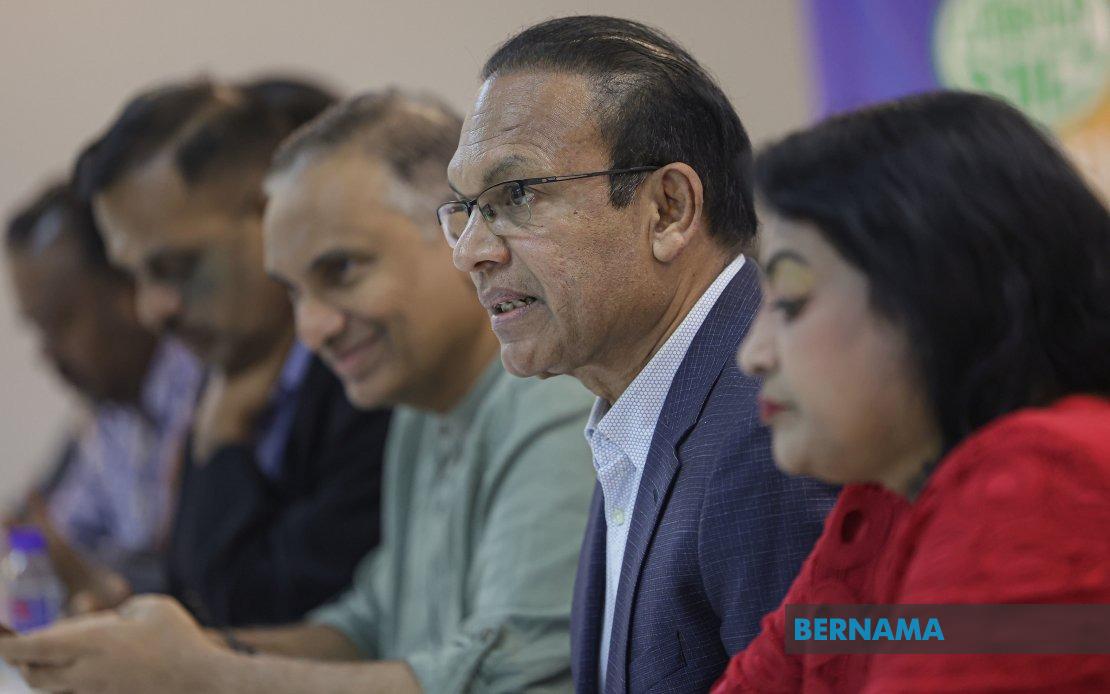
The Malaysian Indian Congress (MIC) has secured an allocation of four seats to contest in the forthcoming Johor state election, according to party vice-president Datuk T. Murugiah. The confirmation came after MIC president Tan Sri SA. Vigneswaran participated in recent coalition discussions between Barisan Nasional (BN) component parties regarding electoral strategy for both Johor and Negeri Sembilan. While the Johor slate has been finalised, negotiations over the party's representation in Negeri Sembilan remain ongoing as coalition partners continue to divvy up available constituencies across the two states.
MIC's allocation of four seats represents a modest but significant presence within BN's broader campaign machinery in Johor, where the coalition will field candidates across all 56 state constituencies. The party's footprint, though limited in numerical terms, carries particular importance given the substantial Indian-Malaysian voter base concentrated in various Johor constituencies. The Election Commission has set July 11 as polling day for Johor, with nomination of candidates scheduled for June 27, giving parties less than two weeks to complete their selection processes and commence intensive campaigning.
To maximise electoral effectiveness among Indian-Malaysian communities, MIC is mobilising its grassroots apparatus through an ambitious training initiative. The party will conduct a two-day speaker training programme in Johor Bahru this weekend, bringing together approximately 150 party cadres tasked with delivering campaign messages across all state constituencies where BN is contesting. These trained speakers will be equipped with standardised talking points and public communication skills, allowing them to conduct targeted outreach to Indian voters in their respective areas. This structured approach reflects the party's recognition that effective community engagement requires both message discipline and personnel preparation at the ground level.
MIC's performance in the March 2022 Johor state election provides context for the party's current positioning. In that contest, the party won three of four seats it contested—capturing Kemelah, Kahang, and Tenggaroh while suffering defeat in Bukit Batu. This 75 percent success rate demonstrated MIC's continued electoral relevance in specific constituencies, though it also highlighted vulnerability in certain seats. Internal party discussions suggest MIC will approach the upcoming election with a modified strategic approach, fielding candidates in Kemelah, Kahang, and Bukit Batu while ceding the Tenggaroh seat to UMNO in exchange for the opportunity to contest Perling. This seat-swapping arrangement reflects the mechanics of coalition politics within BN, where allocation negotiations frequently involve trading constituencies to optimise overall coalition performance.
The expected infusion of new candidates represents a significant generational shift within MIC's electoral strategy. According to party insiders, approximately 50 percent of MIC's candidates in the Johor election will be first-time contenders, suggesting a deliberate effort to refresh the party's parliamentary and state assembly roster. This renewal strategy may serve multiple purposes: introducing candidates with fresher appeal to younger voters, reducing reliance on incumbents who may have become unpopular, and providing advancement opportunities for ambitious mid-tier party members. However, such wholesale candidate changes also carry risks, as inexperienced politicians may struggle against opposition candidates with established ground networks and voter familiarity.
Regarding Negeri Sembilan, the allocation process remains fluid. Party leadership has indicated that MIC currently has realistic prospects to contest two seats in that state, though the final determination has not yet been formalised. The Election Commission has scheduled Negeri Sembilan polling for August 1, with candidate nomination on July 18, providing additional time for coalition negotiations to conclude. The timing differential between the two elections creates distinct campaign windows, allowing BN to concentrate resources sequentially rather than attempting simultaneous deployment across both states.
MIC's role within BN extends beyond formal seat allocations to encompass broader coalition messaging and community mobilisation. By deploying 150 trained speakers across all 56 Johor constituencies, the party positions itself as a bridge between BN's leadership and Indian-Malaysian voters. This grassroots infrastructure carries particular importance in constituencies where Indian voters constitute significant electoral minorities capable of influencing outcome margins. The speaker training programme thus functions as both a practical campaigning tool and a symbolic affirmation of MIC's continued relevance within the coalition structure.
The party's simultaneous announcement of nationwide sporting competitions coinciding with its 80th anniversary celebrations demonstrates MIC's efforts to maintain organisational visibility and community engagement beyond electoral cycles. Planning sports competitions across 152 areas nationwide—including football, badminton, bowling, carrom, and hiking—reflects a strategy of community presence-building that complements formal electoral activities. By explicitly inviting participants from all racial communities, MIC signals a multiethnic orientation that positions the party as concerned with broader national interests rather than narrow communal concerns, a messaging approach potentially valuable during election campaigns.
For Malaysian political observers, MIC's allocation within BN reflects the delicate balance coalition partners must maintain. As the smallest significant component party in BN's Indian-Malaysian political machinery, MIC must demonstrate sufficient electoral influence to justify continued coalition partnership while avoiding competition so robust that it threatens larger BN components. The four-seat allocation and internal party preparations suggest MIC leadership believes the party can deliver meaningful results in targeted constituencies, validating their coalition standing ahead of what remains an uncertain political environment in Malaysia.