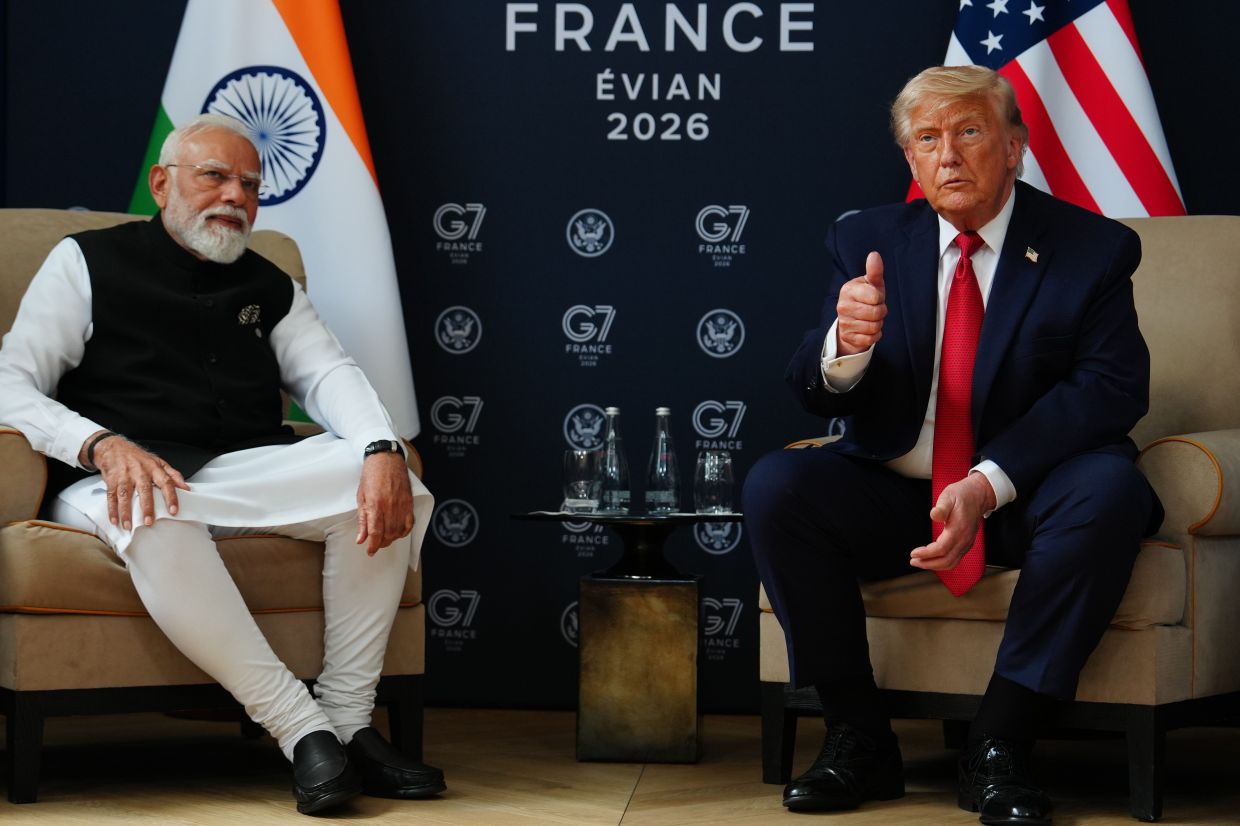
Indian Prime Minister Narendra Modi declared on Thursday that negotiations for a comprehensive trade agreement with the United States have reached an advanced stage, describing the progress as "significant" following his bilateral meeting with President Donald Trump at the G7 summit in Evian, France. The face-to-face encounter, which took place on Wednesday, marked the first substantive engagement between the two leaders since their February 2025 meeting in Washington and suggested renewed momentum in a relationship that has historically oscillated between ambitious announcements and implementation challenges.
The momentum behind the trade negotiations appeared genuine, with Trump himself confirming to journalists in Evian that the two nations were "very close" to striking a final agreement. The US President's characterisation of Modi as "a very tough negotiator, one of the toughest, actually" underscored the complexity of the talks, hinting that both sides had demanded significant concessions to reach this juncture. Such high-level endorsement from Washington carries particular weight for Indian stakeholders who have watched previous negotiations stall amid shifting American trade policies and domestic political considerations.
According to India's foreign ministry readout of the meeting, both leaders expressed particular satisfaction with "the significant progress made in negotiations towards an interim Bilateral Trade Agreement" and directed their respective trade teams to accelerate efforts toward a final accord that would be commercially meaningful for both economies. This language suggests the two countries are now focused on translating months of technical discussions into concrete terms that benefit exporters and investors on both sides, rather than remaining bogged down in foundational disagreements about market access and tariff structures.
The timeline for completion appears genuinely accelerated. US Trade Representative Jamieson Greer is scheduled to visit India in the coming week to conduct what officials have characterised as the latest negotiating round, indicating that substantive discussions will continue at the highest levels of the US trade bureaucracy. Commerce Minister Piyush Goyal's assertion in early June that negotiations were "about 99 per cent" complete on the first tranche of an agreement suggests that major structural disputes have been resolved, leaving primarily technical and administrative details to be finalised.
The two countries have been pursuing an ambitious bilateral trade expansion framework, with a joint target of increasing two-way commerce to US$500 billion by 2030 from current levels significantly below that figure. This numerical goal reflects the strategic importance both nations place on deepening economic ties, particularly as India seeks to diversify its export markets and the United States aims to strengthen alliances in the Indo-Pacific region as part of its broader China containment strategy. However, achieving such growth requires not merely symbolic agreements but actionable commitments to tariff reduction, intellectual property protections, and regulatory harmonisation in critical sectors.
The path to this point has not been straightforward. The two nations reached an initial framework understanding in February 2025, but the momentum dissipated when the US Supreme Court struck down Trump's sweeping tariff measures, forcing the administration to pursue investigations into unfair trade practices against multiple countries, including India, while simultaneously imposing a blanket 10 percent tariff. This legal setback and the subsequent imposition of broad-based tariffs created considerable uncertainty about America's commitment to a bilateral agreement and forced both negotiating teams to recalibrate their expectations and fallback positions.
Beyond the trade portfolio, Modi also leveraged the summit to raise concerns about seafarer safety in the context of the Iran-US deal aimed at reducing Middle East tensions. The Prime Minister highlighted the deaths of three Indian sailors in a US strike on a commercial vessel off Oman on June 10, signalling that New Delhi expects Washington to implement safeguards protecting civilian maritime workers operating in conflict zones. This issue carries particular resonance in India, where maritime labour represents a critical economic constituency and where families of seafarers wield considerable political influence.
India's vulnerability to Middle East disruptions extends well beyond maritime labour concerns. The South Asian nation has suffered substantial economic consequences from the regional conflict, including energy supply constraints resulting from Iran's closure of the Strait of Hormuz, a critical waterway accounting for a significant portion of global oil and gas flows. During the summit, Modi warned that supply chain disruptions affecting fuel, fertiliser, and food production would continue burdening developing economies in the Global South for an extended period, essentially asking developed nations to acknowledge that geopolitical instability in one region creates cascading economic consequences across the world.
For Malaysian observers and policymakers, the trajectory of US-India trade negotiations carries important implications. A successful bilateral agreement would signal renewed capacity for major economic powers to negotiate mutually beneficial trade frameworks, potentially influencing discussions around regional arrangements like the Indo-Pacific Economic Framework. Additionally, India's evolution as a manufacturing hub and export-oriented economy directly competes with Southeast Asian manufacturers in several sectors, meaning the terms of India's market access to the United States will shape competitive dynamics for Malaysian and other ASEAN exporters.
The strategic underpinnings of this trade progress also merit attention. Closer US-India economic integration aligns with Washington's Indo-Pacific strategy of strengthening relationships with democratic partners in Asia to counterbalance Chinese influence. India's growing importance as a counterweight to China resonates across the region, and successful trade negotiations would reinforce broader geopolitical alignments that have implications for ASEAN's position between great powers. Malaysia, as a significant trading nation itself, benefits from general stability and rules-based international commerce, which both countries have rhetorically championed.
The emphasis on reaching an agreement "at the earliest" suggests both sides recognise political windows of opportunity that may not remain open indefinitely. The direction of US policy, particularly following presidential transitions, has proven unpredictable, while India's domestic political calendar and economic priorities also shift over time. This urgency, combined with the reported progress, suggests that a preliminary or interim agreement could materialise within weeks rather than months, providing much-needed momentum for bilateral commerce and perhaps lending credibility to broader American commitments to regional economic integration in Asia.
As negotiations continue, the true test will emerge in implementation. Historical experience with India-US trade frameworks reveals that announcements of progress frequently exceed actual commercial benefits realised on the ground, with regulatory differences, dispute resolution mechanisms, and enforcement challenges often limiting the impact of headline agreements. Nonetheless, the visible personal rapport between Modi and Trump, combined with the apparent technical progress, suggests that this iteration of US-India trade negotiations may ultimately achieve more substantial outcomes than previous attempts.