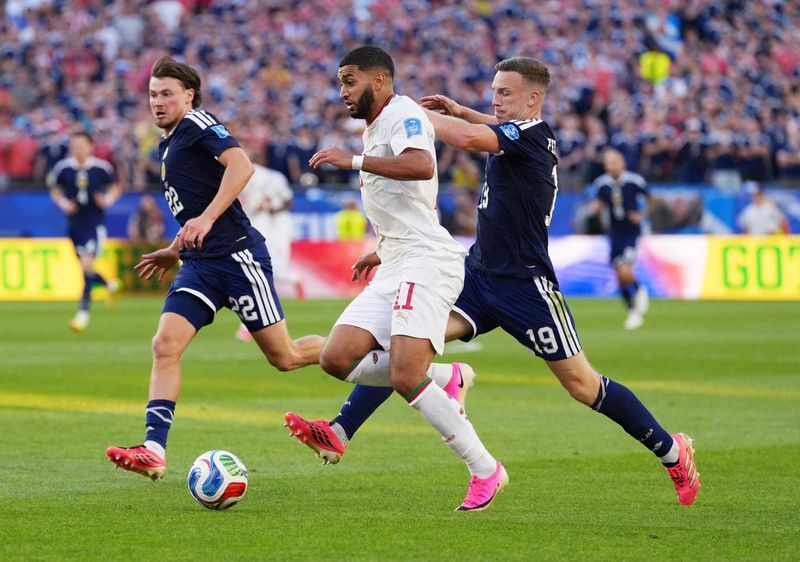
Morocco demonstrated ruthless efficiency on Friday in Foxborough, dismantling Scotland with a 1-0 victory that saw them claim pole position in Group C of the World Cup. The decisive moment came swiftly and dramatically, with Ismael Saibari latching onto a Brahim Diaz cross after just 71 seconds—the quickest strike of the entire tournament—to set the tone for a masterclass in controlled dominance that left the Scottish side chasing shadows for much of the contest.
The North African outfit, who captured global attention as surprise semi-finalists in Qatar's 2022 edition, showed why they earned that distinction through a display of physical intensity and tactical discipline. From the opening whistle, they pressed high, won possession in dangerous areas, and broke forward with purpose. Scotland's early defensive structure crumbled when central defender Grant Hanley stepped out prematurely, creating the gap through which Saibari burst to finish emphatically. For a team that had arrived in Massachusetts riding the crest of their first World Cup victory in 36 years, the reality of facing Morocco's aggression proved sobering and swift.
Saibari's contribution extends beyond the scoresheet. The midfielder's brace across Morocco's first two matches—including a goal in their 1-1 draw with Brazil—has earned him recognition as only the second African player to score in his first two World Cup appearances, joining Egypt's Mohamed Salah in that elite company. Recent reports suggest the Bayern Munich move he has reportedly medically cleared adds another layer of intrigue to his tournament narrative, as he aims to build on this momentum before joining one of Europe's premier clubs.
The match structure reflected Morocco's complete ascendancy. In the opening half, they fashioned chance after chance with a fluidity that belied the 1-0 scoreline. Bilal El Khannouss tested the goalkeeper in the 36th minute following another slick attacking sequence, while Azzedine Ounahi's gallop down the left flank nearly yielded a second when his cutback found two Moroccan players who inexplicably failed to convert from close range. Scotland, by contrast, managed no shots on target until deep into first-half stoppage time—a statistical indictment of their toothless attacking play against a side that appeared to operate on a different tactical plane.
After the interval, the pattern intensified. Saibari struck the post with a deflected effort, while El Khannouss forced Scottish goalkeeper Angus Gunn into a sharp save with a glancing header soon after the restart. The Moroccans were essentially playing exhibition football, secure in their superiority and content to manage the game without overcommitting. Scotland's late-match attempts to pressure Morocco produced occasional glimpses of hope, yet they lacked the creativity and composure to engineer a genuine equalizer.
The performance vindicated Ounahi's pre-match confidence when he boldly stated his team was targeting the tournament final. Morocco's demonstration against Scotland suggested they possess the mettle and tactical intelligence to compete at the highest level. With four points from two matches, they now occupy Group C's summit with one fixture remaining against Haiti on Wednesday. Their quarter-final destination appears increasingly probable, though the calibre of their football and the manner of their victory underscored that they can trouble any opponent when operating at this intensity.
Scotland's position, while still mathematically viable, has become considerably more precarious. With three points from two encounters, Steve Clarke's side must now face five-time champions Brazil on the final matchday with their qualification hopes resting on a result they would ordinarily consider beyond reach. The contrast between their opening night euphoria against Haiti—when they claimed their first World Cup victory since 1990—and this comprehensive dismantling by Morocco illustrates the tournament's brutal nature. The Scots discovered that one win provides no insurance against falling away during the group stage.
The broader Group C narrative tightens considerably with Brazil and Haiti facing each other later Friday. Brazil's status as defending champions makes them formidable in the final reckoning, yet their earlier draw with Morocco proved they are beatable. Haiti, viewed as the group's weakest outfit, nonetheless possess threat on their day. The jockeying for positions and combinations that could determine progression now becomes endlessly intricate, with Morocco's controlling performance having reshaped the mathematical possibilities.
For Malaysian followers of the global game, Morocco's display carries regional significance. The North Africans' success challenges traditional assumptions about European and South American dominance at football's grandest stage. Their tactical maturity and physical organisation provide a template for how emerging footballing nations can compete effectively against established powers. Furthermore, the presence of a player of Saibari's calibre—bound for Bayern Munich—illustrates how African football talent increasingly feeds the world's elite leagues, enriching global competition while strengthening their respective national teams for tournament appearances.
Scotland's pain, meanwhile, provides cautionary perspective for smaller footballing nations everywhere. A single positive result offers no guarantee of sustained performance or progression. The tournament demands consistency, adaptation, and the mental fortitude to bounce back from setbacks. As the Scots contemplate their Brazil assignment, they must recalibrate entirely. Morocco, conversely, can approach their Haiti fixture with confidence, knowing they have already demonstrated they belong among this World Cup's elite performers.