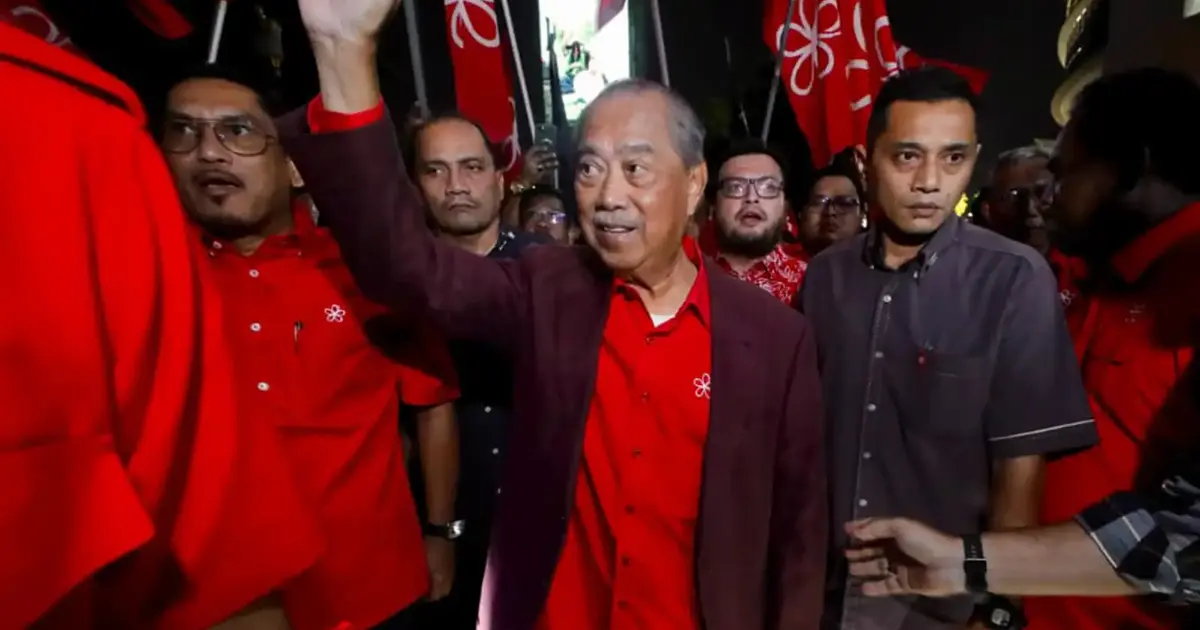
Tan Sri Muhyiddin Yassin commanded a significant show of grassroots backing when over 200 party members gathered in his support ahead of a critical Bersatu meeting that promises to reshape the party's political trajectory. The rally underscores the depth of loyalty the Bersatu chairman maintains within his party machinery, even as the Bumiputera Malaysia United party navigates turbulent coalition politics and preparation for upcoming electoral contests that could significantly influence Malaysia's political landscape.
The timing of the gathering carries substantial weight within Malaysian political circles. Bersatu faces a pivotal moment as it calibrates its approach to forthcoming state elections in Johor and Negeri Sembilan, two states where the party's electoral performance could have broader ramifications for the coalition configurations at federal level. These contests represent more than routine state-level politics; they serve as barometers of public sentiment towards the current federal government and test the resilience of existing political alliances.
Central to the upcoming party meeting's agenda is the question of electoral preparation and resource allocation. Bersatu must determine how to position its candidates competitively in both states while managing expectations among party members. The Johor and Negeri Sembilan elections carry symbolic importance, particularly as Bersatu seeks to consolidate its presence in peninsular Malaysia and demonstrate electoral viability beyond its traditional strongholds. Success in these contests would strengthen Muhyiddin's hand within both Bersatu and the broader coalition framework.
Equally consequential for Bersatu's deliberations is the state of its relationship with PAS, its primary coalition partner in the current federal arrangement. The relationship between the two Bumiputera-focused parties has experienced periods of tension and alignment, reflecting broader currents within Malaysia's Islamist and Bumiputera political movements. PAS's recent actions and strategic pronouncements have prompted discussion within Bersatu circles about the sustainability and mutuality of their partnership, making clarification of terms and expectations urgent for party leadership.
Muhyiddin's role in managing these interrelated challenges positions him as central to Bersatu's future direction. His retention of substantial internal support, as evidenced by the rally attendance, provides him with political capital to shape party decisions. However, he must balance internal party dynamics with the realities of coalition politics at federal level, where Bersatu's bargaining position depends partly on its electoral prospects and internal cohesion.
The broader context involves Malaysia's complex political ecosystem, where state elections frequently reshape federal dynamics. Johor and Negeri Sembilan have historically punched above their weight in terms of national political significance. Control of these states influences federal government stability, coalition durability, and the positioning of regional power brokers. For Bersatu, performing credibly would validate its claim to being an indispensable federal coalition partner and counter narratives of declining relevance.
For Malaysian voters and political observers in Southeast Asia, these developments illustrate how coalition-based governance creates cascading effects across multiple political levels. Bersatu's trajectory directly impacts the stability and policy direction of the federal government, while state-level contests offer voters chances to send signals about their preferences regarding coalition composition and governance approaches. The rally supporting Muhyiddin suggests the party chairman possesses resources and organizational capacity to project influence within his party structure.
The upcoming Bersatu meeting represents a convergence point where multiple pressures meet. Party members expect clear direction on electoral strategy and the rationale behind coalition decisions. The federal government requires stable coalition partners willing to maintain parliamentary support. PAS, meanwhile, will be watching Bersatu's internal deliberations and public positioning, knowing that Bersatu's choices affect the broader Bumiputera-Islamist coalition's effectiveness. Regional observers across Southeast Asia monitor Malaysian coalition politics closely, as outcomes in Malaysia frequently ripple through regional diplomatic and business networks.
Muhyiddin's demonstrated support base suggests the party apparatus remains responsive to his leadership, at least among grassroots mobilization efforts. Whether this translates into decisive party decisions and electoral success in the forthcoming state elections depends on organizational execution and broader voter sentiment. The rally signals Muhyiddin has not lost control of party machinery, a crucial prerequisite for implementing the strategic decisions the party meeting is likely to produce.
Looking forward, the intersection of Johor and Negeri Sembilan elections with PAS relationship management creates a complex agenda for Bersatu deliberations. The party must address immediate electoral concerns while building a sustainable long-term coalition strategy that preserves its political relevance. The over 200 supporters who gathered for Muhyiddin represent just the visible portion of internal party dynamics; the crucial test will come when Bersatu converts support into electoral performance and sustainable governing coalitions.