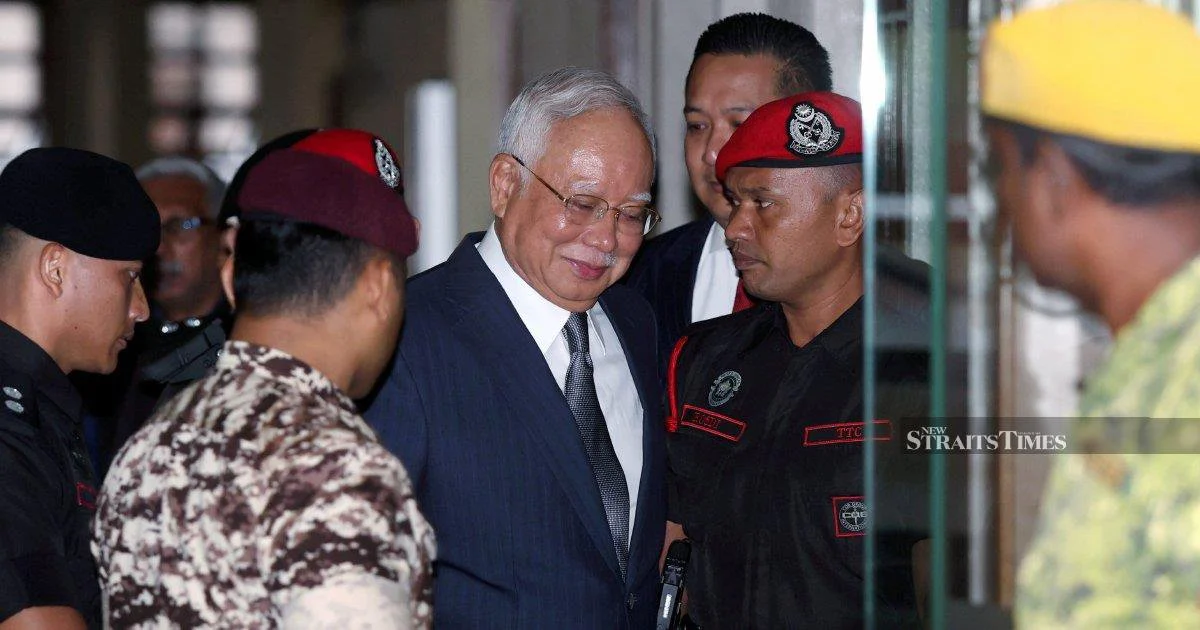
A Kuala Lumpur court has found that former Prime Minister Datuk Seri Najib Razak and fugitive businessman Low Taek Jho operated in tandem to illegally extract billions of ringgit from 1Malaysia Development Bhd (1MDB), establishing what the bench characterised as a partnership defined by close coordination and mutual benefit. The judicial determination underscores the interconnectedness of the two figures within the sprawling financial scandal that has dominated Malaysian politics and law enforcement for nearly a decade.
The court's assessment that Najib and Jho Low functioned as collaborative architects rather than separate actors represents a significant development in understanding the scandal's mechanics. Rather than portraying either as a lone operator acting with sporadic assistance, the ruling suggests a more systematic arrangement where decisions flowed between them and implementation followed aligned objectives. This characterisation carries profound implications for how investigators and prosecutors approach similar large-scale financial crimes, particularly when multiple figures occupy positions allowing them to influence corporate governance and financial flows simultaneously.
1MDB's trajectory from ambitious sovereign wealth initiative to discredited vessel for theft illustrates how institutional safeguards collapse when leadership actively subverts oversight mechanisms. The fund was ostensibly created to drive Malaysia's economic transformation through strategic investments and development projects. Instead, it became a channel through which massive capital flows were diverted from their intended destinations. The scale of the operation—billions rather than millions—required sustained manipulation of financial records, board-level decision-making, and external oversight bodies over an extended period.
Jho Low's fugitive status presents an ongoing challenge to Malaysia's justice system and regional law enforcement cooperation. Despite extensive international manhunts and sanctions, the businessman has evaded apprehension across multiple jurisdictions. His absence from Malaysian proceedings means testimony and evidence must proceed without his direct participation, complicating the court's ability to test certain assertions or secure direct admissions. The situation also raises questions about whether significant assets he allegedly accumulated remain beyond recovery, even as Malaysian authorities pursue civil and criminal remedies against other parties involved.
Najib's legal position has deteriorated substantially since his administration ended in 2018. Beyond the 1MDB-related charges, he has faced separate convictions and ongoing proceedings addressing misuse of government resources and abuse of authority. His role as Prime Minister during the alleged conspiracy adds a constitutional dimension rarely encountered in Malaysian jurisprudence, where the highest executive office was allegedly weaponised to facilitate private theft. This distinction shapes public discourse about institutional accountability and whether democratic systems can adequately constrain leaders disposed toward corruption.
The ruling's implications extend beyond the immediate principals to encompass financial institutions that processed transactions, advisors who structured arrangements, and intermediaries who facilitated asset movements. Malaysian authorities and international partners including the United States, Singapore, and others have already charged numerous individuals and recovered substantial sums through civil asset forfeiture. However, the full ecosystem of enablers remains incompletely addressed, and some foreign institutions implicated in transactions have negotiated settlements without comprehensive accountability mechanisms.
For Malaysia's broader governance framework, the 1MDB scandal exposed structural vulnerabilities that persist despite reform efforts. Sovereign wealth funds and similar institutions require genuine independent oversight, board expertise uncompromised by political loyalty, and transparent financial reporting structures that institutional leaders cannot easily circumvent. The tendency of Malaysian administrations to vest substantial discretion in executive figures without proportionate checks created conditions enabling the conspiracy's evolution and longevity. Subsequent governments have introduced reforms, yet questions remain about their effectiveness and durability across political transitions.
Regional observers including Singapore, Indonesia, and Thailand face their own vulnerabilities to similar schemes. Large state-controlled enterprises and development funds operate across Southeast Asia, and the 1MDB experience provides cautionary evidence that even relatively sophisticated financial systems can be compromised when political will to maintain integrity falters. International cooperation frameworks, including mutual legal assistance treaties and intelligence sharing, have proven essential to tracing assets and pursuing perpetrators across borders, a pattern likely to intensify as regional economies integrate further.
The court's findings also inform ongoing debates within Malaysia about how to balance political accountability with institutional stability. Some observers argue that cases of this magnitude demand comprehensive truth commissions and public reckoning alongside criminal prosecution, while others contend that extended litigation and eventual conviction represent the appropriate constitutional response. The tension between these approaches reflects deeper questions about post-corruption recovery and whether societies can genuinely reform institutions without acknowledging systematic failures at the highest levels.
As proceedings continue against Najib and others, the established connection between him and Jho Low will likely anchor subsequent litigation, civil recovery efforts, and parliamentary inquiries. The judicial characterisation of their coordinated operation provides prosecutors and civil authorities a framework for pursuing additional defendants and assets. For Malaysian citizens observing from outside the legal system, the ruling represents tangible validation of long-held suspicions about the scandal's true architecture, though closure remains distant given the complexity of unravelling transactions spanning multiple countries and institutions.