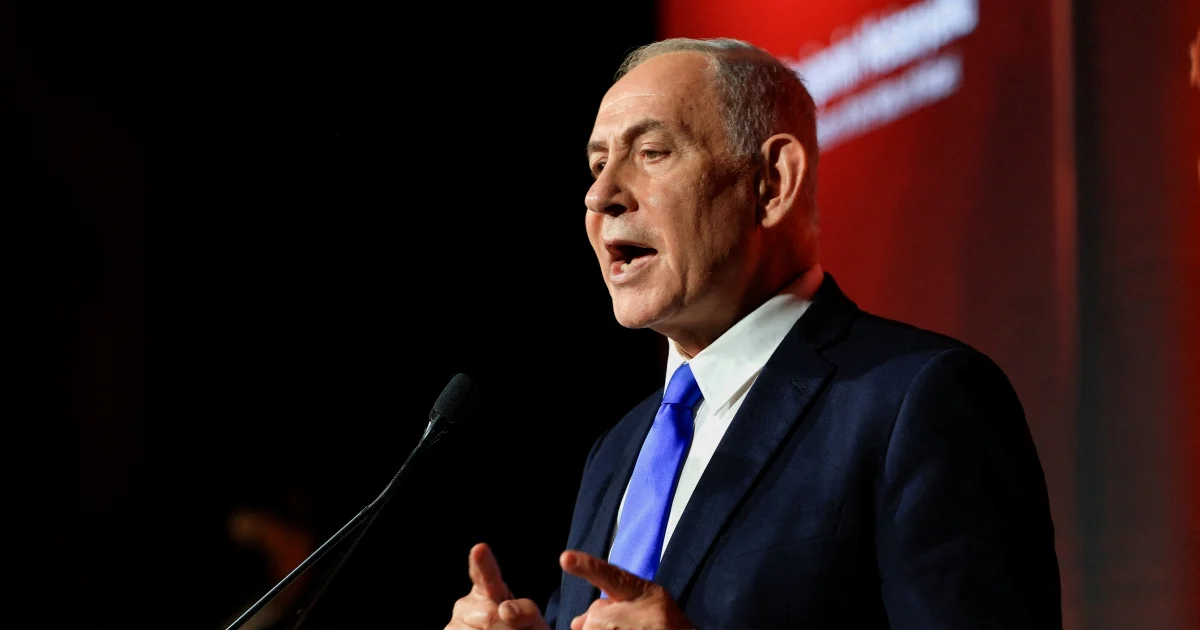
Israeli Prime Minister Benjamin Netanyahu reiterated on Sunday that his country's military deployment in southern Lebanon would continue without a defined timeframe, underscoring the open-ended nature of the current regional security posture. The statement reflects the broader military operations that have reshaped the geopolitical landscape across the Levant, with significant implications for regional stability and international diplomacy in the Middle East.
Netanyahu's remarks come amid an intensified security environment that has drawn international scrutiny and concern from neighbouring countries. The deployment in southern Lebanon, initiated as part of broader operations against Hezbollah, has created an uncertain situation where military objectives remain fluid and exit strategies remain undefined. This indefinite commitment suggests Israel's assessment of the security threats in the region and its determination to maintain strategic advantages along its northern frontier.
The Israeli premier simultaneously renewed his government's resolve to prevent Iran from advancing its nuclear weapons capabilities, a longstanding Israeli security priority that has repeatedly brought the country into diplomatic confrontation with international powers. This dual commitment—maintaining military presence in Lebanon while monitoring Iranian nuclear development—encapsulates Israel's regional security doctrine and the interconnected nature of Middle Eastern security challenges.
For Southeast Asian observers and policymakers, these developments carry important implications. Malaysia and its ASEAN neighbours maintain significant trading relationships and diplomatic ties throughout the Middle East. Regional military escalations, protracted occupations, and nuclear proliferation concerns can disrupt trade corridors, affect energy security, and create broader instability that reverberates across global supply chains and security arrangements.
The open-ended nature of military deployments in the region raises questions about de-escalation pathways and diplomatic solutions. International experience suggests that undefined timelines for military presence often extend far longer than initially anticipated, entrench positions, and complicate eventual political settlements. For a region already fragmented by numerous unresolved conflicts, the addition of an indefinite Israeli presence in southern Lebanon adds another layer of complexity to an already volatile security environment.
Hezbollah, the Lebanese militant group and political organisation that has been the primary target of Israeli operations, maintains significant support structures and retains operational capacity despite sustained military pressure. The organisation's resilience and cross-border capabilities suggest that Israeli security objectives may prove difficult to achieve through military means alone, potentially explaining the reluctance to specify withdrawal timelines or concrete success metrics.
Regional powers, particularly Syria and Iran, view the Israeli deployment as a threat to their interests and influence. Syria, already fragmented by its own civil conflict, faces additional pressure from Israeli military activities within its territory and near its borders. Iran sees the operations as part of a broader campaign targeting its regional allies and strategic position, further elevating tensions in an already volatile relationship with Israel and Western powers.
The international community, including Western allies and the United Nations, continues to call for measured responses and respect for Lebanese sovereignty. Lebanon itself, already struggling with severe economic collapse and political dysfunction, faces the additional burden of hosting Israeli military forces in its southern territory. This situation complicates Lebanon's ability to restore state authority, rebuild its economy, and address the humanitarian needs of displaced populations.
For Malaysian foreign policy considerations, the situation underscores the importance of supporting multilateral diplomatic frameworks and international institutions that can facilitate dialogue and prevent regional conflicts from escalating further. ASEAN's longstanding principle of non-interference and its emphasis on peaceful dispute resolution gain renewed relevance when examining Middle Eastern conflicts, where the absence of effective diplomatic mechanisms often allows military solutions to persist indefinitely.
The nuclear dimension of Israeli security concerns also resonates with Southeast Asian strategic thinking. Malaysia and its neighbours are engaged with international non-proliferation frameworks and understand the destabilising effects of nuclear weapons programmes in any region. The prospect of nuclear proliferation in the Middle East creates global security concerns that extend beyond the region itself, potentially triggering wider geopolitical realignments and arms races.
Economic implications warrant careful consideration as well. Continued military operations and regional instability can disrupt energy supplies, particularly oil exports that pass through critical chokepoints in the Persian Gulf and Red Sea. Malaysia, as an energy consumer and trading nation, has inherent interests in ensuring stable access to these vital resources and maintaining freedom of navigation in international waters.
Netanyahu's statement, while addressing immediate Israeli security concerns, reflects a broader challenge facing the Middle East: the difficulty of achieving lasting security through military dominance alone. Historical precedent suggests that military victories require political settlements to become durable and that indefinite occupation ultimately generates new security challenges rather than resolving existing ones.
%22%2F%3E%3C%2Fpattern%3E%3C%2Fdefs%3E%3Crect%20width%3D%22100%25%22%20height%3D%22100%25%22%20fill%3D%22url(%23ph5142vg)%22%2F%3E%3Crect%20width%3D%22100%25%22%20height%3D%22100%25%22%20fill%3D%22url(%23ph5142vp)%22%2F%3E%3Ctext%20x%3D%2250%25%22%20y%3D%2250%25%22%20text-anchor%3D%22middle%22%20dominant-baseline%3D%22central%22%20fill%3D%22rgba(255%2C255%2C255%2C0.95)%22%20font-family%3D%22Georgia%2C%20'Times%20New%20Roman'%2C%20serif%22%20font-weight%3D%22700%22%20font-size%3D%22194%22%20letter-spacing%3D%22-0.02em%22%3EBintulu%3C%2Ftext%3E%3C%2Fsvg%3E)