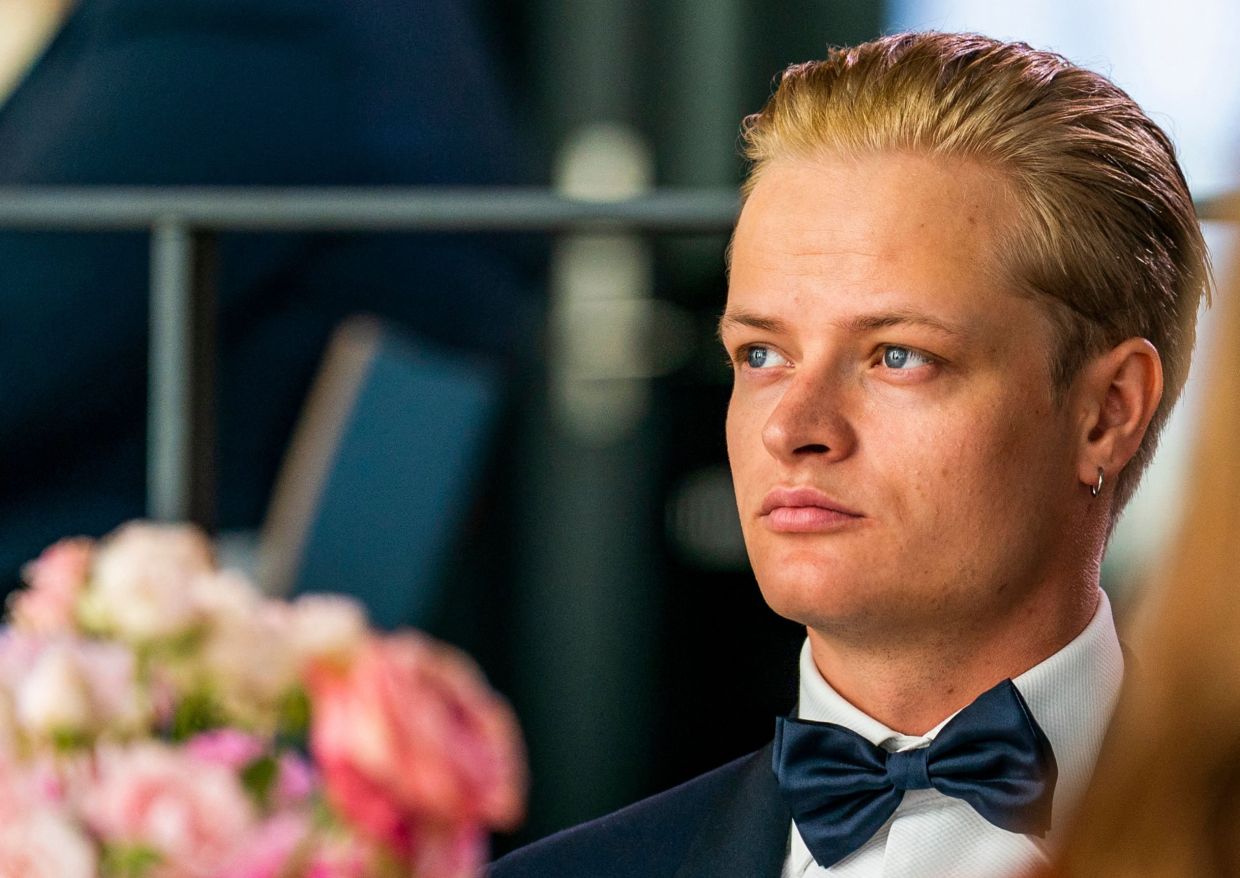
The eldest son of Norway's Crown Princess Mette-Marit, Marius Borg Høiby, received a four-year prison sentence on Monday following his conviction on rape and assault charges, marking a dramatic conclusion to one of Scandinavia's most closely watched criminal trials in recent years. The 29-year-old was found guilty of two of the four rape charges brought against him, while being acquitted on the remaining two counts. Beyond the sexual assault convictions, he was also found liable for assault and abuse within close relationships, and the court ordered him to provide financial compensation to his victims.
The criminal case centred on allegations that Høiby sexually assaulted four women who were either asleep or otherwise incapacitated to resist between 2018 and 2024. His legal difficulties extended well beyond the rape allegations, as prosecutors pursued a total of 40 criminal charges encompassing various offences ranging from drug-related crimes to violations of restraining orders. Throughout the investigation and trial proceedings, Høiby maintained his innocence regarding the rape allegations, though he acknowledged responsibility for numerous lesser offences presented before the court.
The sentencing represents a significant middle ground between the positions staked out by both legal teams. Prosecutors had sought a considerably harsher outcome, requesting that Oslo District Court impose a sentence of seven years and seven months imprisonment. Conversely, the defence had argued for Høiby's acquittal on the rape charges entirely, contending that any punishment should not exceed 18 months for the crimes he had admitted committing. The judge's determination of four years reflects a rejection of both extremes while still imposing substantial custodial punishment.
Høiby's absence from the courtroom during the verdict reading—attributed to health-related concerns—meant that he observed the conclusion of his six-week trial via video feed from his prison location. The extended trial period had featured testimony from multiple accusers alongside substantial documentary and digital evidence, including messages, photographs, and videos retrieved from Høiby's mobile telephone. This comprehensive evidentiary presentation formed the foundation for the court's ultimate finding of guilt on two rape counts and the related assault and abuse allegations.
The case has commanded extraordinary media attention throughout Scandinavia and internationally, primarily because of Høiby's proximity to Norway's succession line. Although he carries no formal royal title and performs no official state functions, his status as the son of Crown Princess Mette-Marit from her pre-marital relationship with Crown Prince Haakon—the heir presumptive to the Norwegian throne—situated him within the royal household during his formative years. This connection to one of Europe's most prominent monarchies transformed what might otherwise have been a serious criminal matter into a subject of intense public and international scrutiny.
The timing of the verdict has amplified the case's prominence within Norwegian public discourse. Crown Princess Mette-Marit's health has deteriorated markedly in recent weeks, intensifying focus on the broader royal family situation. The crown princess, who suffers from pulmonary fibrosis and is currently on the waiting list for a lung transplant, had become a focal point of legal disputes regarding whether her son should receive temporary release from custody pending the verdict announcement. Appeals courts consistently rejected such requests, determining that Høiby should remain imprisoned throughout the adjudication process.
The criminal proceedings against Høiby have unfolded within a broader context of renewed examination of the Norwegian royal family's conduct and associations. Recent revelations regarding Crown Princess Mette-Marit's historical contacts with Jeffrey Epstein, the American financier and convicted sex offender who died in prison, have prompted fresh questions about judgment and oversight within royal circles. The crown princess has publicly acknowledged these contacts, issuing a formal apology and characterizing her decision to maintain the relationship as an error in judgment. She has explicitly rejected any suggestion of wrongdoing on her part.
The verdict is not conclusive under Norwegian law, as Høiby retains the right to appeal the decision to a higher court. This opportunity for legal challenge means that the case may continue to occupy judicial and public attention for an extended period. The appeals process could potentially alter the conviction findings or modify the sentence length, introducing additional uncertainty into the situation. Høiby's decision regarding whether to pursue an appeal, and on what grounds, will likely generate considerable discussion among legal observers and the general public alike.
For Malaysian and Southeast Asian observers, the case illustrates the universal challenge that royal families worldwide face when family members become entangled in serious criminal proceedings. Unlike several Asian monarchies where national defamation laws and lèse-majesté provisions provide robust legal protections against criticism of royal figures, Norway's transparent legal system subjects even close relations of the heir to the throne to public prosecution and media examination without special immunities. The case demonstrates how modern democratic societies, regardless of cultural context, increasingly insist on equal treatment before the law—a principle that creates genuine tension when the accused bears connection to positions of extraordinary privilege and power. The outcome may provide instructive precedent for how other constitutional monarchies manage similar situations where dynastic privilege meets contemporary expectations of accountability.