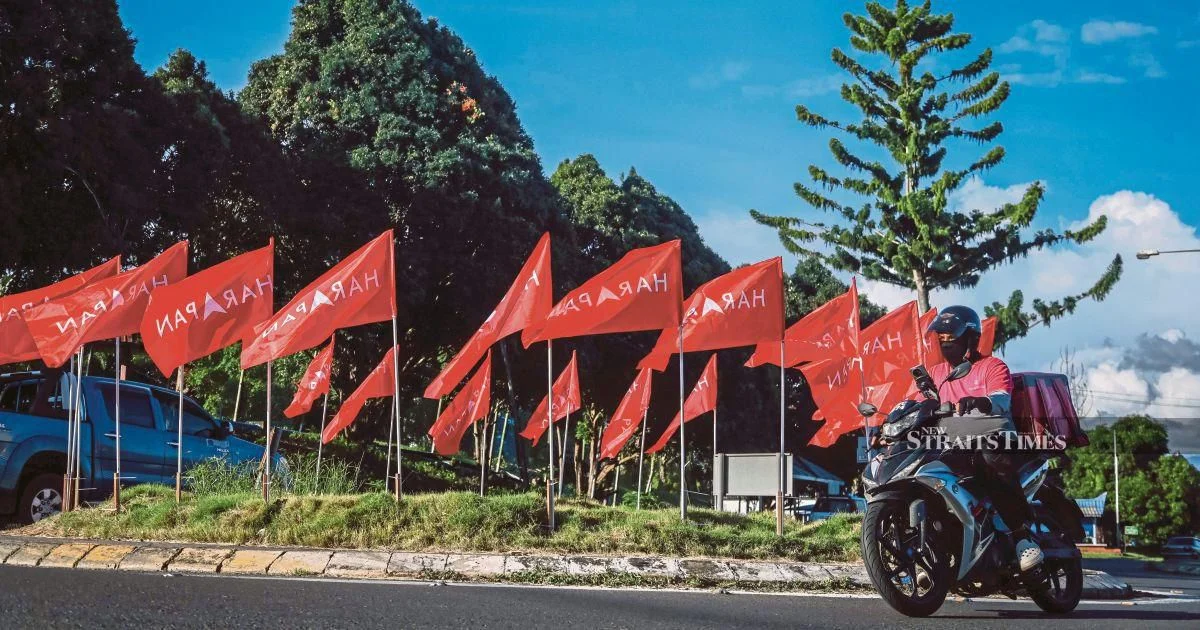
Pakatan Harapan coalition leaders made clear on Tuesday that they will not yield to external pressure to announce a menteri besar candidate ahead of the 16th Johor state election, viewing such premature declarations as strategically disadvantageous. The coalition's stance represents a deliberate withholding of information that rivals have sought to extract, viewing the candidate question as leverage points in an intensifying political contest.
The refusal to name a "poster boy" candidate reflects deeper calculations within the opposition bloc about timing and electoral strategy. By maintaining ambiguity about its leadership choice, Pakatan Harapan preserves flexibility in its campaign approach and denies opponents a defined target to campaign against before voting day. Opposition parties have attempted to compel the coalition into early declarations, hoping to use such information for strategic attacks during campaigning.
This approach differs markedly from traditional Malaysian electoral practice, where coalitions often announce preferred leaders well before elections. Pakatan Harapan's circumspection suggests confidence in its ability to secure victory regardless of who eventually assumes the menteri besar position, or conversely, a recognition that certain candidate choices might alienate voter segments whose support remains contested between coalition members and rivals.
Johor represents strategically critical territory for Pakatan Harapan's national ambitions. The state's 56 state seats encompass diverse constituencies ranging from urban centres like Johor Baru to rural and suburban areas where voter preferences remain volatile. The coalition's calculation that maintaining secrecy about its menteri besar pick serves its interests better than transparency illustrates how Malaysian electoral dynamics have shifted toward information management as a core campaign tool.
Political analysts suggest that Pakatan Harapan's strategy also reflects internal coalition negotiations that may not be fully resolved. The component parties—PKR, DAP, and AMANAH—often harbour different preferences regarding leadership positions and portfolio allocation. By withholding a public announcement, the coalition arguably buys time to achieve internal consensus while maintaining a united public face. Announcing a candidate prematurely could expose divisions before negotiations conclude.
The competitive environment in Johor has intensified following the previous state election outcomes and demographic shifts within the electorate. The Barisan Nasional government currently controls the state, and any transition would represent a significant political realignment in a crucial region. Pakatan Harapan's reluctance to name candidates telegraphs confidence that it can contest effectively on broader policy platforms and leadership competence rather than relying on personality-driven campaigns centred on named individuals.
From a voter perspective, the delayed candidate announcement creates uncertainty about potential governance structures under a Pakatan Harapan state administration. Johor residents will be asked to vote for state assemblypersons and, implicitly, coalition governance without knowing definitively who will occupy the chief minister's office. This approach differs from how many democracies structure elections, where leadership questions are typically settled before, not after, voting takes place.
Both Barisan Nasional and other opposition parties have presumably prepared counterstrategies based on multiple possible Pakatan Harapan scenarios. By forcing competitors to prepare against unknown candidates, Pakatan Harapan may gain tactical advantages during campaigning, as opponents cannot focus attacks with precision. Conversely, the absence of a named leader might complicate voter decisions for undecided electors who prefer clarity about potential leadership.
The coalition's position also carries risks. Procrastination about candidate selection could appear indecisive to voters if media narratives develop that Pakatan Harapan is avoiding accountability or genuine internal divisions prevent consensus formation. Should the coalition struggle to maintain public unity, the delayed announcement could transform from strategic advantage into liability, with observers questioning whether Pakatan Harapan leadership dysfunction explains the reluctance to declare its preferred menteri besar.
Regional implications extend beyond Johor itself. How Pakatan Harapan manages this election and its preparation processes sends signals to voters in other states about coalition competence and organisational coherence. A successful Johor campaign executed with maintained ambiguity about leadership might validate the coalition's approach and encourage its use elsewhere. Conversely, difficulties could prompt reconsideration of the strategy.
Looking forward, Pakatan Harapan will likely maintain its position on this issue until calculating that announcement timing serves electoral advantages. The coalition presumably believes that mobilising supporters and securing victory takes priority over satisfying external demands for early candidate declarations. This calculation reflects confidence in broader coalition appeal, though it remains dependent on translating that appeal into actual electoral outcomes when Johor voters ultimately cast their ballots.
%22%2F%3E%3C%2Fpattern%3E%3C%2Fdefs%3E%3Crect%20width%3D%22100%25%22%20height%3D%22100%25%22%20fill%3D%22url(%23ph43s4kg)%22%2F%3E%3Crect%20width%3D%22100%25%22%20height%3D%22100%25%22%20fill%3D%22url(%23ph43s4kp)%22%2F%3E%3Ctext%20x%3D%2250%25%22%20y%3D%2250%25%22%20text-anchor%3D%22middle%22%20dominant-baseline%3D%22central%22%20fill%3D%22rgba(255%2C255%2C255%2C0.95)%22%20font-family%3D%22Georgia%2C%20'Times%20New%20Roman'%2C%20serif%22%20font-weight%3D%22700%22%20font-size%3D%22136%22%20letter-spacing%3D%22-0.02em%22%3ERonaldinho%3C%2Ftext%3E%3C%2Fsvg%3E)
%22%2F%3E%3C%2Fpattern%3E%3C%2Fdefs%3E%3Crect%20width%3D%22100%25%22%20height%3D%22100%25%22%20fill%3D%22url(%23ph4tn5og)%22%2F%3E%3Crect%20width%3D%22100%25%22%20height%3D%22100%25%22%20fill%3D%22url(%23ph4tn5op)%22%2F%3E%3Ctext%20x%3D%2250%25%22%20y%3D%2250%25%22%20text-anchor%3D%22middle%22%20dominant-baseline%3D%22central%22%20fill%3D%22rgba(255%2C255%2C255%2C0.95)%22%20font-family%3D%22Georgia%2C%20'Times%20New%20Roman'%2C%20serif%22%20font-weight%3D%22700%22%20font-size%3D%22272%22%20letter-spacing%3D%22-0.02em%22%3EJohor%3C%2Ftext%3E%3C%2Fsvg%3E)