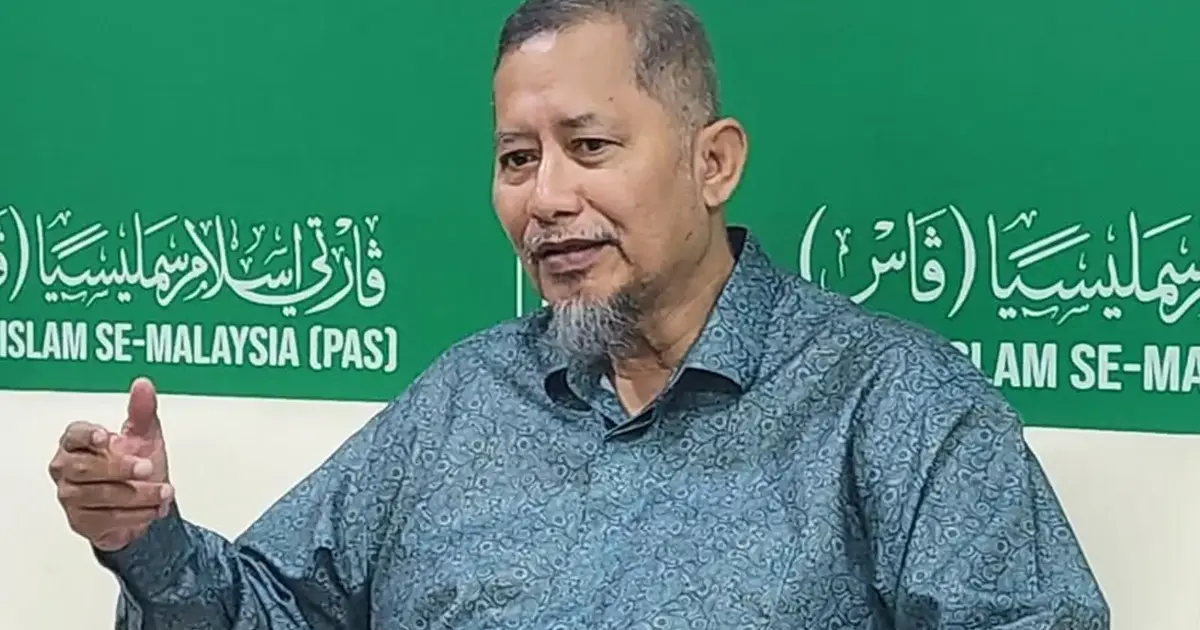
PAS treasurer Iskandar Abdul Samad has publicly asserted that his party possesses the electoral advantage should the two Islamist-oriented coalitions find themselves in direct competition at the polls, signalling confidence in the party's grassroots machinery and voter appeal across Malaysia's Muslim-majority constituencies.
The remarks from Iskandar Abdul Samad reflect deepening tensions within Perikatan Nasional, the political alliance that has become increasingly fractured as its constituent parties pursue competing agendas ahead of future electoral contests. PAS and Bersatu have long maintained an uneasy partnership, with both organisations harbouring ambitions to lead the broader Malay-Muslim political movement in the country. The treasurer's declaration appears designed to project strength at a moment when intra-coalition cohesion appears fragile.
Iskandar Abdul Samad's assertion rests partly on PAS's established network of supporters throughout the country, particularly in rural areas and secondary towns where the party has built institutional presence over decades. The party's grassroots organisations, especially its welfare and religious education arms, have historically provided tangible services that cultivate voter loyalty across multiple election cycles. This foundational advantage, the treasurer suggested, would translate into tangible electoral gains should supporters face a binary choice between PAS and Bersatu.
The confidence expressed by the PAS leadership also reflects the party's recent electoral performance, which has seen steady gains in parliamentary representation and state-level influence. The party's entry into the federal government coalition has elevated its national profile and provided access to state patronage mechanisms that reinforce organisational capacity. These developments have allowed PAS to position itself as a credible governing force rather than merely an opposition voice.
Bersatu's trajectory presents a contrasting picture. The younger party, established more recently, lacks the institutional depth and geographic penetration of PAS across the Muslim-majority communities that form the core electoral battleground. Bersatu's political fortunes have remained heavily dependent on the charisma and political influence of key personalities, a vulnerability that creates structural weakness should those figures lose salience or political standing. The party's organisational infrastructure, while growing, has not yet achieved the maturity and reach that PAS has cultivated.
The treasurer's comments also implicitly challenge the notion that Perikatan Nasional functions as a genuinely unified alliance where member parties subordinate individual ambitions to collective goals. By signalling that PAS would triumph in head-to-head competition with its nominal ally, Iskandar Abdul Samad was essentially saying that party loyalty within the coalition cannot be assumed. Supporters ostensibly committed to Perikatan Nasional's broader agenda would, in the estimation of the PAS treasurer, prioritise their existing relationship with PAS over newer alignments with Bersatu.
This dynamic carries significant implications for Malaysian politics more broadly. The apparent willingness of senior PAS figures to contemplate competitive scenarios with coalition partners suggests that unity within anti-government or government-aligned blocs cannot be taken for granted. Politicians and voters across the country have grown accustomed to rapid coalition realignments, but such instability raises questions about governance capacity and policy coherence once electoral contests conclude. Malaysian democracy increasingly hinges on fragile personal and organisational relationships rather than stable ideological or programmatic commitments.
For Southeast Asian observers, the positioning within PAS also illuminates how Islamist parties across the region are navigating modernisation, governance participation, and organisational competition. PAS has evolved from an oppositional force into a player comfortable with executive power, a transition that requires balancing grassroots Islamist expectations with technocratic governance demands. The party's confidence in electoral superiority over Bersatu partly reflects successful navigation of this delicate equilibrium, though that balance remains perpetually vulnerable to disruption.
The treasurer's remarks must be understood within the context of ongoing negotiations about seat allocations, ministerial portfolios, and policy emphasis within the broader government coalition. These public declarations of confidence often serve as negotiating tactics, allowing one party to claim superior leverage in discussions about resource distribution and strategic direction. By asserting electoral primacy, Iskandar Abdul Samad was indirectly arguing that PAS merits greater consideration in coalition deliberations.
Looking ahead, whether such confidence proves warranted depends on multiple contingencies beyond either party's complete control. Economic conditions, security developments, demographic shifts, and the emergence of new political figures or movements could reshape electoral dynamics significantly. Additionally, the continued engagement of both PAS and Bersatu within government coalitions may erode their respective appeal to supporters seeking alternatives to incumbent power structures. The treasurer's projection of victory assumes relatively stable political conditions and voter preferences, assumptions that frequently collapse in Malaysian politics.
The escalating rhetoric between coalition partners also signals that the next electoral cycle will likely witness unprecedented fragmentation within Perikatan Nasional itself, fundamentally transforming the political landscape compared to previous contests. Voters across Malaysia should prepare for electoral campaigns defined less by clear ideological divides and more by intra-coalition contestation, potentially creating opportunities for other political actors to claim relevance in a crowded marketplace for political loyalty.