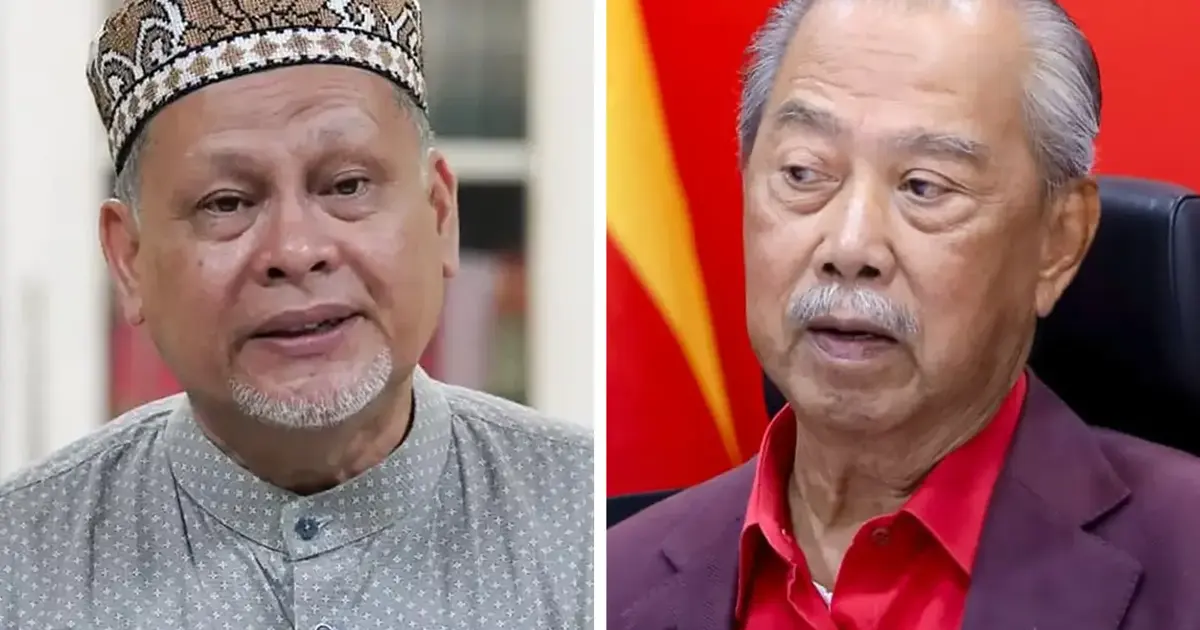
The simmering tensions within Malaysia's Perikatan Nasional coalition have surfaced publicly with PAS issuing a pointed ultimatum to its coalition partner Bersatu, signalling deepening fissures in the once-unified opposition bloc. PAS vice-president Amar Abdullah has characterised Bersatu president Muhyiddin Yassin's recent remarks about potentially contesting against PAS as fundamentally at odds with remaining within the same political alliance, raising fresh questions about the durability of a partnership that has been central to Malaysian opposition politics since 2020.
The remarks from Amar Abdullah represent more than mere political theatre. They underscore a fundamental contradiction that has been gnawing at the Perikatan Nasional structure since its formation—the difficulty of maintaining genuine coalition unity when individual parties harbour separate electoral ambitions and territorial claims. When a coalition partner begins openly discussing contesting against another member, it suggests the underlying trust that binds such arrangements has eroded considerably, creating a situation where formal partnership masks actual rivalry.
For Malaysian observers of coalition politics, this development carries particular significance given the critical role Perikatan Nasional has played in recent years. The coalition emerged as a substantial political force following the 2020 elections and the subsequent Sheraton Move, fundamentally reshaping the country's political landscape. Its stability or instability therefore has implications extending well beyond the internal affairs of two parties, affecting the broader balance of political power in the country.
Bersatu's position within the coalition has always been somewhat distinctive. As a younger party founded by Muhyiddin himself after his departure from UMNO, it has lacked the entrenched grassroots networks that longer-established parties like PAS possess. This structural disadvantage may explain why Muhyiddin has contemplated fielding candidates more broadly—a move that could be interpreted as an attempt to expand Bersatu's electoral footprint and relevance. However, such territorial expansion inevitably collides with PAS's own ambitions, particularly in states where both parties have held aspirations.
The Islamic party's response through Amar Abdullah carries an implicit warning with considerable weight. PAS, which has historically been the dominant Islamic-oriented party in Malaysian politics before Bersatu's emergence, may be signalling that it will not tolerate being elbowed aside within a coalition it views as fundamentally rooted in Islamic principles and Malay-Muslim interests. The ultimatum—essentially, that Bersatu must choose between remaining in the coalition or running rival candidates—reflects a hierarchical view of coalition membership that PAS apparently intends to enforce.
This dynamic also reflects broader uncertainties about Perikatan Nasional's electoral strategy heading toward the next general election. Coalition partners typically negotiate seat allocations beforehand to prevent wasteful three-cornered contests that split the opposition vote. When one partner begins suggesting it might contest seats held by another, it indicates these crucial negotiations may have broken down or never begun in earnest. For Malaysian voters hoping for a coherent opposition alternative, such fragmentation poses challenges to electoral effectiveness.
The timing of these tensions is noteworthy as well. They emerge at a moment when Malaysian politics remains fluid, with both government and opposition coalitions attempting to consolidate their positions. UMNO's complicated relationship with both PAS and Bersatu adds further layers of complexity—Perikatan Nasional and Barisan Nasional have competed for similar electoral territory in some constituencies, and this internal PAS-Bersatu friction may simply be a manifestation of larger struggles over who truly represents Malay-Muslim political interests in the country.
Regionally, these Malaysian coalition dynamics attract attention from neighbouring Southeast Asian democracies where similar multi-party alignments must negotiate internal tensions. Thailand, Indonesia, and the Philippines all feature coalition governments struggling with comparable coordination challenges. How Malaysia's Perikatan Nasional resolves such disputes could offer instructive lessons about the sustainability of diverse political partnerships in the broader Southeast Asian context.
For Muhyiddin specifically, the challenge is acute. Bersatu needs to establish itself as an independent political force with genuine electoral credibility, yet doing so within a coalition framework severely constrains its room for manoeuvre. The party faces a genuine dilemma: remain subordinate within Perikatan Nasional and risk permanent marginalisation, or assert greater independence and risk expulsion from a coalition that currently provides significant parliamentary numbers and legitimacy.
Amar Abdullah's comments also suggest that PAS leadership has concluded it can afford to issue ultimatums without fear of immediate coalition collapse. This confidence may reflect PAS's calculation that Bersatu possesses fewer alternatives and depends more heavily on the coalition's structural support than PAS itself does. Given PAS's traditional electoral strongholds and deeper grassroots presence, particularly in key northern states, such an assessment may well be accurate.
The resolution of this dispute will likely set important precedents for how Perikatan Nasional handles internal competition going forward. If PAS successfully enforces its ultimatum and Bersatu backs down, it establishes a clear hierarchy within the coalition. Conversely, if Bersatu proceeds with contested candidacies despite PAS objections, it signals that the coalition framework is primarily symbolic rather than operationally binding, fundamentally weakening its political coherence.
Malaysian political analysts and observers should monitor this situation carefully, as it may foreshadow broader realignments within opposition politics. Coalition partners that cannot resolve such fundamental questions about territorial representation and electoral strategy often experience slow deterioration leading eventually to formal dissolution or complete restructuring. Whether Perikatan Nasional can navigate these challenges while maintaining functional unity remains an open question with significant implications for the country's political trajectory.