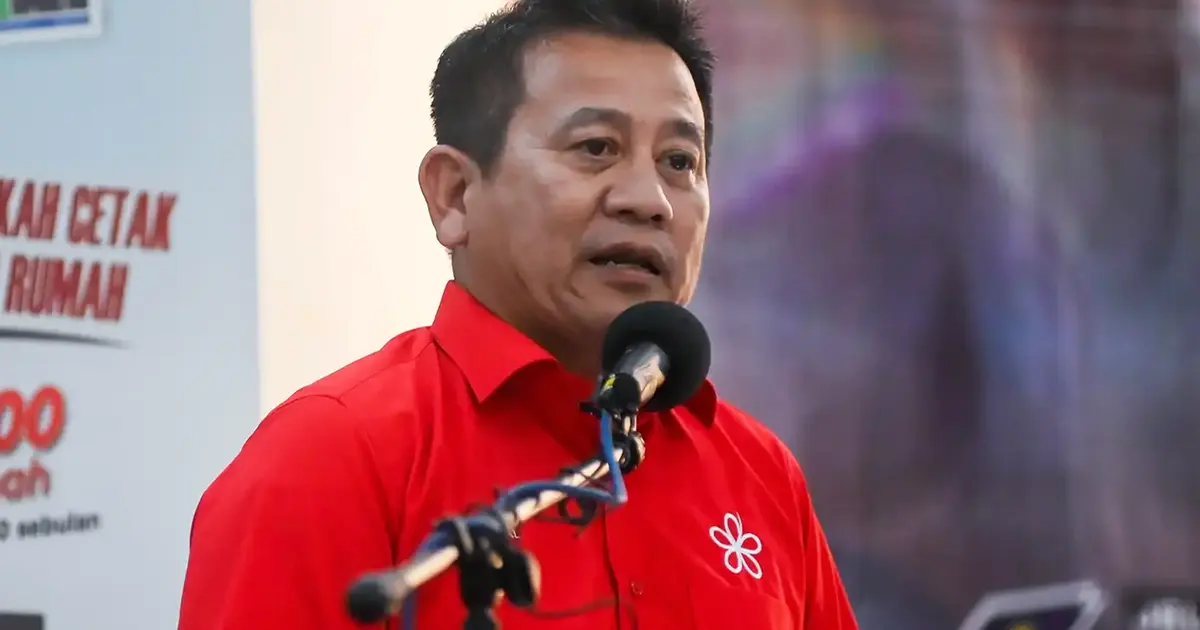
Tun Faisal Ismail Aziz, the information chief of Bersatu, has launched a pointed critique of PAS, contending that the Islamist party is strategically leveraging the Perikatan Nasional coalition reshuffle to consolidate its political dominance and marginalise other member parties. The escalating tensions reveal deepening fissures within the Malay-Muslim opposition coalition, which has been positioned as a counterweight to the federal government but increasingly appears vulnerable to internal power struggles.
The accusations from Bersatu's senior leadership underscore a fundamental tension that has simmered beneath the surface of the PN partnership since its formation. While the coalition was ostensibly constructed around shared ideological and electoral objectives, the distribution of ministerial posts, party influence, and decision-making authority has remained contentious. Tun Faisal's intervention suggests that Bersatu leadership perceives itself as being systematically sidelined in favour of PAS, which commands the largest parliamentary contingent within the alliance.
PAS's dominant position within Perikatan Nasional stems from its substantial representation in parliament and its demonstrated electoral strength in crucial Malay-majority constituencies. The party's electoral performance in recent contests has reinforced its leverage within coalition negotiations. This numerical superiority has translated into significant influence over the direction of the alliance, particularly on religious and cultural policy matters that resonate strongly with the PN's conservative electoral base.
Tun Faisal's characterisation of PAS as exhibiting authoritarian tendencies points to what he perceives as high-handed decision-making processes within the coalition leadership. The reshuffle in question—though specific details remain contested—apparently involved shifts in party positions and responsibilities that Bersatu officials view as unfavourable to their interests. The absence of transparent consultation mechanisms within PN's leadership structures has evidently frustrated Bersatu functionaries who feel excluded from meaningful participation in coalition governance.
For Malaysian political observers, these internal recriminations highlight a critical vulnerability in opposition coalition-building. Perikatan Nasional emerged partly as a response to PAS's earlier alliance with other Malay-Muslim parties, yet the coalition has failed to establish institutional frameworks that balance the interests of its constituent members. Unlike established ruling coalitions that have developed protocols for managing inter-party disputes and distributing spoils equitably, PN appears to lack such stabilising mechanisms.
The broader implications extend beyond intra-coalition squabbles. Bersatu, which includes former Prime Minister Mahathir Mohamad and commands significant support in certain constituencies, holds considerable symbolic weight within opposition circles. If Bersatu's grievances intensify without resolution, the party could recalibrate its political positioning, potentially seeking alternative partnerships or adopting a more independent parliamentary stance. Such developments would fundamentally alter the balance of forces in Malaysian politics.
Regionally, the Perikatan Nasional coalition's internal struggles reflect wider patterns observable across Southeast Asia, where opposition alliances frequently crumble under the weight of competing ambitions and ideological differences. The sustainability of multi-party coalitions depends critically on institutional maturity and demonstrated commitment to democratic decision-making among member organisations. PN's apparent difficulty in managing these fundamentals raises questions about its long-term viability as a cohesive political force.
The clash between Bersatu and PAS also illuminates underlying tensions regarding Islam's role in Malaysian governance and political mobilisation. While both parties claim authority over Malay-Muslim interests, their approaches differ substantially. Bersatu's leadership encompasses a broader ideological spectrum, whereas PAS represents a more doctrinally consistent Islamist position. These philosophical divergences inevitably complicate coalition management when fundamental decisions about party ideology and public positioning arise.
Tun Faisal's public airing of these grievances represents a departure from the diplomatic silence typically maintained by coalition partners seeking to project unified authority. His willingness to speak candidly suggests that behind-the-scenes negotiations have failed to produce satisfactory outcomes for Bersatu. This development signals that internal PN deliberations have reached a point where senior figures feel compelled to mobilise external political pressure, potentially hoping that public scrutiny will force more equitable arrangements.
The situation demands careful monitoring by analysts and political observers, as developments within Perikatan Nasional will significantly influence Malaysian electoral dynamics in coming years. Should PN fracture, the resulting realignment could strengthen the federal government's parliamentary position or alternatively trigger unexpected coalition formations. For Southeast Asian observers tracking Malaysian politics, the PN saga provides instructive lessons about the fragility of opposition coalitions and the organizational challenges inherent in multi-party alliances operating outside government structures.