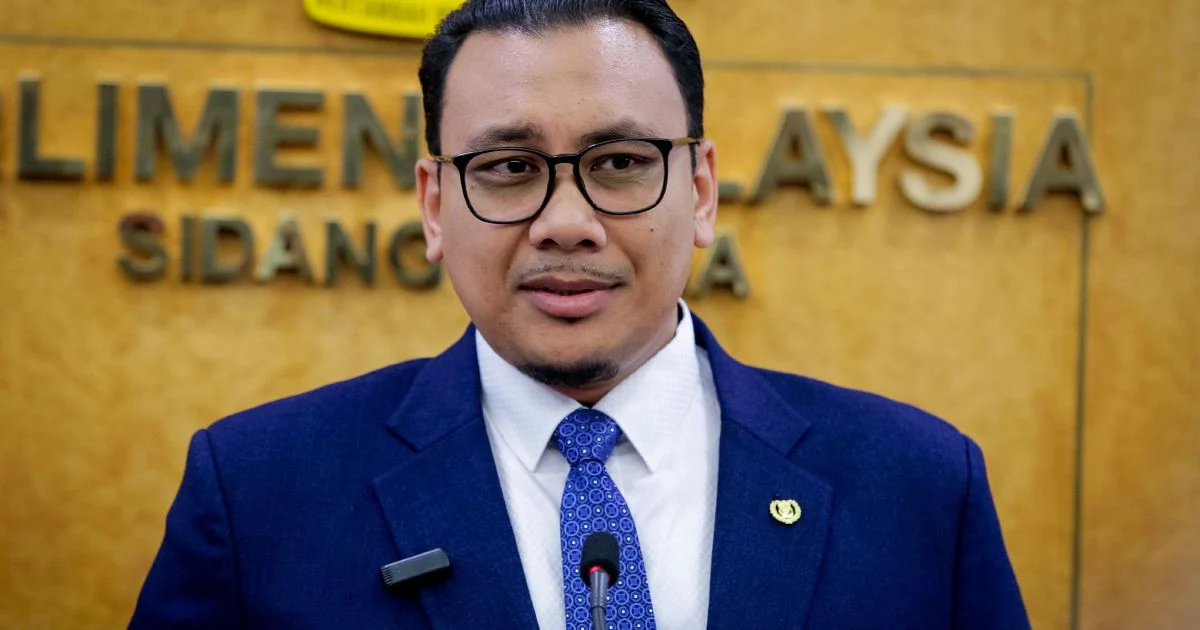
The youth wing chief of PAS, Afnan Hamimi Taib Azamudden, has taken the decision to escalate a social media dispute into the courts, having instructed his legal representatives to commence proceedings stemming from a Facebook post attributed to a prominent Bersatu figure. The post in question is alleged to have contained offensive remarks directed at his father and extended family members, according to the party youth leader's statement.
The incident highlights the increasingly fraught relationship between coalition partners despite their nominal alliance within Malaysia's political framework. PAS and Bersatu, both members of the Perikatan Nasional grouping, have experienced mounting tensions in recent months as they compete for influence and support bases, particularly among Bumiputera and conservative constituencies. The collision between digital-era political communication and traditional concepts of family honour reflects broader friction within Malaysia's coalition politics.
Social media has become a flashpoint for inter-party disputes, with politicians and their supporters using platforms such as Facebook to launch salvos against rivals. Unlike parliamentary exchanges or press statements, social media posts often bypass official channels and decorum, creating situations where personal attacks can spread rapidly and damage reputations before formal responses are possible. The alleged insult to Afnan Hamimi's father represents a particularly sensitive crossing of boundaries, as attacks on family members have historically been considered beyond the pale in Malaysian political discourse.
The decision to pursue legal remedies suggests that the youth leader views the matter as sufficiently serious to warrant intervention through formal legal channels rather than relying on political rhetoric or rebuttals. This approach indicates an intent to establish a clear precedent regarding acceptable boundaries for online political commentary and personal attacks. By taking the matter to court, Afnan Hamimi is effectively placing the issue within a framework that demands evidence, accountability, and legal consequences—a significant escalation from typical political squabbles.
Bersatu's involvement in this controversy adds another layer to the complex dynamics within the Perikatan Nasional coalition. The party, which emerged from UMNO's fractious internal politics and has since evolved into a significant player in Malaysian politics, has been navigating difficult relationships with its coalition partners. If a Bersatu leader was indeed responsible for the post, the incident raises questions about party discipline and the extent to which leadership can or should control the online behavior of members and supporters.
The role of social media as a political tool has expanded dramatically across Southeast Asia, with Malaysia proving no exception. Platforms like Facebook remain particularly influential among older voters and rural constituencies—demographics important to both PAS and Bersatu. When disagreements spill onto these platforms, they can rapidly gain visibility and generate secondary commentary, potentially amplifying the original offense and inflaming tensions within the broader political ecosystem.
From a legal perspective, Malaysia's defamation laws and provisions under the Penal Code provide recourse for individuals who believe their reputation has been damaged through false or malicious statements. The case will likely hinge on whether the post can be definitively attributed to the alleged Bersatu leader, whether the statements contained therein were factually false, and whether they were published with knowledge of their falsity or with reckless disregard for the truth. The court will need to balance concerns about protecting individual reputation with principles of free expression and political speech.
The incident also reflects a broader pattern in Malaysian politics where coalition partners engage in public disputes despite officially maintaining cooperative arrangements. Such tensions are partly structural—multiple parties forming government coalitions inevitably compete for credit, resources, and electoral advantage. When these competitions become personal, as they have in this instance, the fabric of coalition governance can be strained.
For PAS, pursuing legal action demonstrates a willingness to defend the honour of its leadership and families against what it perceives as unwarranted attacks. The youth wing's decision to take this route may also resonate with the party's base, particularly conservative voters who place high value on family respect and propriety. Conversely, the legal action could be seen as an aggressive move that further destabilizes the coalition, potentially forcing Bersatu to take a defensive posture.
The outcome of this case, once it proceeds through the courts, may establish important precedents regarding the boundaries of political speech in Malaysia's digital age. Courts will need to carefully consider how to protect individuals from malicious attacks while simultaneously ensuring that legitimate political criticism and debate remain possible. This balance is particularly important in a democratic system where robust political discourse, including criticism of public figures, serves important functions.
Beyond the immediate dispute between Afnan Hamimi and the Bersatu leader, this incident underscores the challenges facing Malaysia's coalition government. As multiple parties attempt to govern together while maintaining separate identities and competing for voter support, incidents like this one reveal the fragility of such arrangements. Moving forward, both PAS and Bersatu may need to establish clearer guidelines regarding acceptable political communication, particularly on social media platforms where messages can easily spiral beyond the control of party leadership.
The legal proceedings will unfold over coming months, with potential implications extending beyond the two individuals directly involved. If successful, Afnan Hamimi's case could embolden other politicians to pursue similar actions against critics and rivals. Conversely, if unsuccessful, it may encourage further social media attacks on political figures and their families. For ordinary Malaysians observing these developments, the case serves as a reminder of how quickly digital communication can transform personal disputes into matters of public consequence and legal significance.