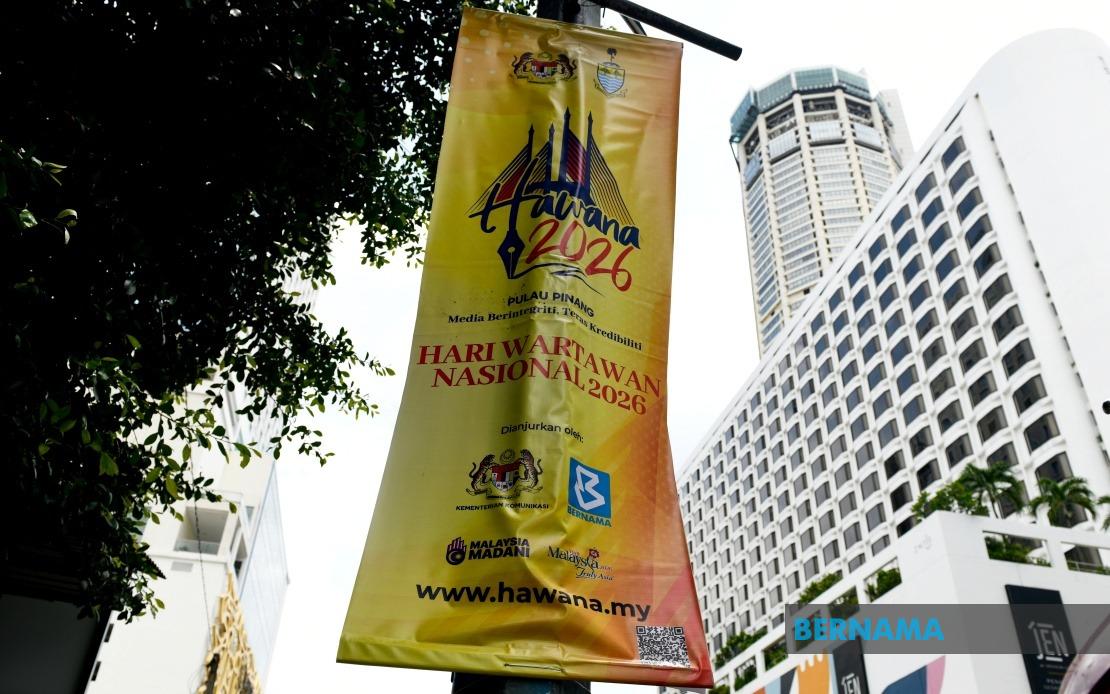
Penang is gearing up to host one of Malaysia's most significant media industry events, with state leadership expressing strong confidence in the successful execution of the National Journalists' Day 2026 celebration. Chief Minister Chow Kon Yeow has backed the event as an opportunity to elevate recognition of the journalism profession's essential role in society, underlining the state government's commitment to supporting the programme through comprehensive planning and coordination with federal authorities.
Preparations have been intensive, with Chow noting that his administration engaged in sustained dialogue with the Ministry of Communications over the preceding two to three months to establish a robust framework for the event. This collaborative approach between state and federal government demonstrates the political priority afforded to honouring media practitioners, who have faced significant challenges in recent years ranging from economic pressures to questions about editorial independence and misinformation.
The centrepiece of the celebrations is the HAWANA 2026 Summit, scheduled to be held at PICCA Convention Centre @ Butterworth Arena on June 20, where Prime Minister Datuk Seri Anwar Ibrahim will deliver the official opening remarks. The summit is anticipated to draw approximately 1,000 media professionals, including journalists, editors, and news executives from Malaysia and international media organisations, creating a rare gathering of the regional and global journalism community.
The theme selected for this year's HAWANA—"Media Integrity Strengthens Credibility"—reflects contemporary concerns within the industry and broader society about the erosion of trust in news institutions. By centring the celebration on integrity and credibility, the organisers are signalling that professional journalism practices remain fundamental to the industry's legitimacy and its contribution to informed public discourse in an era increasingly characterised by digital disruption and the proliferation of unverified information.
Beyond the summit itself, a dedicated media dinner featuring Penang Governor Tun Ramli Ngah Talib is scheduled to take place, providing an intimate forum for networking and dialogue among senior figures in journalism and government. Such events serve an important function in Malaysia's media landscape, where direct engagement between news professionals and political leadership can help establish mutual understanding and address concerns about media freedom and access to information.
The celebrations extend beyond professional engagement into broader public participation through the three-day RIUH Pi HAWANA Carnival, which is expected to draw approximately 30,000 visitors. This component demonstrates recognition that journalism's importance extends beyond the industry itself, affecting every citizen's access to reliable information. By making the celebration accessible to the general public, the event organisers are attempting to reconnect ordinary Malaysians with the value of quality journalism during a period when traditional news outlets have experienced declining readership and advertising revenue.
The carnival itself features an eclectic mix of attractions designed to appeal to diverse audiences. More than 24 local creative product brands have been invited to participate, alongside 20 food and beverage vendors, reflecting Penang's reputation as a cultural and culinary hub. This commercial dimension helps sustain the event while also positioning the media industry as part of a broader creative and economic ecosystem, rather than a separate professional sphere isolated from everyday commerce and culture.
Interactive workshops embedded within the carnival programme provide hands-on opportunities for public engagement with creative industries and journalism processes. These activities are particularly significant for younger audiences, who are growing up in a media environment radically different from previous generations—one characterised by social media influence, citizen journalism, and algorithmic content distribution. Educational engagement at carnival-style events can help build digital literacy and encourage critical consumption of information.
Musical performances add another dimension to the celebrations, with 16 free stage acts featuring prominent Malaysian artists including Exists, Bunkface, Masdo, Sakura Band, Budak Nakal Hujung Simpang and Chelsea Ng. The selection of contemporary and established performers suggests that the event organisers are attempting to position journalism as integral to Malaysian popular culture rather than a distant, elite profession. This democratisation of the celebration helps counter perceptions that the media industry is disconnected from ordinary Malaysians' experiences and concerns.
The Ministry of Communications has positioned HAWANA 2026 as an occasion to acknowledge and celebrate the contributions, perseverance and professionalism of Malaysia's media practitioners. This framing is significant given ongoing debates about press freedom, news literacy, and the role of journalism in combating misinformation—challenges that have become increasingly urgent across Southeast Asia as digital platforms reshape information ecosystems. For Malaysian readers, this celebration represents an opportunity to reflect on journalism's ongoing relevance and the responsibilities that both the profession and the consuming public bear in maintaining healthy information environments.
Penang's role as host carries particular symbolic weight, given the state's historical significance in Malaysian political culture and its current positioning as a major economic and tourism destination. Hosting HAWANA 2026 elevates Penang's profile as a centre for professional discourse and cultural events beyond traditional manufacturing and heritage tourism. For the state government, successfully delivering this event represents both a demonstration of administrative capacity and an investment in positioning Penang as important to Malaysia's media and creative industries.