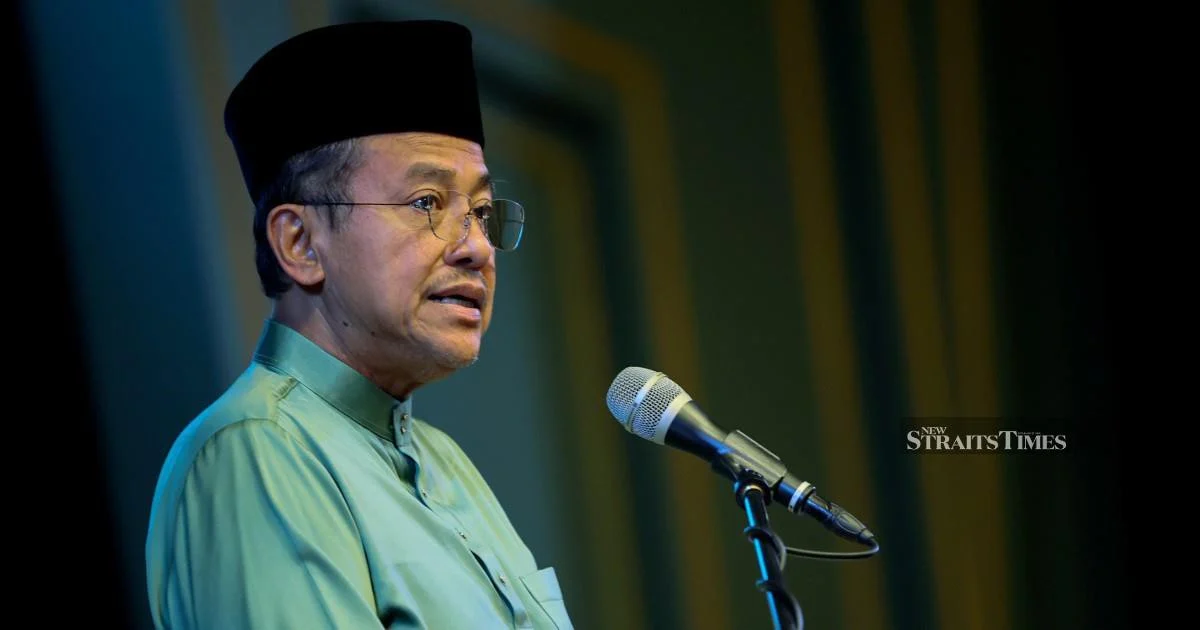
The Perikatan Nasional leadership council will convene tomorrow to deliberate on the status and role of Bersatu within the broader coalition framework, according to PAS vice-president Datuk Seri Dr Ahmad Samsuri Mokhtar. The statement, made in Temerloh, signals mounting pressure on the three-party alliance that has served as the primary opposition formation since 2020.
Bersatu's position within PN has grown increasingly precarious as internal coalition dynamics shift. The party, founded by former Prime Minister Muhyiddin Yassin in 2016, has faced persistent questions about its organisational strength and electoral viability compared to its two larger partners. This forthcoming discussion represents a critical juncture for the coalition's structural stability and suggests that senior leaders are grappling with fundamental questions about how best to configure their alliance for maximum political impact.
The timing of this review reflects broader uncertainties coursing through opposition politics in Malaysia. Over the past two years, various alliances have splintered, reformed, and recalibrated their membership arrangements in response to shifting electoral calculations and internal contradictions. PN itself emerged from the 2022 general election with diminished parliamentary representation, prompting sustained reckonings about strategic direction and resource allocation among its constituent parties.
For Malaysian political observers, the significance of tomorrow's meeting extends beyond arcane coalition mechanics. The health of opposition coalitions directly influences the competitive environment for the ruling government and shapes the tactical landscape of parliamentary politics. Weakened or internally fractious opposition blocs create space for government consolidation, whilst coherent alternative formations maintain pressure for performance and accountability from the administration. The PN's ongoing stability or instability therefore carries implications that ripple across the entire political system.
Bersatu brings particular complications to this equation. As a relative newcomer to formal coalition structures compared to PAS and PKR before the 2020 realignment, the party has struggled to establish independent electoral machinery and grassroots presence across most Malaysian states. Simultaneously, its leadership has occasionally pursued divergent political objectives from its partners, creating friction points that accumulate over time. This structural mismatch between ambition and capability has prompted recurring discussions about whether the party should remain within PN or seek alternative political arrangements.
The coalition itself comprises complex and sometimes contradictory ideological currents. PAS brings an Islamic-oriented political agenda and strong presence in rural Malay-majority areas, whilst PKR represents a more diverse, urban-oriented coalition with multiethnic composition. Bersatu occupies an uneasy middle ground, attempting to bridge these constituencies without commanding the deep organisational roots of either partner. This positioning has rendered the party vulnerable during periods of coalition stress, as the other two members can arguably survive without it more easily than it can survive without them.
Ahmad Samsuri's statement from Temerloh carries additional weight given PAS's role as the numerically largest parliamentary component of PN and a key power-broker within the alliance. By publicly framing tomorrow's discussion as addressing Bersatu's position, PAS effectively signals that fundamental questions about coalition composition are now subject to serious consideration. This public positioning may be designed to establish parameters for negotiation or to test reactions from party members and the broader political community.
Southeast Asian opposition coalitions generally face persistent vulnerabilities related to member party autonomy, ideological diversity, and electoral incentives that can push individual parties toward defection. The PN arrangement reflects these universal pressures whilst operating within Malaysia's specific political context of bumiputera politics, regional state dynamics, and legacy competition between Islamist and secular political traditions. Tomorrow's meeting will test whether the coalition possesses sufficient cohesion and common interest to navigate this current challenge.
The outcome of the leadership council meeting will likely signal the coalition's trajectory for the medium term. A reaffirmation of Bersatu's membership with clarified roles and responsibilities might stabilise the alliance and allow it to focus on developing alternative policy platforms and strengthening parliamentary scrutiny. Conversely, any attempt to marginalise or reconfigure Bersatu's position could precipitate either the party's departure from PN or internal conflicts that undermine coalition effectiveness across all three constituent parties.
For regional observers tracking Malaysian politics, this gathering represents an important indicator of whether opposition forces can maintain sufficient unity to provide meaningful democratic competition. The outcome will influence not only parliamentary dynamics but also electoral prospects for the coalition ahead of the next general election, currently scheduled for 2028 but potentially subject to earlier calling under constitutional provisions.