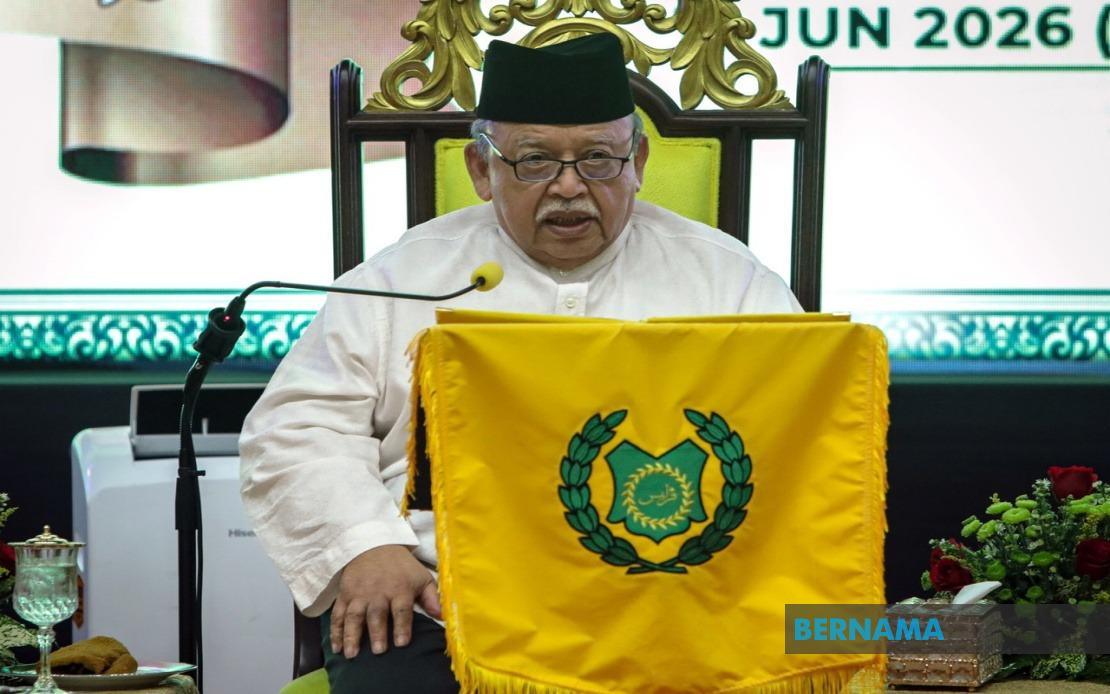
Tuanku Syed Sirajuddin Jamalullail, the Raja of Perlis, has made a forceful case that sustainable national progress rests not on monuments and highways, but on the moral fibre of the population. Speaking at the state-level Maal Hijrah 1448H/2026M celebration in Kangar on June 18, the Ruler challenged citizens to execute their duties with sincerity, treat labour as an expression of faith, and resolutely oppose graft in all its manifestations. His intervention touches on a perennial tension in Malaysian governance: the temptation to conflate economic growth with genuine development.
The Ruler's framing of progress as fundamentally tied to character reflects a philosophical stance gaining traction among Malaysia's traditional leadership. He contended that a state achieves authentic advancement only when its residents marry intellectual capacity with moral rigour, demonstrate civic responsibility, and maintain social cohesion. This argument implicitly critiques development models that prioritise gross domestic product metrics while overlooking the institutional and ethical foundations necessary for long-term stability. For regional observers, the message carries weight in Southeast Asia, where rapid industrialisation has sometimes outpaced institutional maturation, leaving economies vulnerable to corruption and social fragmentation.
Central to Tuanku Syed Sirajuddin's vision is the concept of MADANI development—a term increasingly prominent in Malaysian policy discourse. The Ruler rejected the notion that progress can be measured primarily through physical infrastructure, insisting instead that genuine advancement encompasses intellectual growth, cultural preservation, moral elevation, and institutional integrity. This redefinition matters significantly for Malaysian policymakers and observers evaluating government initiatives. It suggests that investment in education, ethical governance, and social institutions should command equal or greater priority than construction projects, a perspective that could reshape budget allocation debates.
The call to embrace civilised values in everyday interactions, strengthen national unity, pursue knowledge continuously, and maintain accountability in public service forms a coherent platform. Tuanku Syed Sirajuddin framed these imperatives not as idealistic abstractions but as practical necessities for competitive advantage in an increasingly complex world. Malaysian readers will recognise in this framework a response to visible governance challenges—instances of corruption in procurement, lacklustre public service delivery, and institutional inefficiency—that undermine citizen confidence and economic productivity.
The Ruler also emphasised that understanding Islam must be rooted in textual sources and grounded in mature political culture. This dual emphasis is instructive. It suggests that religious fervour divorced from institutional sophistication and civic maturity produces instability rather than progress. For a nation where religious sentiment runs deep and political Islam remains contentious, the Ruler's insistence on combining faith with civilisational norms addresses a live debate about how Islam can coexist with pluralism, rule of law, and democratic governance.
Particularly striking was Tuanku Syed Sirajuddin's focus on preparing citizens for contemporary disruptions. He singled out technological transformation, artificial intelligence, social metamorphosis, and shifting global economic structures as challenges demanding proactive engagement rather than passive observation. This forward-looking stance resonates with Malaysian businesses and professionals grappling with digital disruption and regional competition from China and India. The Ruler's exhortation to become architects of change rather than bystanders reflects anxiety among thoughtful observers that Malaysia risks slipping behind in innovation and adaptability if education systems and mindsets do not evolve rapidly.
The imperative to cultivate courage, intelligence, and self-reliance as defining traits of Perlis citizens—and implicitly all Malaysians—responds to a perceived deficit in these qualities. Institutional dependency, risk aversion, and rentier mentality have arguably taken root in Malaysian public and private sectors where patronage networks and government largesse reduce incentives for enterprising initiative. Tuanku Syed Sirajuddin's call for independence and competitiveness thus doubles as a critique of structural incentives that reward conformity over innovation.
The emphasis on multi-dimensional development spanning religious, political, economic, and social spheres acknowledges that isolated progress in any single domain creates imbalance. A nation can boast rising per capita income while experiencing political polarisation, religious extremism, or social alienation. Malaysia's experience over recent decades illustrates the hazards of compartmentalised development: rapid urbanisation without corresponding institutional reform, religious conservatism amid economic liberalisation, and wealth accumulation alongside perceptions of injustice and inequality. Tuanku Syed Sirajuddin's integrated vision offers a corrective framework.
The recognition extended to Datuk Izham Mahmud of Yayasan Tuanku Syed Putra through the Perlis Tokoh Maal Hijrah award symbolically reinforces the message. By honouring institutional contribution to community welfare, the Ruler privileges service orientation and measurable social impact over mere status or wealth. For Malaysian civil society and corporate sectors, the implicit message is that legitimacy flows from tangible contribution to collective wellbeing rather than possession of privilege.
The broader context is significant. These remarks arrive as Malaysia navigates a complex transition. Economic growth has slowed relative to historical rates and regional competitors. Institutional credibility has suffered from high-profile corruption cases. Political polarisation has deepened. Social cohesion faces tests from religious tensions, generational gaps in values, and rising inequality. Against this backdrop, a senior royal figure articulating an alternative development paradigm—one prioritising integrity, knowledge, unity, and cultural maturity—carries political and social weight. Traditional leaders in Malaysia retain symbolic authority and moral standing that elected officials sometimes lack, particularly when those officials face questions about conduct.
For Southeast Asian readers broadly, Tuanku Syed Sirajuddin's intervention illustrates how regional monarchies and traditional institutions are positioning themselves as guardians of civilisational values amid rapid change. This positioning reflects both genuine commitment to cultural preservation and shrewd recognition that legitimacy in contemporary Southeast Asia requires more than historical pedigree or constitutional position. Leaders must articulate compelling visions of collective purpose that resonate with citizens anxious about displacement, cultural erosion, and uncertain futures.
The message also carries implications for regional competition and integration. As ASEAN nations compete for investment, talent, and influence, those offering not merely economic opportunity but social stability, institutional reliability, and civilisational coherence may attract quality growth. Malaysia's aspiration to become a high-income, knowledge-based economy ultimately depends less on capital stock than on the quality of governance, the integrity of institutions, and the resilience of social fabric. Tuanku Syed Sirajuddin's call to prioritise these foundations over monuments suggests recognition that long-term competitive advantage flows from these sources.