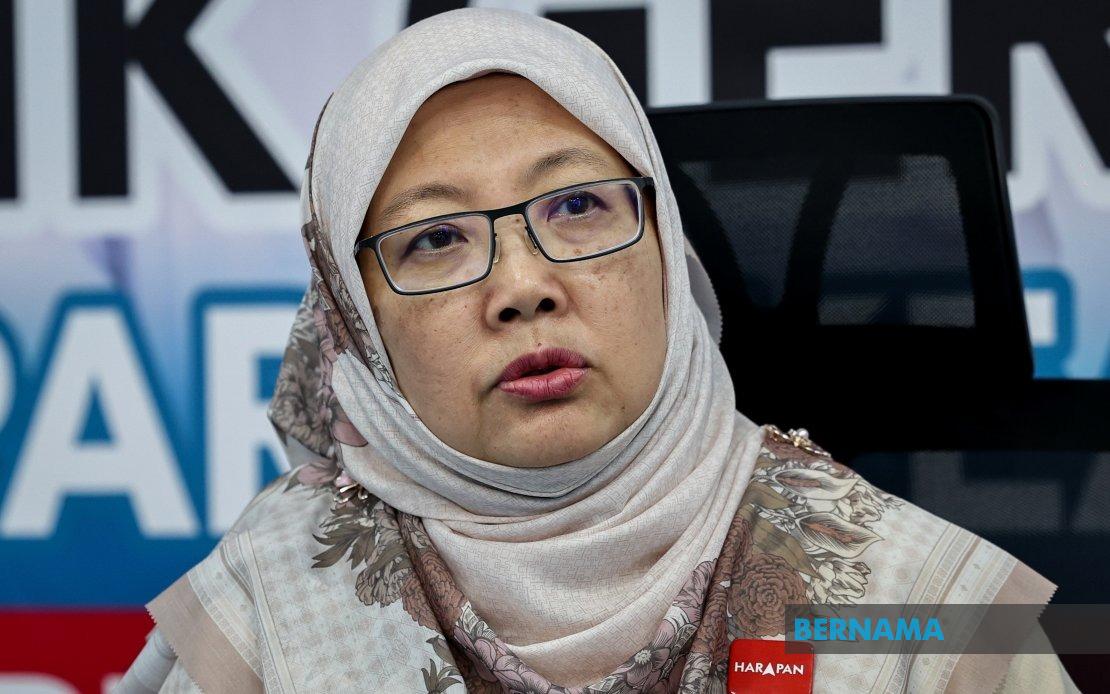
Pakatan Harapan has firmly stated it will respect the constitutional provisions governing Johor's governance, specifically the Sultan's prerogative to select the Menteri Besar should the coalition secure the mandate in the forthcoming state election. The pledge, made through Johor PKR chairman Datuk Seri Dr Zaliha Mustafa, underscores PH's position that the appointment of the chief executive remains a matter of royal discretion rather than electoral politics.
The statement represents PH's response to suggestions from the current Johor leadership that opposition coalitions should publicly announce their preferred candidate for the top administrative post before voters go to the polls. This strategic positioning reflects broader tensions in Malaysian electoral campaigns about the balance between democratic choice and constitutional monarchy, particularly in states with strong sultanates. The Johor State Constitution 1895 explicitly vests this appointment power in the reigning Sultan, a framework that both incumbent and opposition parties must navigate during campaign season.
Dr Zaliha's intervention signals that PH intends to keep the spotlight trained on policy platforms and governance proposals rather than personality-driven campaigns centred on leadership contests. The coalition's strategy assumes that voters are primarily concerned with economic performance, public service delivery, and concrete solutions to living costs and employment challenges rather than speculating about administrative appointments. This approach acknowledges that in Malaysia's constitutional framework, the Sultan's role transcends partisan politics and remains above electoral contestation.
The timing of this clarification is significant given the competitive nature of Johor politics. As the nation's southern economic anchor and a state with historical significance to UMNO and the broader Malay-Muslim political establishment, Johor elections attract disproportionate national attention. PH's emphasis on policy substance rather than leadership announcements may reflect calculated awareness that the coalition lacks deep institutional roots in the state compared to rival coalitions, making personality-driven campaigns potentially disadvantageous.
Beyond the immediate campaign mechanics, this stance reveals how Malaysian opposition parties navigate the tension between popular democratic accountability and respect for constitutional monarchy. Unlike Westminster democracies where the head of government emerges directly from electoral outcomes, Malaysia's system requires winning coalitions to work within constitutional parameters that grant appointed heads of state significant formal powers. For PH, a coalition still rebuilding after the 2018-2020 period and subsequent internal divisions, demonstrating respect for constitutional conventions may serve to reassure wavering middle-class voters concerned about political stability and institutional continuity.
The coalition's assertion that it possesses numerous qualified leaders capable of steering Johor's administration carries implicit strategic value. By declining to anoint a single candidate, PH preserves flexibility and optionality—the ability to negotiate with the Sultan from a position of electoral strength without having publicly committed to specific personnel. This negotiating room matters in Malaysian political culture where personal relationships between political leaders and the monarchy often influence governance outcomes. A premature public announcement could constrain subsequent negotiations and potentially invite constitutional complications if the Sultan exercised discretion differently from public expectations.
From a voter engagement perspective, PH's framing that citizens require substantive policy explanations rather than leadership speculation attempts to elevate campaign discourse above personality cults. The coalition's emphasis on economic revival, job creation, and improved living standards targets anxieties about inflation and employment security that likely dominate voter concerns in Johor. This pivot away from administrative appointments toward developmental agendas may resonate with swing voters in urban and semi-urban constituencies who evaluate parties on deliverables rather than symbolic leadership announcements.
The broader context involves Malaysia's federal structure and intergovernmental dynamics. Johor, as a constitutionally autonomous state with its own legal framework and revenue sources, maintains distinct governance traditions. The Sultan of Johor's authority is embedded in historical state-level arrangements predating Malaysia's 1957 independence. For a federal-level coalition like PH, which also governs several other states through different constitutional arrangements, consistency in respecting state-level constitutional provisions becomes a matter of principled governance. Johor's particular constitutional inheritance means that campaign conventions in other states cannot simply be transplanted.
Opposition strategies in Johor must also reckon with demographic and economic realities. The state's mixed urban-rural composition, significant Malay-Muslim majority, and strategic importance to UMNO's traditional heartland create electoral terrain where constitutional and institutional questions carry particular weight. Voters with concerns about stability and continuity in state administration may indeed find reassurance in opposition parties demonstrating respect for established legal frameworks rather than appearing to challenge traditional power-sharing arrangements between elected assemblies and constitutional monarchies.
Looking forward, the Johor election will test whether PH's strategy of emphasizing policy substance and constitutional propriety can overcome structural disadvantages in a state where rival coalitions maintain deeper historical roots and institutional legitimacy. The campaign's focus on economic solutions and service delivery performance, rather than leadership dramatics or constitutional revisionism, reflects realistic assessment of the coalition's position. For Malaysian voters observing Johor politics from other states, PH's reaffirmation of constitutional principles may provide signals about the coalition's broader approach to governance and institutional respect—factors that extend beyond Johor's borders to influence national political calculations.