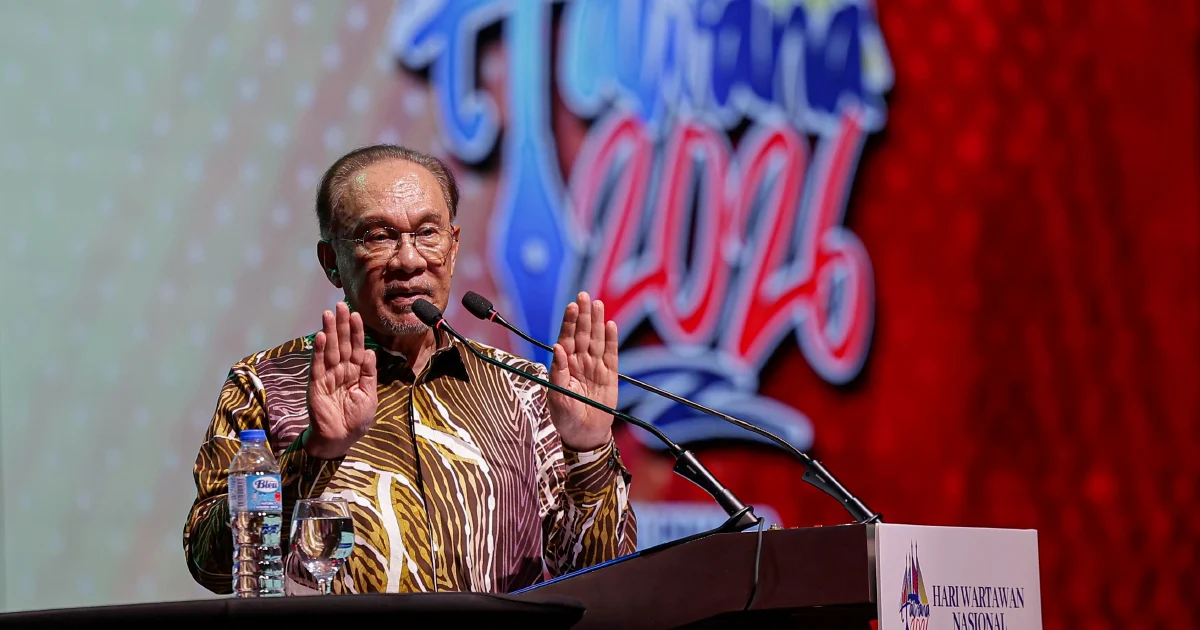
Prime Minister Datuk Seri Anwar Ibrahim has signalled strong backing for the appointment of former Federal Court judge Tan Sri Nallini Pathmanathan to lead the Malaysian Media Council, arguing that her judicial background and established reputation will buttress public confidence in the regulatory body. Speaking in Butterworth, Anwar suggested that Nallini's elevation to the helm represents a strategic move to reinvigorate the council's standing at a time when media regulation and public trust in information institutions face mounting scrutiny across Southeast Asia and globally.
The appointment underscores a broader recognition within government circles that leadership credentials matter significantly in restoring institutional confidence. Nallini's tenure on Malaysia's highest court positions her uniquely to navigate the complex terrain of media regulation, where decisions must balance journalistic freedom against the public interest and governmental concerns. Her experience interpreting constitutional law and adjudicating sensitive cases furnishes both legal acumen and an understanding of democratic principles that advocacy groups and media professionals typically view with greater credibility than career administrators or political appointees.
For Malaysian readers, the MMC appointment carries particular weight given the country's longstanding debates over media independence and regulatory capture. The council historically has faced criticism from press freedom advocates who question whether its leadership genuinely insulates the body from governmental pressure or instead serves as an extension of state interests. Anwar's emphasis on Nallini's judicial credentials appears calculated to counter such perceptions by associating the MMC with the perceived independence of the Federal Court, even as critics note that judicial independence itself remains contested terrain in Malaysian governance.
The timing of this appointment reflects broader regional patterns where Southeast Asian governments face mounting pressure to demonstrate commitment to transparent institutions. Following waves of democratic backsliding across the region, countries from Thailand to Myanmar have witnessed erosion of public trust in regulatory bodies perceived as politically compromised. Malaysia's positioning of Nallini as chairman signals an attempt to align with international norms and democratic expectations, potentially countering narratives that the country's institutions serve narrow political interests rather than public good.
Nallini's background carries additional significance beyond her judicial service. As a woman in a historically male-dominated legal establishment, her appointment carries symbolic weight regarding institutional modernisation and inclusivity. Malaysian audiences increasingly scrutinise whether leadership appointments reflect meritocratic principles or remain subject to patronage networks, making her credentials as a former apex court judge a substantive rather than merely cosmetic credential. This dimension may help legitimise the MMC among segments of society sceptical of government institutions generally.
The Malaysian Media Council itself has undergone significant evolution since its establishment. Tasked with maintaining professional standards among print and online media while respecting editorial independence, the council navigates inherently contested terrain where no regulatory decision fully satisfies all stakeholders. Media outlets chafe against restrictions, while government officials and public complainants sometimes view the council as insufficiently assertive. A chairman commanding substantial judicial authority and public respect may possess greater latitude to make nuanced rulings without accusations of bias, though this remains contingent on whether Nallini's decisions actually vindicate the public interest or serve unstated governmental objectives.
For Southeast Asian media observers and regional press freedom advocates, Nallini's appointment represents either a meaningful institutional reform or merely cosmetic window-dressing depending on whether her leadership translates into demonstrable changes in MMC operations, appeals processes, and the transparency of regulatory decision-making. The real test lies ahead, as the council confronts contentious cases involving political coverage, fact-checking standards, and online media regulation where competing principles inevitably collide. Her judicial experience suggests capacity for reasoned analysis, yet judicial authority does not automatically translate into sound media policy or institutional change.
Anwar's public expression of confidence serves multiple purposes beyond endorsement. By highlighting institutional leadership as central to restoring trust, the Prime Minister positions his government as responsive to concerns about regulatory credibility. This rhetorical move acknowledges public anxieties about institutional integrity without committing to specific structural reforms or transparency measures that might constrain governmental influence over media narratives. Whether such confidence translates into actual outcomes depends considerably on Nallini's exercise of authority and the council's concrete practices rather than her appointment alone.
For Malaysian readers concerned about media freedom and information quality, Nallini's appointment warrants careful monitoring of actual council decisions rather than acceptance of leadership rhetoric. History demonstrates that even well-credentialled institutional leaders sometimes find their authority circumscribed by political pressure or structural constraints built into regulatory frameworks. The meaningful assessment of this appointment will emerge through the council's handling of controversial cases, its transparency in decision-making, and whether media practitioners and civil society observers ultimately perceive genuine institutional evolution or renewed efforts at information control wearing different leadership clothing.
%22%2F%3E%3C%2Fpattern%3E%3C%2Fdefs%3E%3Crect%20width%3D%22100%25%22%20height%3D%22100%25%22%20fill%3D%22url(%23ph3dyskg)%22%2F%3E%3Crect%20width%3D%22100%25%22%20height%3D%22100%25%22%20fill%3D%22url(%23ph3dyskp)%22%2F%3E%3Ctext%20x%3D%2250%25%22%20y%3D%2250%25%22%20text-anchor%3D%22middle%22%20dominant-baseline%3D%22central%22%20fill%3D%22rgba(255%2C255%2C255%2C0.95)%22%20font-family%3D%22Georgia%2C%20'Times%20New%20Roman'%2C%20serif%22%20font-weight%3D%22700%22%20font-size%3D%22194%22%20letter-spacing%3D%22-0.02em%22%3EUnusual%3C%2Ftext%3E%3C%2Fsvg%3E)
%22%2F%3E%3C%2Fpattern%3E%3C%2Fdefs%3E%3Crect%20width%3D%22100%25%22%20height%3D%22100%25%22%20fill%3D%22url(%23ph3nybjg)%22%2F%3E%3Crect%20width%3D%22100%25%22%20height%3D%22100%25%22%20fill%3D%22url(%23ph3nybjp)%22%2F%3E%3Ctext%20x%3D%2250%25%22%20y%3D%2250%25%22%20text-anchor%3D%22middle%22%20dominant-baseline%3D%22central%22%20fill%3D%22rgba(255%2C255%2C255%2C0.95)%22%20font-family%3D%22Georgia%2C%20'Times%20New%20Roman'%2C%20serif%22%20font-weight%3D%22700%22%20font-size%3D%22320%22%20letter-spacing%3D%22-0.02em%22%3EPM%3C%2Ftext%3E%3C%2Fsvg%3E)