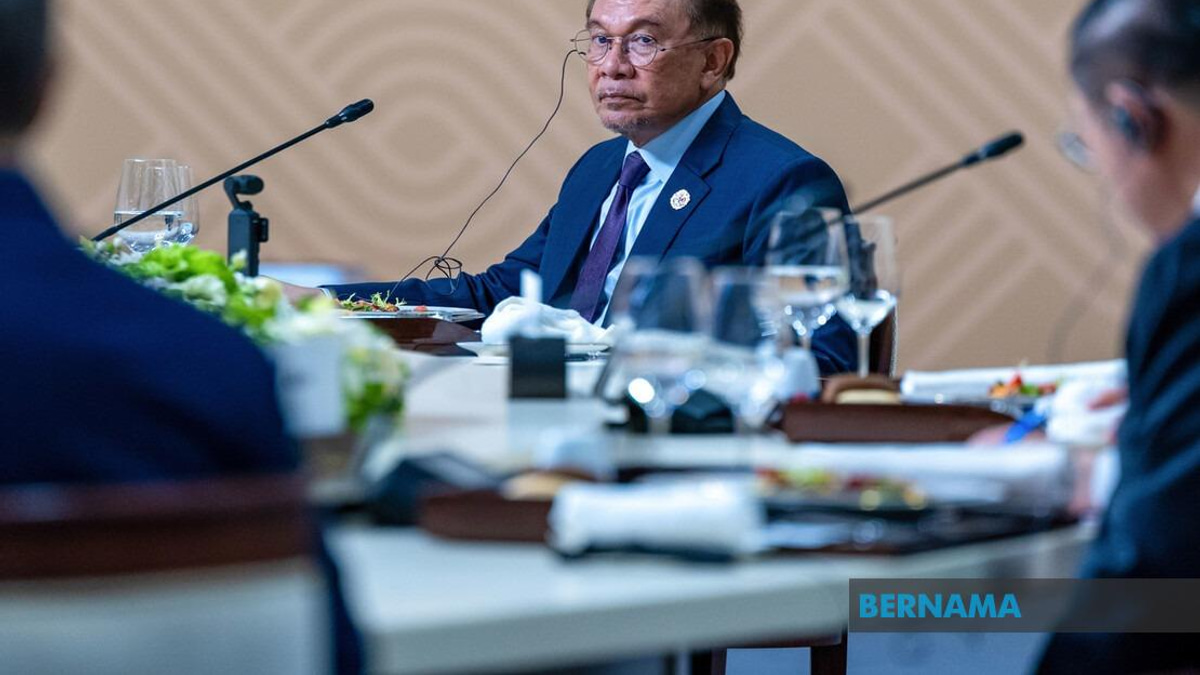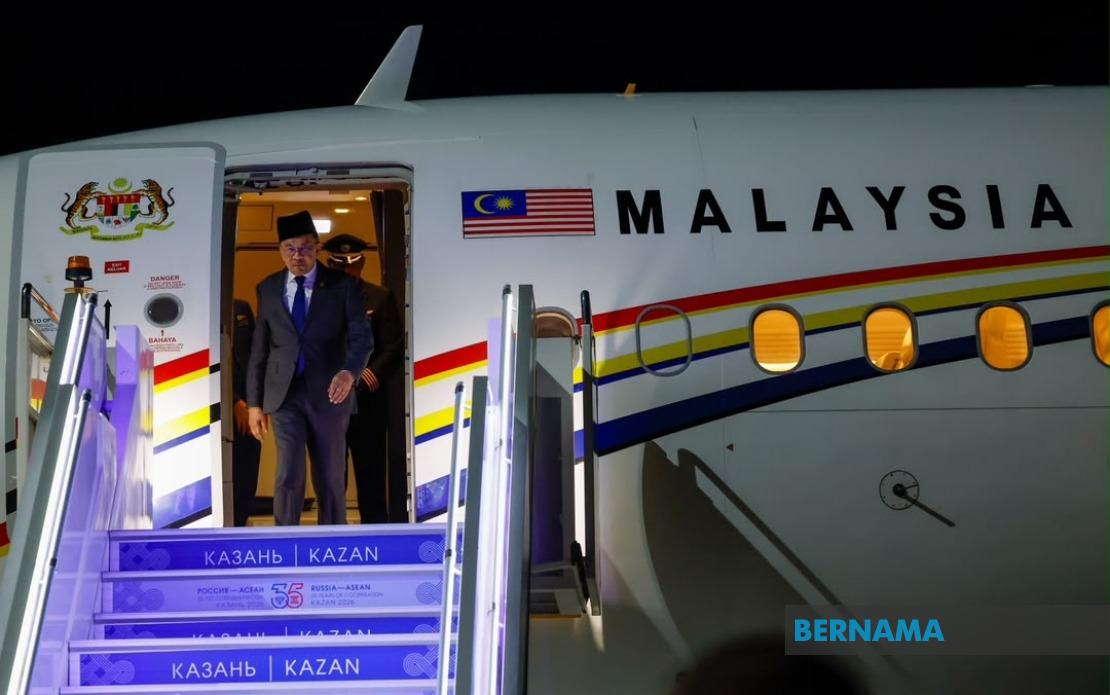
Prime Minister Datuk Seri Anwar Ibrahim landed in Kazan on Tuesday evening, beginning a carefully planned two-day engagement that will see Malaysia's top diplomat take centre stage at a landmark regional gathering. The aircraft carrying the Prime Minister touched down at Kazan International Airport at 10.20 pm local time, marking the official commencement of discussions that will define ASEAN-Russia cooperation for the next half-decade. Accompanying Anwar were Minister of Investment, Trade and Industry Datuk Seri Johari Abdul Ghani and Minister of Economy Akmal Nasrullah Mohd Nasir, alongside senior officials from both the Prime Minister's Office and the Foreign Ministry, signalling the administrative weight Malaysia is placing on these talks.
The timing of this visit carries particular significance within the broader context of international relations. This represents Anwar's third sojourn to Russia since he took office in November 2022, demonstrating a deliberate pattern of engagement with Moscow. His previous journey to Vladivostok in September 2024 for the Eastern Economic Forum was followed by an official visit to Moscow in May 2025, during which substantive discussions took place across multiple sectors including trade, investment, agriculture, education, aerospace and energy cooperation. The incremental nature of these visits suggests a methodical approach to building institutional relationships and exploring synergies that extend well beyond ceremonial diplomacy.
The summit itself represents a historical milestone. The gathering marks the 35th anniversary of ASEAN-Russia relations, a partnership established in Kuala Lumpur in 1991 that has evolved considerably through decades of engagement. This commemorative occasion serves as an inflection point where both the Association of Southeast Asian Nations and the Russian Federation can assess the trajectory of their cooperation while simultaneously charting fresh directions for the coming years. For Malaysia, which holds significant regional influence within ASEAN, the summit provides an opportunity to shape the agenda and ensure that Southeast Asian interests are prominently featured in discussions about future collaboration.
The substantive agenda encompasses areas of particular relevance to Malaysia and the broader Southeast Asian region. Discussions will concentrate on deepening practical cooperation across multiple dimensions: trade and investment frameworks, energy security arrangements, food security initiatives, digital economy advancement, science and technology partnerships, cultural exchanges, educational programmes and people-to-people engagement. These thematic areas reflect shared priorities between Southeast Asia and Russia, each addressing critical challenges that transcend borders and demand coordinated responses. Energy security, for instance, remains a pressing concern for resource-dependent Southeast Asian economies, while food security touches upon fundamental development and sovereignty questions across the region.
Four substantial outcome documents are anticipated to emerge from the summit, each intended to crystallise commitments and establish mechanisms for future cooperation. The Kazan Declaration on the 35th Anniversary of ASEAN-Russia Relations will commemorate the partnership's historical trajectory while establishing the political framework for advancement. Complementing this are dedicated joint statements addressing energy cooperation and cultural cooperation, reflecting the compartmentalised yet integrated nature of modern bilateral diplomacy. Perhaps most consequentially, the Comprehensive Plan of Action to Implement the ASEAN-Russia Strategic Partnership 2026-2030 will serve as an operational blueprint, translating political commitments into concrete initiatives and measurable outcomes over a five-year implementation window. These documents are designed to foster institutional continuity and ensure that partnership objectives remain aligned even as political transitions occur within either party.
Malaysia's participation in this summit extends beyond ceremonial attendance. According to Wisma Putra, the Foreign Ministry, the nation's engagement reflects a deliberate commitment to reinforcing ASEAN's external relations and cementing ASEAN Centrality as a governing principle in regional affairs. This positioning is particularly important given the increasingly complex global environment characterised by great power competition and shifting geopolitical alignments. By actively participating in mechanisms that include Russia, Malaysia and the broader ASEAN community signal their intention to maintain constructive relationships across the political spectrum rather than aligning exclusively with any single bloc. This approach aligns with Malaysia's traditional non-aligned ethos while acknowledging contemporary realities.
Beyond the formal summit sessions, Anwar's schedule includes bilateral engagements with multiple counterparts. Most prominently, meetings with Russian President Vladimir Putin and the Rais (head) of the Republic of Tatarstan are anticipated, providing opportunities for high-level strategic discussions. Additionally, Anwar intends to hold engagements with his ASEAN counterparts attending the summit, enabling horizontal dialogue on bilateral relations and issues of shared concern. These side meetings often prove as consequential as the main summit sessions, allowing leaders to address specific national interests and forge coalitions around particular policy positions.
The thematic focus of Malaysia's engagement reflects carefully considered priorities. Anwar will emphasise advocacy for dialogue and peace, a stance consistent with Malaysia's longstanding preference for multilateral conflict resolution and diplomatic engagement. Supporting economic resilience represents a pragmatic concern for a Southeast Asian economy navigating global trade uncertainties and currency volatility. Advancing energy and food security acknowledges the structural vulnerabilities that developing economies face when dependent on external supplies of critical commodities. Deepening people-to-people links recognises that sustainable international relationships must extend beyond governmental channels to encompass cultural, educational and business communities that create organic networks of mutual understanding and interdependence.
For Malaysian readers and Southeast Asian observers, this summit carries implications that extend well into domestic policy spheres. Enhanced energy cooperation mechanisms with Russia could potentially diversify Malaysia's energy portfolio and provide alternatives to concentrated supply chains. Investment frameworks negotiated at such summits create pathways for Malaysian businesses to access new markets and for Russian enterprises to explore Southeast Asian opportunities. Educational and cultural exchanges foster the human capital development that underpins long-term competitiveness. Moreover, Malaysia's active role in constructing these ASEAN-Russia frameworks enhances the nation's diplomatic profile and underscores its capacity to operate effectively across different geopolitical contexts.
The broader strategic significance of this engagement cannot be overlooked. In an international environment marked by increased polarisation and competition between major powers, ASEAN's ability to maintain constructive relations with multiple actors—including Russia—represents a form of strategic autonomy. Malaysia's participation in these discussions sends clear signals to the international community that Southeast Asian nations reserve the right to engage with all powers on the basis of mutual interest and benefit. This approach differs markedly from binary Cold War-era alignments and reflects the sophisticated diplomatic calculus that contemporary Southeast Asian states employ to maximise their strategic space and development prospects.
As the summit unfolds over the next two days, the concrete outcomes in terms of agreements signed, investment commitments announced, and cooperative mechanisms established will become apparent. What is already evident, however, is Malaysia's deliberate commitment to strengthening the ASEAN-Russia relationship at a moment when such engagement carries particular geopolitical weight. Anwar's presence in Kazan, supported by key economic ministers and senior officials, underscores the Malaysian government's assessment that this regional partnership merits sustained attention and resources.