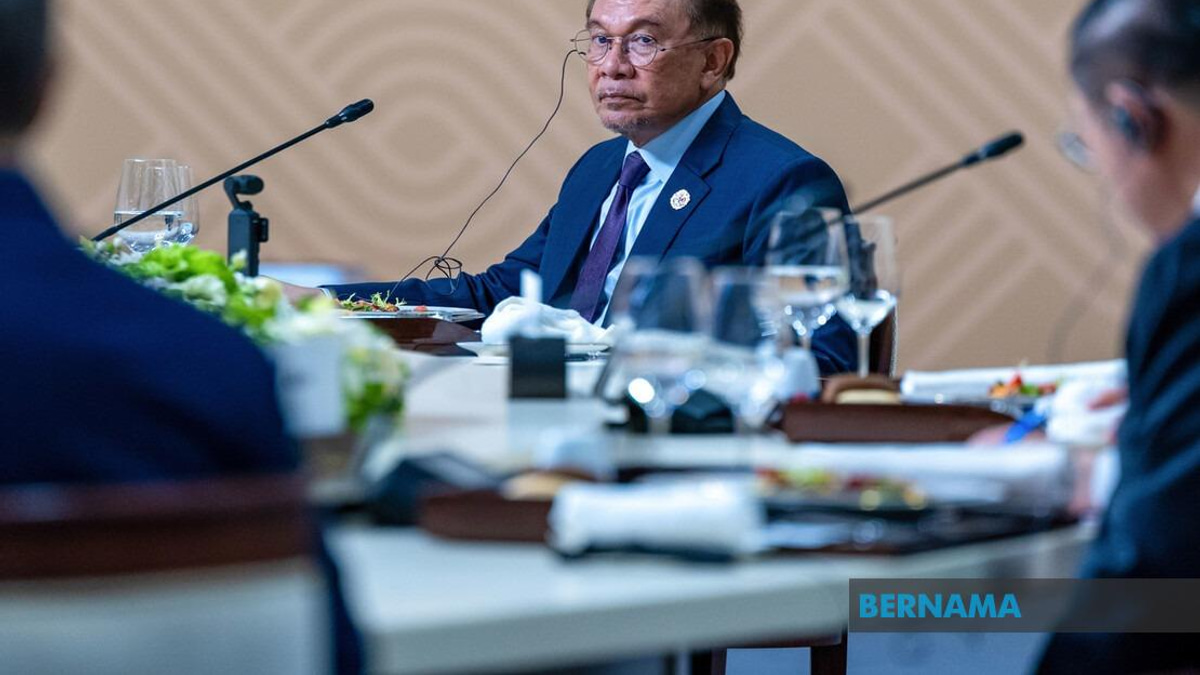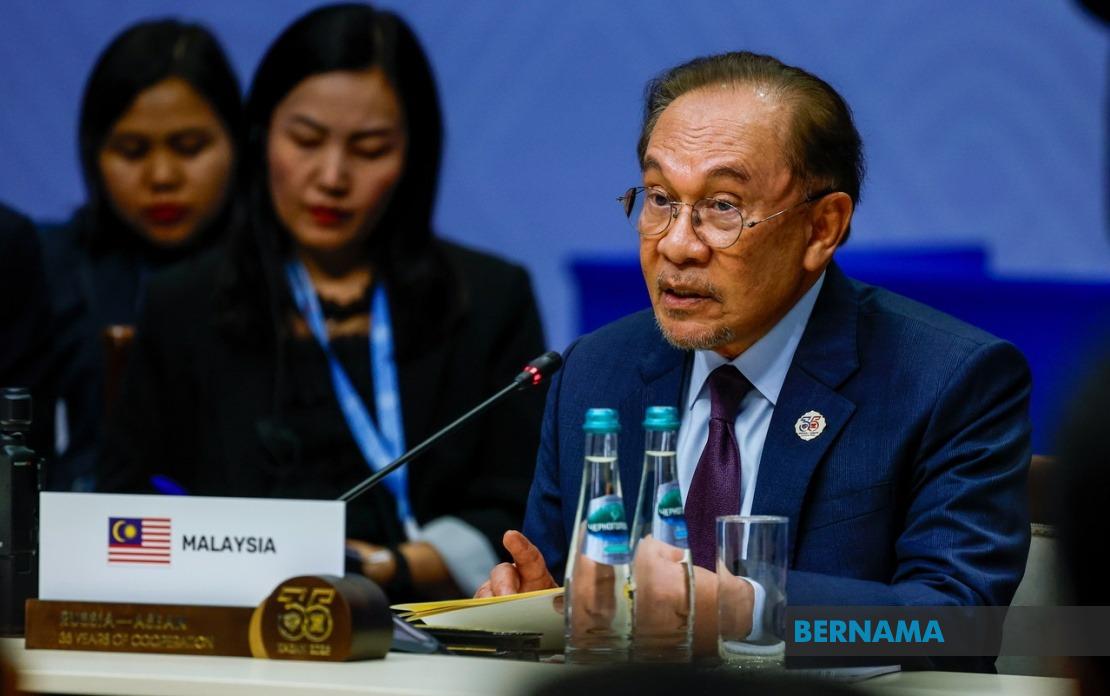
Prime Minister Datuk Seri Anwar Ibrahim has called for ASEAN and Russia to substantially deepen their strategic partnership, particularly in areas that address contemporary global challenges. Speaking at the ASEAN-Russia Commemorative Summit in Kazan on June 18, Anwar underscored that sustained cooperation between the regional bloc and Moscow represents a critical mechanism for navigating an increasingly volatile international landscape. His intervention arrived as the bloc seeks to demonstrate its relevance in mediating between competing great powers while advancing collective prosperity.
The Malaysian premier articulated a comprehensive vision for expanded ties, identifying multiple sectors where ASEAN and Russia could generate tangible benefits for their populations. Beyond traditional commerce and investment frameworks, Anwar specifically highlighted digital infrastructure, artificial intelligence, scientific research, and renewable energy as priority domains. The inclusion of the halal industry in his enumeration reflected Malaysia's particular interest in trade pathways that align with Islamic standards—a growing market segment across Southeast Asia and Central Asia. Equally significant was his emphasis on people-to-people exchanges, suggesting that durable partnerships require cultural and educational foundations alongside governmental agreements.
The Kazan gathering marks a symbolic milestone: the 35th anniversary of ASEAN-Russia relations, which commenced in 1991 in Kuala Lumpur during the early post-Cold War period when Moscow was reassessing its regional role. The longevity of this engagement, now spanning more than three decades, testifies to mutual recognition of strategic value despite the fluctuations in global power dynamics. For ASEAN members, the partnership offers a counterbalance to unipolar arrangements while providing access to Russian expertise in energy security and resource development. For Russia, the bloc represents a stabilizing force in the Indo-Pacific and a potential alternative market as Western sanctions tighten.
Anwar's intervention placed particular stress on the centrality of dialogue and international law as mechanisms for resolving disputes. This rhetorical position carries significance for Malaysia, which has long positioned itself as a proponent of multilateralism and peaceful dispute resolution. By anchoring his remarks in these principles, the Prime Minister signalled that ASEAN's approach to the Russia-Ukraine conflict remains rooted in neutrality and adherence to UN frameworks rather than alignment with any single bloc. This stance allows Malaysia and other ASEAN capitals to maintain productive relations with both Western powers and Russia without appearing to abandon foundational commitments to rules-based international order.
The summit included substantive interventions on Middle Eastern developments, reflecting ASEAN's expansion beyond traditional Southeast Asian concerns. Anwar reiterated Malaysia's longstanding demands for an immediate cessation of violence in Gaza, unimpeded humanitarian access, and recognition of Palestinian self-determination rights. His condemnation of Israeli military expansion into Lebanon and any attacks on United Nations peacekeeping forces demonstrated that ASEAN's diplomatic agenda encompasses global humanitarian concerns. These statements align with broader Malaysian foreign policy, which has consistently prioritised Palestinian causes and opposed what Kuala Lumpur characterises as Israeli regional militarism.
The summit's expected outcome documents signal the intended trajectory of ASEAN-Russia engagement through 2030. The Kazan Declaration marking the 35-year relationship milestone provides a platform for joint reflection and mutual recognition of shared achievements. The dedicated joint statements on energy and cultural cooperation indicate sectors where near-term progress appears feasible. Most crucially, the comprehensive plan of action for implementing the ASEAN-Russia Strategic Partnership 2026–2030 establishes a roadmap with defined objectives, timelines, and accountability mechanisms—transforming aspirational cooperation into operationalised partnerships.
Energy cooperation merits particular analytical attention given Southeast Asia's growing demand and Russia's expansive supply capabilities. ASEAN economies collectively consume substantial volumes of oil and liquefied natural gas, with demand trajectories pointing upward as development accelerates. Russia, despite Western sanctions on conventional energy markets, retains capacity to service Asian markets through alternative logistics routes. Joint statements formalising this cooperation create frameworks for long-term contracts, technology transfer, and infrastructure development—tangible outcomes that translate diplomatic rhetoric into economic activity.
The attendance of Philippines President Ferdinand Marcos Jr, who holds the 2024 ASEAN chairmanship, lent additional weight to the Kazan proceedings. Marcos's participation alongside other ASEAN leaders and representatives demonstrated collective commitment to the Russia partnership despite internal differences within the bloc regarding responses to geopolitical tensions. The Philippines itself has navigated complex triangular relationships involving the United States, China, and Russia, making its presence at a Russian-hosted summit a statement about ASEAN's determination to chart an independent foreign policy course.
For Malaysian readers and Southeast Asian observers, the summit represents a broader assertion of regional agency in an era of great power competition. Rather than accepting predetermined roles in superpower rivalries, ASEAN capitals are endeavouring to construct partnerships that serve their development objectives while maintaining strategic autonomy. Anwar's call for strengthened ASEAN-Russia cooperation reflects this balancing act: deepening engagement with Moscow without alienating Western partners, advancing concrete economic interests while maintaining rhetorical commitment to universal principles, and expanding regional influence through diplomatic positioning between competing global orders.
The geopolitical context amplifies the significance of these partnership documents. As Western economic measures constrain Russia's access to conventional markets and technology, Asian alternatives become increasingly valuable. Simultaneously, ASEAN nations seek diversified partnerships that reduce dependence on any single power while maximising access to resources, markets, and technical expertise. The formal adoption of outcome documents at Kazan institutionalises this mutual interest, creating organisational structures and accountability frameworks that should persist beyond any particular political administration or international crisis.
Looking forward, the articulated priorities in Anwar's remarks—artificial intelligence, digital infrastructure, food security, and the halal industry—reflect contemporary development challenges facing Southeast Asia. These sectors are not marginal to ASEAN's future but central to its prosperity agenda. By anchoring ASEAN-Russia cooperation in these domains rather than narrow geopolitical positioning, Malaysia and its ASEAN partners are attempting to frame the partnership as mutually beneficial rather than zero-sum competition. This approach seeks to demonstrate that deepened engagement with Russia advances regional development objectives rather than contradicting commitments to other partnerships.