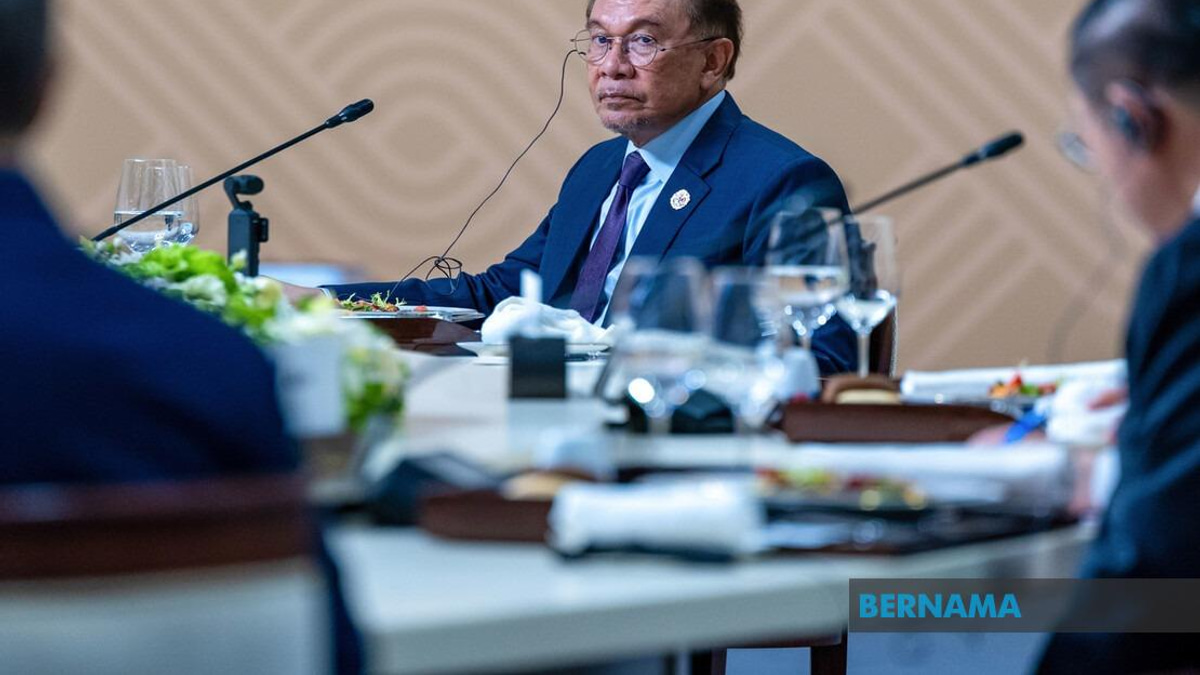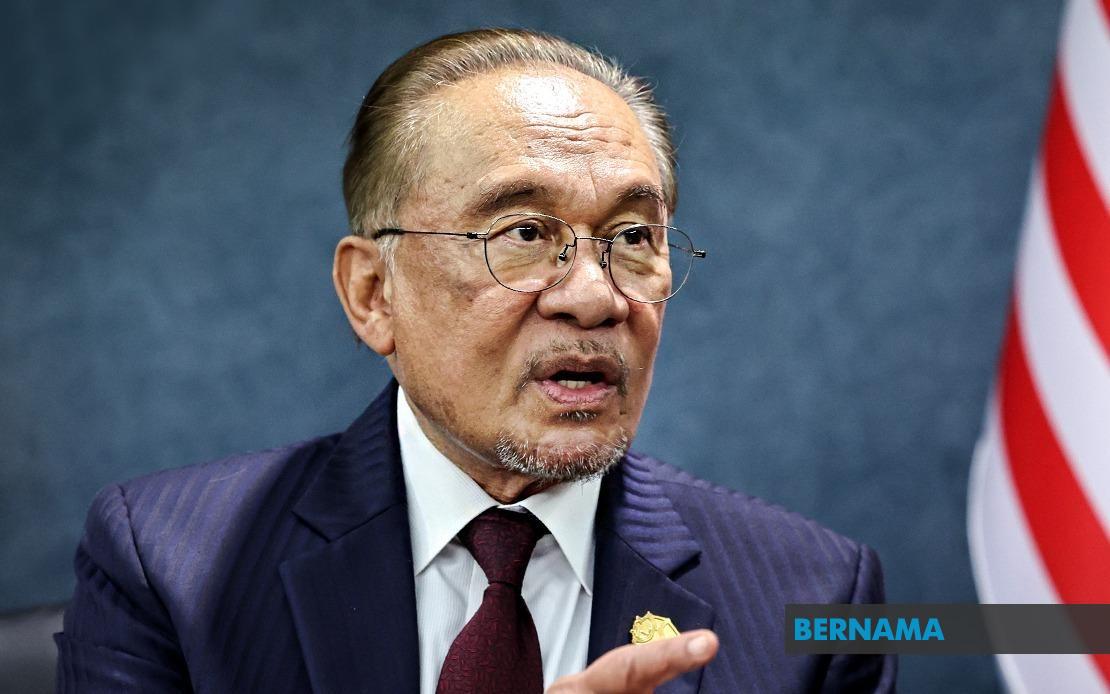
Prime Minister Datuk Seri Anwar Ibrahim is set to take centre stage at the ASEAN-Russia Business Forum in Kazan, delivering a keynote address to an assembled group of business representatives and officials from across the ten-member Southeast Asian bloc and the Russian Federation. The forum, held at Kazan IT Park, represents a significant diplomatic and economic engagement initiative between Malaysia and Russia during a period of evolving geopolitical repositioning in the region.
The Malaysian leader, who concurrently holds the Finance portfolio, will be formally received by Ilya Nachvin, the Minister of Digitalisation of Public Administration, Information Technologies and Communications of the Republic of Tatarstan. This ceremonial welcome underscores the bilateral importance both nations attach to the occasion. Following his address to the assembled business and government representatives, Anwar will transition to an evening engagement at the Tatar State Academic Theater, where he is expected to participate in a courtesy call with Russian President Vladimir Putin—a development that signals the strategic importance Malaysia places on its relationship with Moscow.
The gathering forms part of the broader ASEAN-Russia Commemorative Summit framework, a milestone event that acknowledges three and a half decades of structured engagement between the regional grouping and the Russian state. Since the formal establishment of dialogue relations in 1991, the relationship has matured considerably, with Russia's elevation to full ASEAN Dialogue Partner status in 1996 representing an important watershed moment. More recently, the 2018 Strategic Partnership designation has provided a institutional framework for deepening cooperation across the political-security, economic, and socio-cultural domains.
Kazan serves as an particularly symbolic venue for such proceedings. Situated approximately 800 kilometres east of Moscow at the confluence of the Volga and Kazanka rivers in European Russia, the city functions as a crucial cultural and political nexus, frequently characterised as Russia's third major metropolis after Moscow and Saint Petersburg. With a population exceeding 1.3 million residents, Kazan carries a history spanning more than a millennium, having established itself as one of Russia's foremost Islamic cultural centres. This positioning makes it an exceptionally appropriate location for diplomatic engagement between Russia and ASEAN, given the latter's substantial Muslim-majority composition and cultural significance within the Islamic world.
The economic dimension of the ASEAN-Russia relationship warrants considerable attention, particularly for Malaysian stakeholders seeking to understand regional trade dynamics. During 2024, total bilateral trade between ASEAN and Russia reached USD18.1 billion, while Russian foreign direct investment flowing into ASEAN economies amounted to USD92.97 million—equivalent to RM367.90 million. These figures, whilst substantial, suggest significant untapped potential within the commercial relationship, particularly given the geographic and demographic scale of both partners.
For Malaysia specifically, Russia represents a notably significant economic partner, ranking as the country's ninth-largest trading partner among European nations in 2025. The bilateral trade relationship generated RM8.72 billion in value, or approximately USD2.04 billion, during the measurement period. This positions Russia amongst Malaysia's more substantive trading relationships within the European continent, reflecting decades of accumulated commercial ties and institutional engagement mechanisms.
The composition of Malaysia-Russia trade reveals complementary economic structures that facilitate mutually beneficial exchange. Malaysian exports to the Russian market concentrate predominantly on electrical and electronic products, machinery, equipment components, and processed food items—sectors aligned with Malaysia's established manufacturing and processing capabilities. Conversely, Malaysian imports from Russia centre on petroleum products, mineral resources, chemicals, and chemical-derived products—categories reflecting Russia's resource-extraction strengths and petrochemical processing infrastructure. This trade pattern demonstrates a pragmatic division of labour that has evolved organically through market mechanisms and bilateral commercial relationships.
The significance of this year's summit extends beyond routine diplomatic protocol. By commemorating thirty-five years of dialogue relations, the gathering acknowledges a partnership that has weathered significant shifts in international relations, including periods of geopolitical tension and shifting alliance structures. ASEAN's maintenance of strategic autonomy through relationships with major powers—including Russia—remains a defining characteristic of the regional bloc's foreign policy approach. Malaysia's active participation in such forums reflects its commitment to the ASEAN consensus on non-alignment and equidistant engagement with global powers.
Anwar's dual role as both Prime Minister and Finance Minister carries particular weight in this context. His presence signals that Malaysia approaches the economic dimensions of ASEAN-Russia engagement with high-level governmental attention and strategic priority. The emphasis on business forum participation suggests that economic cooperation—rather than mere diplomatic courtesy—forms the substantive core of the commemorative summit's agenda. This pragmatic orientation aligns with Malaysia's broader policy framework of leveraging multiple international partnerships to advance national economic interests and regional stability.
The gala dinner and presidential courtesy call following the business forum address represent the ceremonial culmination of Malaysia's participation in the summit. Such interactions, whilst often characterised as formal protocol, serve important functions in reinforcing personal relationships between national leaders and signalling mutual respect and ongoing commitment to bilateral engagement. These informal channels frequently facilitate discussions that shape medium-term cooperation frameworks and resolve outstanding bilateral issues.
Looking forward, the business forum outcomes may yield insights into sectors and mechanisms through which ASEAN-Russia cooperation could expand. Energy security, digital infrastructure development, and agricultural trade have emerged as potential growth areas in regional commerce. Malaysia's significant participation in the digital economy and renewable energy transition positions it as a potential facilitator of such expanded cooperation frameworks.
The Kazan summit ultimately reflects ASEAN's broader strategic positioning in an increasingly multipolar international environment. By maintaining substantive engagement with Russia through high-level forums and business-focused dialogue platforms, ASEAN member states—including Malaysia—reinforce their commitment to independent foreign policy orientations unconstrained by bloc-based alignments. The economic dimensions of such engagement, whilst significant, remain secondary to the political-strategic imperatives of maintaining stable, predictable great-power relationships across the region.