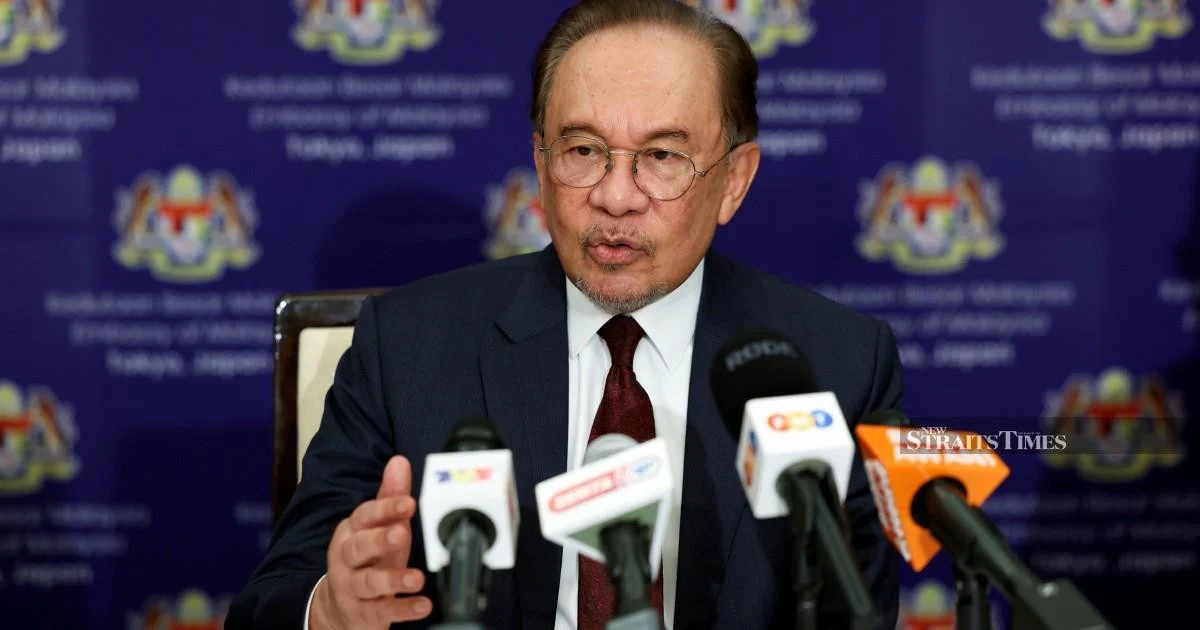
Prime Minister Datuk Seri Anwar Ibrahim announced a substantial increase in funding directed toward Bumiputera businesses through Malaysia's government-linked investment companies, marking a decisive policy shift aimed at strengthening indigenous entrepreneurship. The funding commitment for 2026 has been lifted to RM2 billion, representing a notable jump from the RM1.3 billion allocated in the previous year and signalling renewed government determination to nurture locally-owned enterprises.
The 54 percent increase in investment commitments underscores the administration's recognition that Bumiputera businesses require sustained capital to compete effectively in an increasingly competitive regional economy. This injection of resources comes as Malaysia grapples with ensuring equitable economic participation and building a robust class of homegrown business leaders capable of driving innovation and job creation across multiple sectors.
Government-linked investment companies serve as critical conduits for channelling public resources into private enterprise, leveraging their expertise and networks to identify promising opportunities and support companies through growth phases. The decision to substantially elevate Bumiputera-focused investments reflects a broader policy emphasis on inclusive economic growth, acknowledging that demographic realities and constitutional commitments toward indigenous participation require deliberate and well-funded strategies.
The enhanced allocation demonstrates faith in the capacity of Bumiputera entrepreneurs to generate returns and contribute meaningfully to national economic objectives. Rather than viewing such investments purely as welfare measures, the government appears increasingly convinced that supporting indigenous businesses yields tangible economic benefits through job creation, technology transfer, and strengthened supply chains within the broader ecosystem.
For Malaysian entrepreneurs within the Bumiputera category, this increased funding availability represents genuine opportunities to scale operations, invest in modernisation, and access networks previously beyond reach. Companies seeking capital for expansion, technology adoption, or market penetration now benefit from a more generous funding environment, potentially accelerating growth timelines that might otherwise stretch over many years.
The injection of RM700 million in additional annual commitments also carries implications for employment, skills development, and regional economic distribution. As funded businesses expand, they typically hire workers, establish supplier relationships, and contribute to economic activity in areas beyond Malaysia's largest metropolitan centres, potentially addressing regional development imbalances.
However, the effectiveness of this funding increase ultimately depends on rigorous due diligence, transparent selection processes, and adequate support mechanisms beyond capital provision. Merely increasing money flows without addressing underlying challenges—such as access to management expertise, technological infrastructure, or market intelligence—risks creating inefficiencies where capital fails to generate proportionate returns or sustainable competitive advantages.
The commitment also occurs within a broader Southeast Asian context where governments increasingly recognise that inclusive capitalism and ownership diversity strengthen economies long-term. Thailand, Indonesia, and the Philippines have pursued similar strategies targeting specific demographic groups or sectors, yielding mixed results that offer instructive lessons for Malaysia's approach.
From a fiscal perspective, the RM2 billion annual commitment represents a significant government expenditure requiring careful monitoring and regular performance reviews. Investment companies must demonstrate clear metrics for success, whether measured through job creation, revenue generation, profitability of portfolio companies, or broader economic multiplier effects within target communities.
The announcement also reflects confidence in Malaysia's broader economic trajectory and government capacity to maintain spending at enhanced levels despite global uncertainties. Such sustained commitments require stable revenue streams and political consensus around development priorities, suggesting this initiative enjoys support across the administration's economic decision-making structures.
For investors and analysts monitoring Malaysia's economic policy direction, this funding increase signals official emphasis on private sector dynamism within prescribed demographic frameworks. It indicates that policymakers view Bumiputera business development not as a legacy issue but as a contemporary priority requiring modern approaches and adequate resources.
The coming year will prove pivotal in determining whether the increased allocation translates into measurable improvements in Bumiputera business formation, growth, and sustainability. Government investment companies face pressure to demonstrate that expanded resources reach genuinely promising entrepreneurs capable of building enduring enterprises, distinguishing this initiative from previous well-intentioned but ultimately limited interventions.