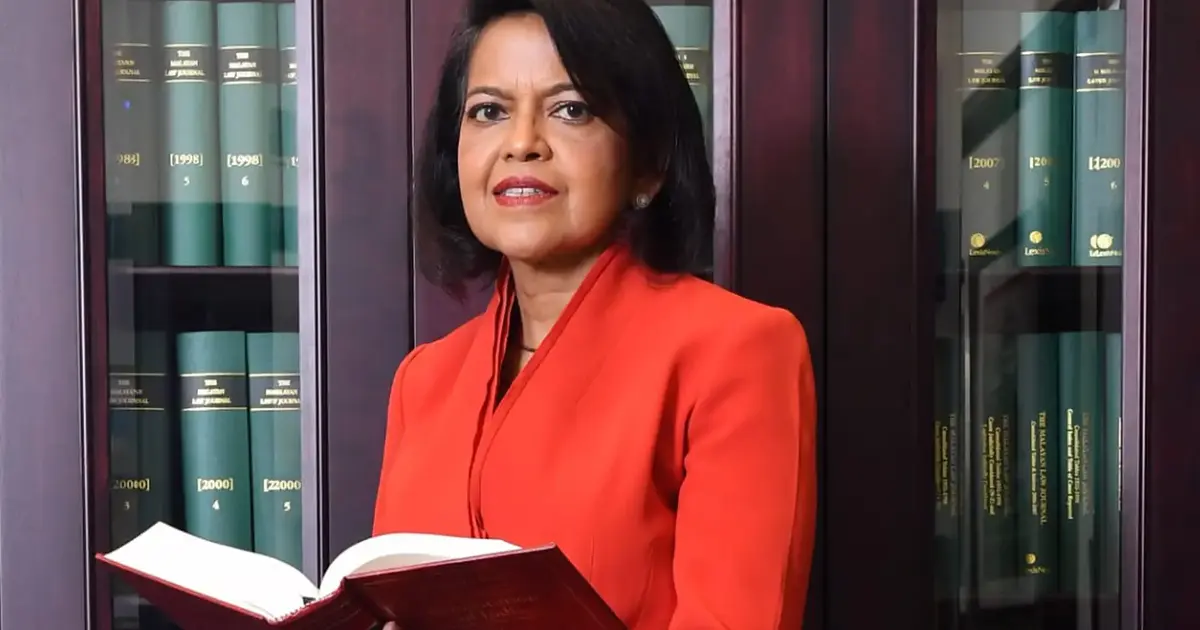
The Malaysian Media Council has elevated retired Federal Court judge Nallini Pathmanathan to the position of chairman, marking a significant leadership transition for the regulatory body overseeing the country's media landscape. The appointment signals the council's intention to bring judicial rigour and institutional experience to its operations during a period of considerable turbulence within the industry.
Pathmanathan's judicial credentials span decades of service on Malaysia's highest court bench, where she developed expertise in constitutional matters and governance issues. Her elevation to the council's top post reflects a strategic decision to anchor the institution with someone versed in interpreting complex legal frameworks and managing institutional pressures—qualities the council leadership evidently believes are essential in the current environment.
The Malaysian Media Council operates as a self-regulatory body for the country's media sector, tasked with upholding professional standards, addressing complaints, and mediating disputes between media organisations and the public. The council's role has grown increasingly complex as traditional and digital news outlets proliferate, each operating under different regulatory regimes and commercial pressures. Pathmanathan's appointment represents the council's acknowledgment that it requires more robust leadership to navigate these competing interests effectively.
The media industry across Malaysia and the broader Southeast Asian region faces a constellation of interlocking challenges that have intensified over recent years. Declining print circulation, the migration of advertising revenue to digital platforms, and the rise of social media as a primary news source have fundamentally altered the economics of journalism. These structural shifts have forced news organisations to reassess business models, editorial capacity, and their relationship with audiences—changes that inevitably create friction points requiring mediation and regulation.
Beyond economic pressures, Malaysian media grapples with heightened political sensitivities following successive governments' shifts in approach to press freedom and editorial autonomy. The relationship between state institutions and media outlets remains delicate, with concerns periodically surfacing about regulatory overreach or editorial independence. A chair with Pathmanathan's judicial background may be positioned to mediate these tensions by bringing principles of fairness and constitutional interpretation to the council's deliberations.
The rise of misinformation and disinformation campaigns represents another layer of complexity confronting media regulators. Malaysian audiences, like those across Southeast Asia, have experienced increasing circulation of false or misleading content, particularly during election cycles and moments of political instability. Traditional media organisations face public criticism for both spreading and failing to counter such narratives, creating pressure on the council to develop clearer standards and enforcement mechanisms. Whether Pathmanathan's judicial experience extends readily into the digital information ecosystem remains an open question.
Digitisation has fundamentally altered the council's enforcement terrain. Digital-native news platforms, social media accounts operated by journalists, and rapidly evolving distribution channels exist in regulatory grey zones. The council must now address complaints that may originate from content published globally yet consumed locally, a jurisdictional puzzle that previous regulatory frameworks were not designed to address. Pathmanathan's appointment suggests the council is seeking to develop more sophisticated institutional approaches to these boundary questions.
The council's effectiveness also depends on its credibility with multiple constituencies simultaneously: news organisations that fund it, audiences who lodge complaints, the government that creates its legal foundation, and civil society advocates monitoring press freedom. Balancing these competing expectations requires diplomatic skill alongside judicial temperament. Pathmanathan's transition from the bench to regulatory leadership places her at the intersection of these pressures, where her reputation for impartiality may help the council maintain institutional credibility across ideological divides.
For Malaysian readers and regional observers tracking media development in Southeast Asia, this appointment carries particular significance. Malaysia's media environment shapes narratives not only domestically but influences broader regional conversations about press freedom, government accountability, and democratic participation. The council chairman's priorities and approach filter down through editorial decision-making at news organisations across the country, indirectly affecting what stories receive coverage and how complex issues are framed.
Pathmanathan assumes her role at a moment when media literacy campaigns have become increasingly prominent across the region, with governments, civil society, and private sector entities all investing in efforts to help citizens distinguish credible journalism from false content. The council's collaboration with these initiatives, and its role in establishing professional standards that reinforce trustworthiness, will be central to her agenda. Her judicial background suggests familiarity with evidence-based reasoning and rigorous argumentation—attributes essential for articulating why media standards matter in democratic governance.
The council's work also intersects with Malaysia's international standing and its participation in regional media organisations. As Southeast Asian nations grapple collectively with questions about digital governance, content moderation, and the relationship between state regulation and editorial independence, the Malaysian Media Council's positioning influences how Malaysia engages with these conversations. A chairman capable of speaking to both judicial principles and practical media challenges may enhance the council's voice in regional forums.
Implementing Pathmanathan's vision for the council will require building consensus among often-divided stakeholders within Malaysia's media landscape. Legacy print publications, digital-first newsrooms, broadcast organisations, and online platforms operate under different economic pressures and editorial philosophies. Finding common ground on professional standards that accommodate this diversity while maintaining meaningful accountability represents one of her primary challenges. Her success will partly depend on whether the council can evolve beyond traditional concerns about accuracy and fairness to encompass questions of digital distribution, algorithmic accountability, and the council's own institutional adaptability in a rapidly transforming sector.