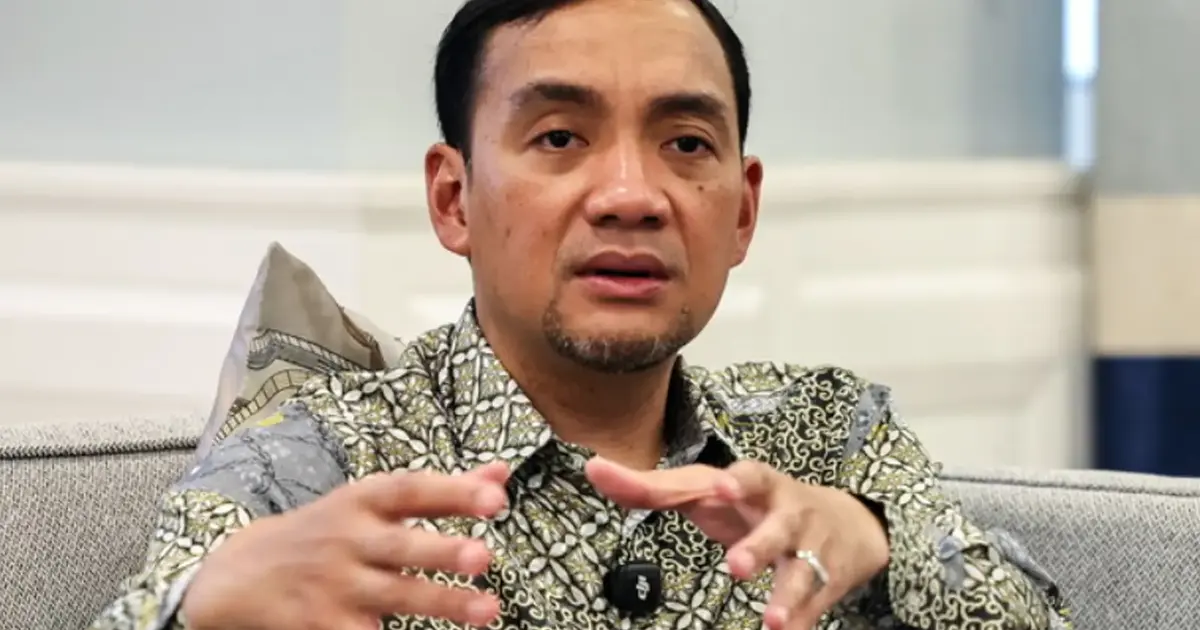
Johor's Menteri Besar Onn Hafiz Samsuddin has underscored a fundamental principle of Malaysian constitutional governance that often escapes public discourse: the sovereign role of the Ruler in determining state leadership. Speaking on the matter of succession and leadership appointments within Johor, Onn Hafiz stressed that visibility and popularity alone cannot guarantee elevation to the menteri besar position, reiterating that the ultimate authority rests with the palace.
This statement carries particular significance given the highly personalised nature of Malaysian politics at the state level, where individual politicians frequently cultivate public images as potential successors or leaders. The Johor menteri besar's remarks serve as a reminder that constitutional monarchy remains more than ceremonial in Malaysia's political architecture. The Sultan of Johor, as the head of state, retains considerable discretionary power over the appointment of the chief executive, a prerogative that supersedes popularity contests or party internal dynamics, at least in formal constitutional terms.
Onn Hafiz's clarification addresses an often-overlooked tension in Malaysian political culture. Media prominence, party support, and grassroots backing can certainly influence a politician's prospects, but they do not operate within a vacuum independent of royal considerations. The palace's perspective—informed by institutional relationships, perceived administrative competence, and alignment with royal preferences—remains a critical variable that cannot be circumvented through public campaigning or party machinery alone.
The statement also reflects broader constitutional realities that govern state administration across Malaysia's thirteen states. Each state ruler possesses the constitutional authority to request the resignation of a menteri besar and to appoint a successor, typically from among members of the state assembly. While these powers are conventionally exercised within established frameworks of political stability and majority support, they remain genuine prerogatives rather than rubber stamps. Understanding this distinction is crucial for observers of Malaysian politics seeking to anticipate leadership transitions or assess the viability of potential successors.
Within Johor specifically, the relationship between the palace and the state administration has historically carried particular weight. The state's sultanate maintains a distinctive profile within the Malaysian federation, and the Sultan's role extends beyond ceremonial functions. The palace's institutional interests—encompassing land administration, Islamic affairs, and broader governance matters—create substantive engagement with executive authority. Consequently, a menteri besar must satisfy not merely party electors or voters, but also the Ruler's assessment of suitability for office.
Onn Hafiz's intervention into this conversation, whether prompted by speculation about leadership succession or broader questions about political advancement, serves an educative function for Malaysian political observers. It redirects attention from personality-driven narratives toward the constitutional scaffolding that actually structures state government formation. This is particularly relevant in an era where social media amplifies individual political brands and where aspirants can cultivate followings independently of traditional party hierarchies.
The practical implications of this principle become apparent during periods of political uncertainty or succession planning. A politician who achieves substantial public recognition or accumulates impressive electoral credentials may still find themselves unable to secure the menteri besar position if the palace prefers an alternative figure. Conversely, a less publicly prominent figure might ascend to the office with royal backing. This asymmetry between public profile and actual appointment authority reflects the constitutional separation between electoral legitimacy and executive authority in Malaysia's system.
For political analysts examining state-level politics, particularly in Johor, the menteri besar's statement emphasises the need for multi-layered assessment of leadership prospects. Party dynamics, electoral performance, and public opinion remain relevant factors, but institutional channels—particularly the palace's perspective—operate with considerable autonomy. This complexity distinguishes Malaysian state politics from purely majoritarian systems where legislative majorities determine executive leadership.
The statement also carries implications for understanding power dynamics within ruling coalitions and between state and federal levels. A menteri besar backed by palace approval but lacking overwhelming popular enthusiasm may govern more durably than someone with enthusiastic public support but questionable royal favour. This tension, while sometimes unspoken, shapes the actual functioning of state governments and influences how political actors navigate advancement strategies.
Onn Hafiz's emphasis on royal consent ultimately reinforces a foundational principle of Malaysian governance: the monarchy's substantive constitutional role in state administration. Whether this principle operates beneficially—by introducing institutional checks against purely party-driven appointments or by constraining democratic responsiveness—remains subject to interpretation. What seems clear from his statement is that aspiring menteri besar candidates must cultivate relationships and demonstrate suitability across multiple constituencies simultaneously: their party, the electorate, and crucially, the palace. None of these spheres can be neglected or assumed to be automatically secured through success in another arena.