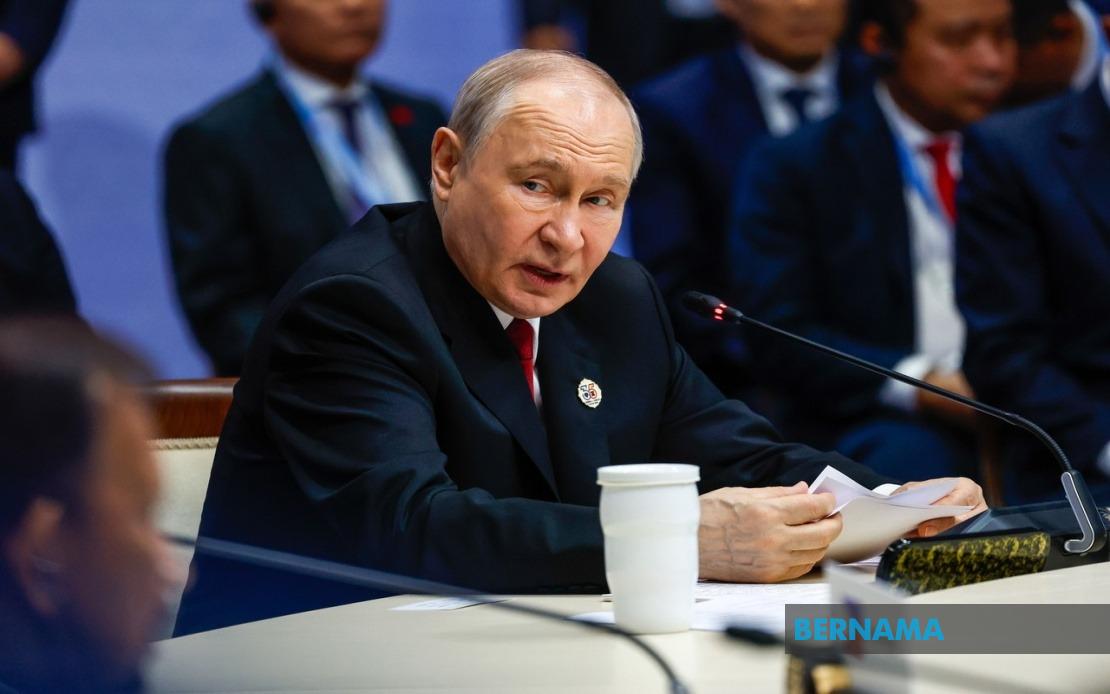
Russian President Vladimir Putin has underscored the significance of Moscow's three-and-a-half decade relationship with ASEAN, casting the partnership as a crucial stabilising influence across the Asia-Pacific at a time when the region faces mounting geopolitical pressures. Speaking at the ASEAN-Russia Commemorative Summit in Kazan, Putin pointed to the breadth and depth of cooperation spanning defence and security matters, commercial ties, natural resources, agriculture, technological innovation, and educational exchanges as evidence of a partnership that has matured well beyond its initial establishment in 1991.
The formal codification of Russia-ASEAN relations began in Kuala Lumpur that year, but the relationship has evolved substantially over subsequent decades. The designation of Russia as a full ASEAN Dialogue Partner in 1996 represented an intermediate milestone, yet it took until 2018 for both sides to elevate their engagement to the status of Strategic Partnership, a move that acknowledged Moscow's enduring commitment to strengthening cooperation across political-security, economic and socio-cultural dimensions. This progression reflects a deliberate process of institutional deepening rather than sudden expansion.
Putin's characterisation of the relationship as foundational to regional equilibrium deserves particular scrutiny for Malaysian observers. The assertion that Russia-ASEAN cooperation provides balance to Asia-Pacific security architecture speaks to broader questions about how smaller and medium-sized nations can maintain diplomatic flexibility and strategic autonomy in an environment dominated by competing great powers. For Malaysia and its regional peers, maintaining substantive partnerships with multiple global actors—including Russia—has historically been part of a non-aligned tradition dating back to the Cold War.
The legal and institutional scaffolding supporting Russia-ASEAN engagement is extensive, encompassing numerous bilateral and multilateral agreements, joint committees, and cooperative mechanisms that touch nearly every sector of national interest. Energy represents one particularly significant domain, given Russia's position as a major exporter of oil, natural gas, and other hydrocarbons, while several ASEAN members remain dependent on energy imports. Agricultural cooperation similarly addresses food security concerns that have become increasingly salient across Southeast Asia, particularly following supply-chain disruptions in recent years.
Digitalisation and technological transfer emerge as growth areas within the partnership, reflecting recognition that digital transformation has become foundational to economic competitiveness and governance effectiveness. Russia possesses considerable expertise in mathematics, cybersecurity, software development, and satellite technologies that could benefit ASEAN nations seeking to accelerate their digital transitions. Science and technology cooperation, meanwhile, opens pathways for joint research initiatives that might address shared challenges in environmental management, health security, and sustainable development.
The timing of the summit holds particular relevance given overlapping regional and global uncertainties. Trade tensions between major powers, supply-chain fragmentation, energy market volatility, and evolving security competition in the Indo-Pacific create complex conditions requiring careful diplomatic navigation. For ASEAN members, maintaining constructive engagement with Russia while managing relationships with other strategic partners represents a delicate equilibrium that the bloc has traditionally sought to preserve through its principle of non-alignment and inclusive regional architecture.
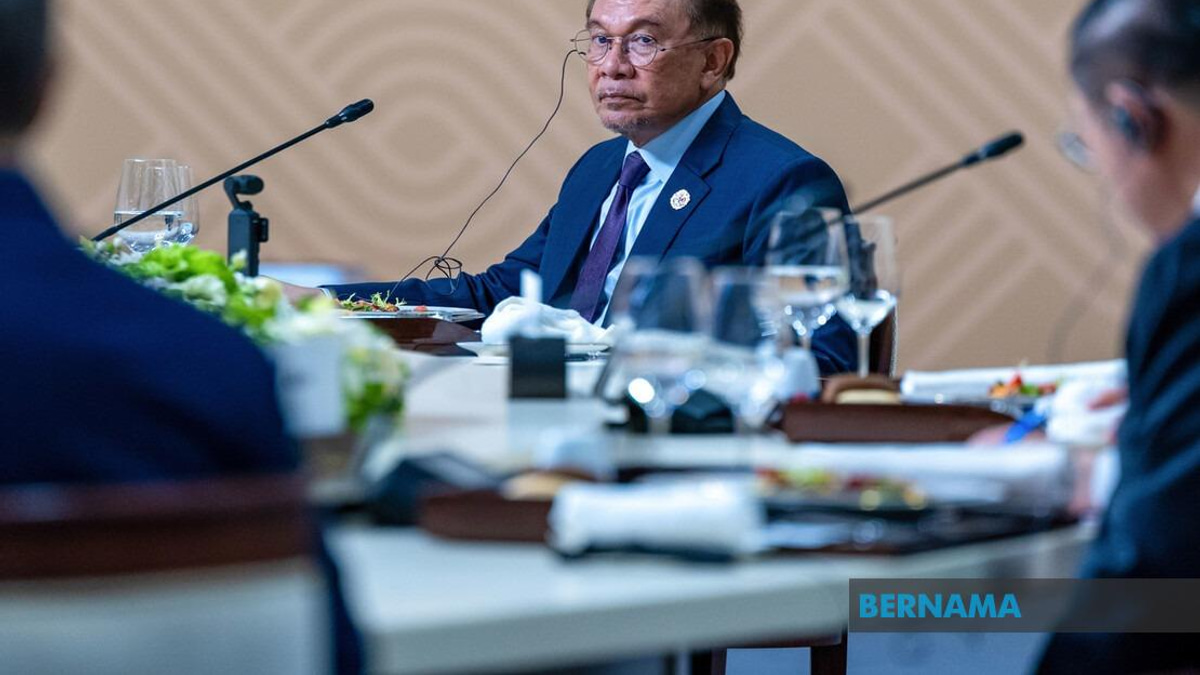
Philippine President Ferdinand Marcos Jr, serving as current ASEAN Chair, and Malaysia's Prime Minister Datuk Seri Anwar Ibrahim joined other Southeast Asian leaders in attending the two-day commemoration, signifying collective ASEAN commitment to the partnership despite the absence of unanimous positions on various international issues among member states. This attendance pattern itself carries diplomatic weight, suggesting that substantive engagement with Russia remains compatible with ASEAN's broader foreign policy objectives and its commitment to maintaining dialogue with all major powers.
Food and energy security have assumed heightened importance as organising themes within Russia-ASEAN cooperation frameworks. These sectors directly impact economic stability and social resilience across Southeast Asia, where population growth, urbanisation, and industrialisation continuously expand demand pressures. Russia's capacity to supply agricultural products and energy resources potentially offers some diversification benefits for ASEAN sourcing strategies, though such dependencies must be carefully managed to avoid over-concentration of supply risk.
Higher education represents another dimension worthy of attention from the Malaysian perspective. Russian universities and research institutions have historically attracted Southeast Asian students and academics, contributing to intellectual exchange networks that facilitate people-to-people connections beyond formal diplomatic channels. Expanded educational cooperation could accelerate knowledge transfer in specialised fields whilst strengthening long-term bilateral relationships through alumni networks and professional associations.
The partnership's emphasis on mutual interests and adherence to international law provides rhetorical anchoring, though practical application of these principles inevitably encounters friction points. For Malaysia and ASEAN members navigating great power competition, the challenge lies in translating partnership declarations into tangible benefits whilst preserving strategic autonomy. The commemorative summit's discussion of future directions suggests both sides recognise the need to refresh and reinvigorate cooperation frameworks to address twenty-first-century challenges that differ significantly from those of the Cold War era.
Beyond bilateral exchanges, Russia-ASEAN cooperation also intersects with broader regional architecture involving the East Asia Summit, ASEAN Regional Forum, and other multilateral forums where Russia participates as an external stakeholder. These institutional forums provide venues for building consensus on regional norms and security practices, making Russia's sustained engagement consequential for the shape of emerging Asia-Pacific order. For Malaysian policymakers, such multilateral dimensions remain integral to managing regional stability.
The economic dimension of Russia-ASEAN relations merits closer examination given global trade fragmentation trends. Whilst bilateral commerce volumes fluctuate with commodity prices and geopolitical circumstances, potential remains for trade expansion in non-energy sectors including machinery, chemicals, and value-added manufacturing. Enhanced investment cooperation could also unlock opportunities for joint ventures in infrastructure development, telecommunications, and other strategic sectors where both sides possess complementary capabilities.
Looking forward, the commemorative summit's stated focus on reviewing past achievements and charting future trajectories suggests both Russia and ASEAN recognise that sustaining partnership relevance requires adaptive cooperation frameworks. As Southeast Asia continues its economic ascent and technological advancement, opportunities for sophisticated collaboration in emerging domains—including artificial intelligence, green energy transitions, and space technology—could deepen interdependence and broaden partnership foundations beyond traditional security and resource dimensions that have historically dominated the relationship.