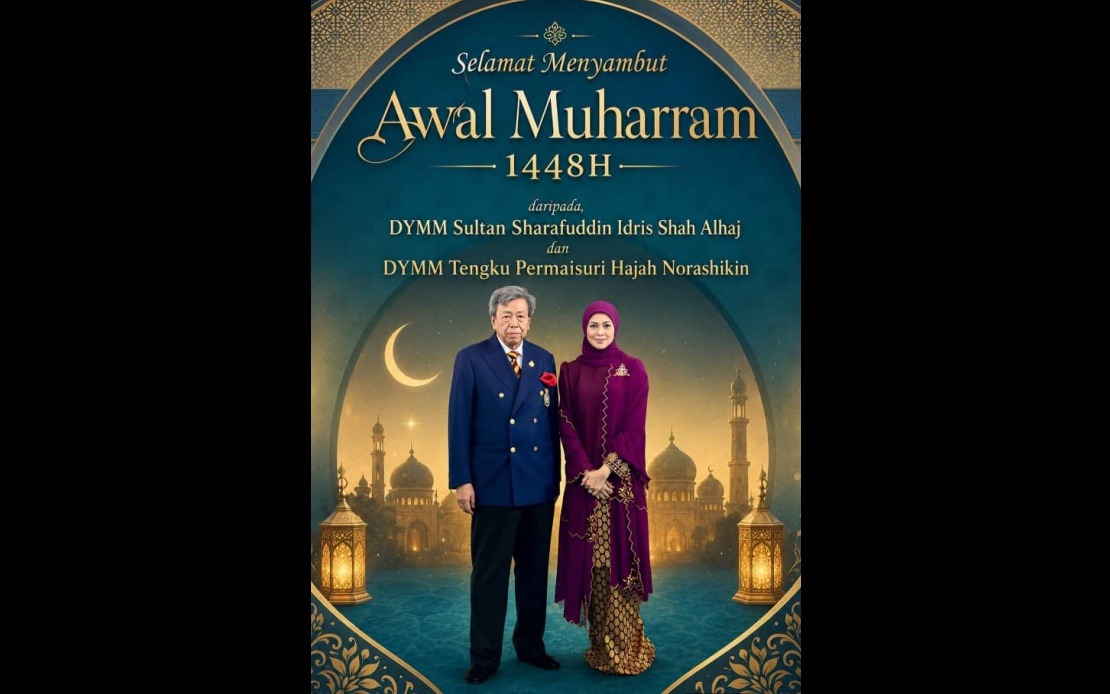
Sultan Sharafuddin Idris Shah, the Ruler of Selangor, has renewed his appeal for Muslims to place unity at the forefront of their priorities as they navigate present-day challenges, marking the occasion of Maal Hijrah 1448H. Speaking in Shah Alam on June 16, the Sultan articulated a vision of the Islamic calendar's commencement that transcends mere chronological significance, positioning it instead as a symbolic moment for positive transformation and the consolidation of the Muslim community.
The concept of Hijrah, the Sultan explained, carries meaning far beyond the historical migration of the Prophet Muhammad from Mecca to Medina. Rather, it represents a broader call to spiritual and social renewal, an invitation for believers to realign their priorities and strengthen collective bonds. In the contemporary context, this interpretation holds particular resonance for Muslim-majority Malaysia, where maintaining communal cohesion remains integral to the nation's multicultural fabric and political stability.
Drawing upon the wisdom of his predecessor, the late Sultan Salahuddin Abdul Aziz Shah, Sultan Sharafuddin articulated a framework for handling internal disagreements within the Muslim community. The guidance emphasises that differences of opinion and matters requiring correction should be addressed with restraint, wisdom and proper decorum. This approach reflects a long-standing Islamic principle that constructive discourse must be conducted with dignity and mutual respect, preserving the honour of all involved.
When criticism or counsel becomes necessary, the Sultan stressed that such interactions must be undertaken gracefully and with genuine courtesy. The distinction he drew separates legitimate expression of diverse viewpoints from confrontational or disrespectful engagement. This nuance is particularly relevant in an era of rapid social media dissemination, where unguarded statements can rapidly inflame sensitivities and fracture community bonds that took years to build.
The Sultan advocated for a problem-solving methodology rooted in private deliberation rather than public spectacle. Issues amenable to amicable resolution should remain within closed circles, guided by principles of mutual respect and a shared commitment to identifying solutions that serve the collective good. This preference for discreet negotiation reflects traditional Islamic jurisprudential practices that prioritise reconciliation over confrontation.
He cautioned against permitting disputes to spill into the public arena, where they take on magnified dimensions and become susceptible to external manipulation. When internal quarrels become visible to outsiders, the Sultan warned, observers inevitably discern vulnerabilities within the Muslim community and the broader nation. Such exposure creates opportunities for adversarial forces to exploit divisions, potentially deepening rifts that might otherwise have healed through quiet mediation.
The political and social implications of this message extend beyond rhetorical exhortation. In Southeast Asia, where communal tensions between religious and ethnic groups periodically surface, the maintenance of internal Muslim unity carries consequences for interfaith relations more broadly. Public disputes within the Islamic community can inadvertently reinforce negative stereotypes or trigger reactive responses from other communities, setting off cycles of escalating tension that undermine social cohesion across the entire nation.
The Sultan positioned the new Islamic year as an opportunity for Muslims to recommit to the spirit of Hijrah by actively strengthening solidarity amongst themselves. This renewal involves cultivating greater tolerance for differing interpretations and perspectives within Islam, whilst simultaneously transcending sectarian or ideological boundaries. He urged believers to subordinate individual preferences and factional interests to the welfare of the faith, the nation and society at large.
Furthermore, the Sultan articulated a conviction that uncontrolled public quarrelling produces no victors—only collective loss. When the Muslim community expends energy on internal recriminations visible to the world, all parties sustain reputational damage and squander resources that might otherwise advance shared objectives. This recognition of zero-sum dynamics in public disputes represents pragmatic political wisdom grounded in historical observation.
The call for renewed harmony and unity carries particular resonance in Selangor, Malaysia's most economically dynamic and ethnically diverse state. As a region where multiple religious and cultural communities coexist and interact daily, maintaining exemplary standards of internal Muslim conduct sets valuable precedents for broader interfaith relations. The Sultan's emphasis on private resolution of differences and dignified dialogue offers a model applicable well beyond the Muslim community.
Looking forward, the Sultan expressed hope that the Islamic year would usher in blessings, tranquility and material progress for all. This benediction frames unity not merely as a moral imperative but as a prerequisite for prosperity. The implicit argument suggests that communities divided by internal strife and public acrimony dissipate resources on managing conflict rather than pursuing constructive development.
The timing of this message, delivered during a religiously significant observance, underscores the Sultan's intention to connect spiritual renewal with practical social conduct. By invoking Maal Hijrah not merely as a historical commemoration but as an occasion for recommitting to communal values, the Sultan demonstrates how traditional Islamic concepts can address contemporary challenges in plural societies. The emphasis on resolving disputes through wisdom, private dialogue and mutual respect provides a constructive framework for navigating the complexities of modern Malaysian life, where diverse communities must coexist peacefully and productively.