Residents of Selangor are being urged to exercise extreme caution against an emerging wave of fraudulent text messages purporting to relate to the KitaSelangor Voucher scheme, a state assistance initiative designed to provide financial relief to lower-income families. The Selangor State Secretary's Office issued the alert on June 16 to shield the public from online scams that have begun circulating ahead of the programme's official launch, emphasizing that citizens should avoid clicking links sent through unauthenticated channels or responding to unverified communications claiming to be from government sources.
The timing of this warning is critical because applications for the voucher programme have not yet commenced, despite fraudsters attempting to solicit personal information and financial details from unsuspecting recipients. Authorities stressed that all genuine communications regarding KitaSelangor Voucher will originate exclusively through verified state government platforms and official announcements. This distinction is particularly important in Malaysia's digital landscape, where SMS-based fraud has become increasingly sophisticated, often mimicking legitimate government communications with convincing layouts and language that can deceive ordinary citizens unfamiliar with official procedures.
According to the state government's official timeline, eligible beneficiaries will receive legitimate SMS notifications beginning June 23, staggered in phases to allow recipients to verify their personal information and complete applications through the dedicated KitaSelangor Voucher Portal. The state administration has specifically advised the public to await an official announcement scheduled for June 22 before taking any action whatsoever regarding the programme. This staged approach is designed to create a clear checkpoint where residents can distinguish between authentic notifications and criminal attempts to exploit public interest in the assistance scheme.
The KitaSelangor Voucher initiative targets precisely defined population groups identified through existing government databases and registries. Intended recipients include impoverished households already listed in the eKasih system, workers who have been laid off in recent months, individuals classified as vulnerable populations and registered with the Social Welfare Department, and single mothers who satisfy the programme's eligibility criteria. This targeted approach means that those genuinely entitled to assistance will be formally contacted by authorities rather than discovering their eligibility through unsolicited messages, providing another method for residents to identify fraudulent communications.
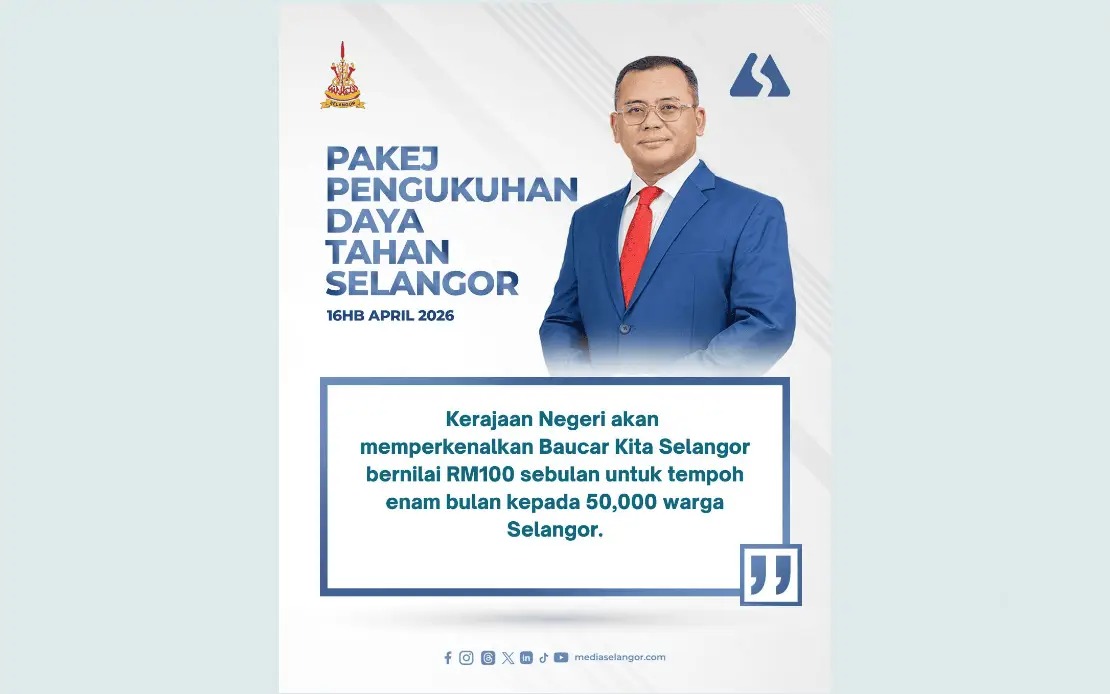
The assistance programme represents a substantial governmental commitment, with Selangor Menteri Besar Datuk Seri Amirudin Shari announcing that approximately 50,000 low-income families across the state would receive monthly cash transfers of RM100 sustained over a six-month period beginning June 30. This totals RM30 million in direct household assistance, forming part of the broader RM140 million Selangor Resilience Strengthening Package Phase 1 that the state government unveiled in April as a comprehensive response to multiple economic pressures facing residents. The package was formulated to address the combined challenges of global economic instability, accelerating living costs, and ongoing disruptions to international supply chains that have driven inflation in Malaysia's consumer and industrial sectors.
The decision to implement the voucher programme through a carefully managed, phased registration system reflects lessons learned from previous assistance initiatives. By controlling the pace at which notifications are distributed and by maintaining a clear official portal for applications, the state government aims to prevent the congestion and processing delays that can occur when large numbers of citizens attempt to register simultaneously. This methodical approach also provides authorities with better mechanisms to verify applicant information and prevent duplicate applications or fraudulent claims, protecting both beneficiaries and government resources.
For Malaysian residents, particularly those in Selangor who may be eligible for this assistance, the key protective measure is vigilance and patience. Scammers typically create urgency through messages claiming that vouchers will expire or that spots are limited, pressuring recipients into hasty decisions. The state government's clear messaging about waiting until June 22 for official announcements serves as both a practical timeline and a behavioural boundary—any message received before this date claiming to offer KitaSelangor Voucher benefits should be treated as suspicious. Additionally, genuine government communications rarely request passwords, personal identification numbers, banking credentials, or other sensitive information via SMS; any message making such requests should be immediately reported to authorities.
The broader context of this fraud alert reflects growing concerns across Southeast Asia about the vulnerability of cash transfer and welfare assistance programmes to criminal exploitation. As governments increasingly utilize digital systems to distribute aid, fraudsters have adapted their tactics to intercept or impersonate these communications. Malaysia's experience with the numerous economic assistance schemes launched during and after the COVID-19 pandemic has demonstrated both the necessity and the risks of rapid digital disbursement systems. Public education about verifying official channels has become as important as the programmes themselves.
Residents who receive suspicious messages claiming to be from Selangor authorities regarding KitaSelangor Voucher or any other state programme are encouraged to independently verify these communications by contacting official state government lines or visiting authenticated government websites rather than following instructions in the messages themselves. This simple verification step can prevent financial loss and identity theft. The Selangor State Secretary's Office has positioned this alert as part of its broader commitment to protecting residents during the implementation phase of the assistance initiative, recognizing that public trust in government programmes depends partly on demonstrating proactive protection against fraud.