A 29-year-old Singaporean man has been charged with a cluster of serious traffic offences stemming from a chaotic early-morning incident that saw him drive against the flow of traffic at dangerous speeds before colliding with a school bus and leaving his vehicle ablaze. The March 6 incident resulted in injuries to two children aged nine and ten, raising fresh concerns about repeat traffic offenders in the island nation and the consequences of impaired driving on vulnerable road users.
Aaron Tan Yao Cong faced the magistrate on Thursday last week with charges encompassing drink driving, dangerous driving causing hurt, leaving his vehicle in a hazardous position, failing to cooperate with breathalyser testing, and driving against the direction of traffic flow. The severity of the charges reflects both the aggressive nature of his driving and the breach of fundamental road safety protocols during the incident.
The troubling sequence of events began around 5.50am along Cavenagh Road when Tan ignored a traffic sign directing straight travel and instead negotiated a left turn into oncoming traffic. Rather than attempting to correct course immediately, he brought his vehicle to a complete stop on the left side of the two-lane road, creating an obstruction in the path of approaching vehicles. This initial violation suggests either impaired judgment or deliberate disregard for traffic regulations.
Within minutes, police arrived at the scene at approximately 6am, but instead of submitting to inspection, Tan accelerated away from officers and embarked on what authorities characterise as a high-speed flight through the heart of Singapore's Bukit Timah area. Over a ten-minute window between 6.06am and 6.16am, he traversed Bukit Timah Road towards Upper Bukit Timah Road, maintaining an average velocity of 114 kilometres per hour while aggressively weaving between other vehicles. For Malaysian drivers accustomed to the 110kmh highway speed limits on expressways, this velocity represents reckless acceleration in what would have been residential pre-dawn conditions.
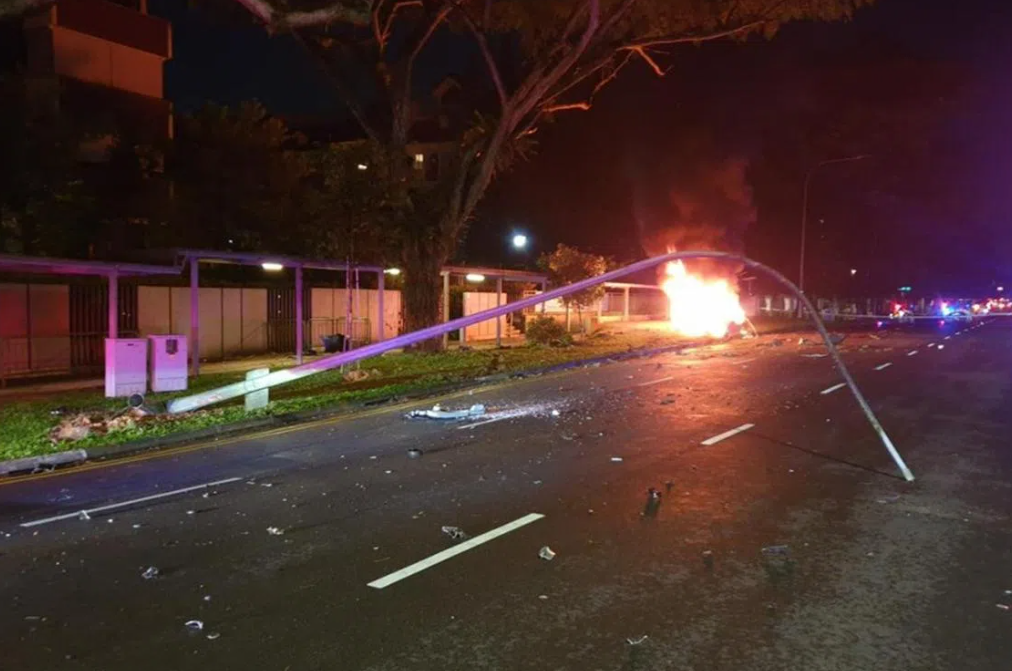
The rampage culminated at the intersection of Sixth Avenue when Tan allegedly proceeded through a red traffic light and struck a private bus engaged in a U-turn manoeuvre. The collision with the bus triggered a secondary impact with a lamp post, which ignited his vehicle. The fact that his car subsequently caught fire added an additional layer of danger to an already chaotic scene, potentially trapping occupants had escape routes been compromised. Tan and three passengers in his vehicle managed to evacuate, but the bus driver and his two young passengers required immediate hospitalisation.
A critical element in the prosecution's case involves Tan's refusal to undergo breathalyser testing at the time of arrest, a failure to cooperate that carries its own legal consequences. Subsequent testing revealed his blood alcohol concentration at 148 milligrams per 100 millilitres of blood, substantially exceeding Singapore's legal threshold of 80 milligrams per 100 millilitres. This 85 per cent excess over the permitted limit indicates substantial alcohol consumption in the pre-dawn hours, raising questions about his activities earlier that evening and the decision-making process that led him behind the wheel.
Tan's history compounds the gravity of the current charges. He carries a previous conviction for drink driving and driving without due care and attention dating to 2019, meaning the current incident constitutes his second brush with alcohol-related motoring offences. This repeat status triggers enhanced penalties across multiple counts. For the drink-driving charge alone, conviction could result in up to two years' imprisonment and a fine reaching $20,000. The dangerous driving charge carries sentences of equivalent length alongside fines up to $10,000, with repeat offenders facing the higher penalty threshold of $20,000.
The legislative framework governing Singapore's response to such offences demonstrates the jurisdiction's zero-tolerance stance on impaired driving. The failing to provide a breath specimen charge carries penalties up to six months' jail and $5,000 fine, rising to one year and $10,000 for repeat offenders. Driving against traffic flow, while seemingly the least serious charge, still attracts up to three months' jail or $1,000 fine for first-time offenders, doubling to six months and $2,000 for repeat offenders. In aggregate, Tan faces potential imprisonment exceeding five years should he be convicted on all counts, a significant deterrent reflecting societal costs of such behaviour.
The involvement of children aged nine and ten on the bus injects a particular poignancy and public concern dimension into the case. Schools transport represents a critical infrastructure component in Singapore's social fabric, and incidents endangering these services inevitably draw heightened scrutiny from both parents and policymakers. The injuries sustained by these young passengers, while described as requiring medical attention rather than critical injury, nevertheless represent preventable harm inflicted by a motorist operating under impaired judgment and with disregard for others' safety.
For Malaysian observers, the case underscores the importance of robust traffic enforcement and consequences for repeat offenders. While Singapore's drink-driving laws represent one end of the enforcement spectrum in Southeast Asia, the case highlights how even within strictly regulated jurisdictions, determined individuals can still create dangerous situations. The availability of blood alcohol testing capabilities and the legal architecture to mandate such testing following arrest represents a procedural advantage that many regional jurisdictions might aspire toward improving.
Tan is scheduled to return to court on July 16 for further proceedings, and he has not yet indicated whether he intends to plead guilty to any of the five charges. His choice between contesting the charges and accepting responsibility will likely hinge on the strength of evidence compiled by authorities, including police dashcam footage, traffic signal records, and medical records from the injured children and bus driver. The case demonstrates how a single impaired driving incident can generate cascading legal consequences affecting not just the perpetrator but innocent bystanders whose lives are disrupted by medical treatment, trauma, and inconvenience.