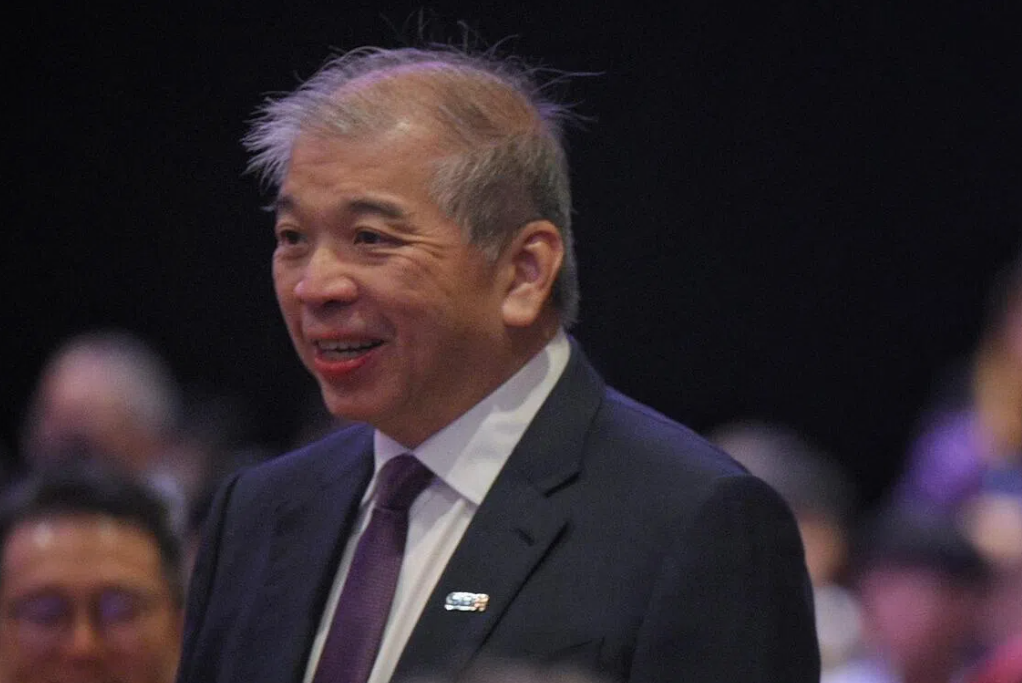
Singapore shipping magnate Teo Siong Seng has been drawn into mounting legal jeopardy following the filing of two separate civil lawsuits in California federal court against him and fellow container industry executives implicated in an alleged international price-fixing conspiracy. The litigation, launched by American businesses seeking to recover substantial financial losses, represents a significant escalation beyond the criminal charges already levelled by US authorities and opens a new dimension of legal exposure for the defendants.
The two class-action lawsuits, which came before the District Court for the Northern District of California on June 2 and 9, are distinct from the criminal indictment issued by the US Department of Justice in January and publicly revealed in May. Manufacturing company C.A. Spalding Company and logistics firm Daybreak Express are the driving forces behind these civil actions, each seeking to recoup millions of dollars they contend they lost through purchasing containers at artificially inflated prices over an extended period. This dual-track legal approach—combining criminal prosecution with civil recovery actions—demonstrates the comprehensive nature of the investigation into what authorities characterise as one of the shipping industry's most significant cartels.
According to court documents rooted in the criminal indictment unsealed on May 19, the alleged cartel encompassed five major container manufacturers: China International Marine Containers (CIMC), Shanghai Universal Logistics Equipment, CXIC Group Containers, Singamas Container Holdings—where Teo serves as chief executive—and two unidentified manufacturing entities. These firms collectively produced approximately 95 per cent of the world's supply of standard dry containers, granting them extraordinary market influence. The breadth of this cartel's reach underscores the systemic nature of the alleged conspiracy and its potential impact on global supply chains.
The mechanics of the alleged scheme are remarkably sophisticated. Executives from participating companies orchestrated production restrictions designed to maintain artificially elevated price levels across the industry. They achieved this through multiple coordinated mechanisms, including limiting the daily operating hours and production shifts available on each manufacturing line. Most notably, investigators uncovered evidence that the conspirators had installed 87 surveillance cameras positioned strategically across 49 container production lines in their respective facilities—a surveillance infrastructure designed explicitly to monitor compliance with the agreed-upon output restrictions and prevent any individual manufacturer from defecting by increasing production.
The financial consequences of this alleged manipulation proved devastating for purchasers and beneficial beyond measure for the cartel members. Investigators documented that standard 20-foot container prices more than doubled between 2019 and 2021, escalating from approximately US$1,600 to US$3,500—a staggering 119 per cent increase that rippled through global logistics networks. For Malaysian importers and exporters dependent on container shipping, such price volatility constitutes a significant operational cost shock, potentially squeezing margins across industries reliant on containerised trade.
The profitability surge experienced by the cartel members validates the effectiveness of their scheme. CIMC's container manufacturing business witnessed extraordinary profit growth: earnings expanded from approximately 137 million yuan in 2019 to 1.99 billion yuan in 2020, then exploded to 11.3 billion yuan in 2021. Similarly, Singamas Container Holdings transformed a substantial operational loss of roughly US$110 million in 2019 into a profit of approximately US$186.8 million by 2021. Such dramatic financial reversals, concentrated within a period of alleged coordinated pricing behaviour, strongly suggest the cartel mechanism was generating billions in illicit profits extracted directly from downstream businesses and ultimately consumers.
The civil lawsuits carry potentially severe financial consequences beyond the criminal penalties. Both C.A. Spalding Company and Daybreak Express have petitioned the courts for treble damages—a punitive mechanism under antitrust law that multiplies proven financial losses by three. Should the defendants be found liable, this mechanism could expose them to damages equalling triple their actual wrongdoing, creating powerful deterrent effects and substantial financial liability. The treble damages provision reflects American law's philosophical commitment to punishing cartel behaviour not merely at its actual cost to victims but at a level designed to eliminate any profit incentive from illegal conduct.
The defendants have been formally notified of the lawsuits through summonses issued on June 8 and 11, initiating a 21-day response window. Failure to respond within this period could result in default judgments against them. The individuals named span multiple countries and corporations: Mai Boliang, who transitioned from CIMC president and chief executive to chairman in August 2020; Huang Tianhua and Wan Yongbo, senior CIMC executives; Li Qianmin of Shanghai Universal Logistics Equipment; and Zhang Yuqiang of CXIC Group Containers. All are Chinese nationals. Teo, a Singaporean, stands as the only named defendant from Singapore, alongside Vick Ma, Singamas's marketing director, who currently faces extradition from France following his April arrest.
The personal and professional consequences for Teo have already materialised substantially. The 71-year-old has voluntarily withdrawn from multiple prominent positions, including his role as executive chairman at Pacific International Lines. He has also stepped back from positions within the Singapore Business Federation, where he had recently assumed the chairmanship, the Singapore Economic Resilience Taskforce, the board of Enterprise Singapore, and his pro-chancellor position at the National University of Singapore. These absences reflect the reputational damage and practical necessity of managing his defence without compromising the institutions he previously represented.
Teo's tenure at the Singapore Business Federation proved remarkably brief. He assumed the chairmanship on May 20 following the early departure of his predecessor, Lim Ming Yan, who transitioned to chair Changi Airport Group. During his initial media statement on May 28, Teo announced his decision against seeking re-election when his term concluded on June 24, citing the need for sufficient time to address the legal matters confronting him while preserving the interests of the various organisations he served. This represents a significant withdrawal from Singapore's business establishment for someone who had previously chaired the SBF through three consecutive two-year terms from 2014 to 2020, demonstrating his historical prominence within the local corporate community.
For Malaysia and Southeast Asia more broadly, this litigation carries implications extending far beyond the immediate defendants. The container shipping industry remains vital infrastructure supporting regional trade networks, and systematic price manipulation at the manufacturing level undermines the cost-competitiveness of regional exports. Malaysian manufacturers and traders who utilised these containers during the 2019 to 2021 period likely absorbed portion of the artificially inflated costs, reducing their own profitability and global market share. The successful prosecution and civil resolution of this case may establish important precedent for pursuing similar cartel behaviour and could facilitate recovery claims from affected regional businesses.
The investigation into container industry price-fixing reflects broader international enforcement against cartel activity in critical infrastructure and industrial sectors. The coordination of American civil litigation with criminal prosecution demonstrates sophisticated prosecution strategy targeting both individual executives and corporate entities. As these cases progress through American courts, they will likely generate substantial documentary evidence through discovery processes, potentially exposing the full contours of the conspiracy and identifying additional participants or affected parties. For Malaysian stakeholders in shipping and logistics, close monitoring of these proceedings could illuminate cost pressures their industries have experienced and establish grounds for future remedial action.